
24/7 Customer Support

Free returns

Same-day & Next-day Delivery

Quality Guaranteed

Unlock Your Welcome Offers: FREE Delivery | Up to 80% OFF | Free 30-day JoyPlus trial
Download the APP
Struggling with dim, yellow halogen headlights on dark British roads? You're not alone. Standard factory-fitted bulbs often provide lacklustre illumination, making night-time driving more stressful than it needs to be. A popular and effective solution is a car headlight bulbs upgrade to modern H7 LEDs. They offer a brighter, clearer light that can significantly improve visibility and give your vehicle a more contemporary look.
However, the market is filled with options, and choosing the right set can be confusing. This guide is designed to help you understand the key features to look for in an H7 LED headlight bulb and to present a few carefully selected options available on Joybuy, helping you make an informed decision for your vehicle.
Before you purchase, it's important to understand a few technical aspects to ensure you get a compatible and effective upgrade.
Many modern vehicles, particularly those from European manufacturers, use a Controller Area Network (CANbus) system to monitor the vehicle's functions, including the headlights. A standard halogen bulb has a specific electrical resistance; if the system detects a different resistance from an LED bulb, it may trigger a dashboard warning light, cause flickering or simply not work. To avoid this, look for CANbus H7 LED bulbs. These have built-in resistors or circuitry designed to communicate correctly with your car's computer system, ensuring smooth, error-free operation for most vehicles.
The appearance and intensity of your new headlights are determined by two key measurements:
One of the most appealing aspects of a modern H7 headlight bulb replacement is the ease of installation. Many of the latest models are designed as plug and play H7 bulbs. This means they feature a 1:1 mini design, mirroring the size and shape of the original halogen bulb. This allows them to fit directly into the headlight housing and connect to the factory socket without any modifications, extra wiring or bulky external drivers. Also, pay attention to the cooling system—a built-in fan or a passive heat sink is vital for dissipating heat and ensuring the bulb has a long operational life.
Here are a few recommendations from our catalogue, selected for their features and specifications.
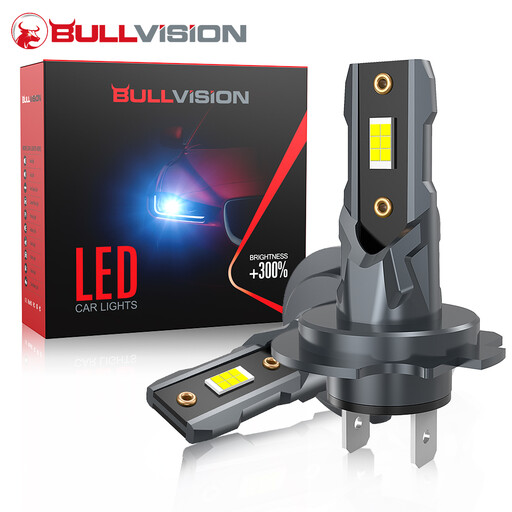
Why It Stands Out: The Bullvision H7 bulbs focus on delivering a balanced upgrade with a strong emphasis on ease of installation. Their 1:1 design is nearly identical to a stock halogen bulb, making the replacement process straightforward for DIY enthusiasts. The integrated cooling fan is designed to maintain performance over time.
Pros:
Who is it for? This is a great starting point for drivers seeking a simple and effective H7 headlight bulb replacement. It's particularly suited for those who value a hassle-free, plug and play installation without needing to modify their vehicle's headlight assembly. Note the manufacturer's advice that some vehicles (e.g., Volkswagen, Mercedes-Benz, BMW) may require an additional CANbus decoder.
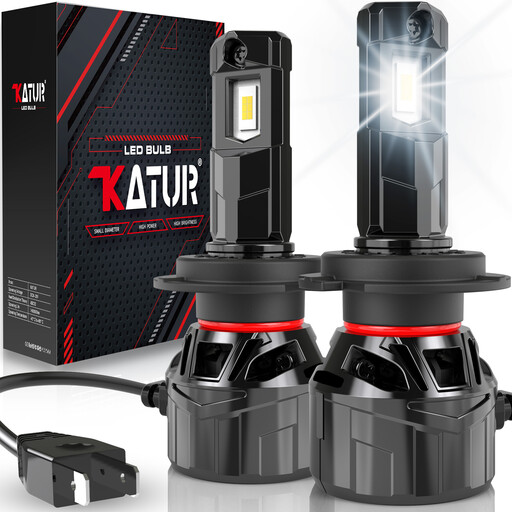
Why It Stands Out: The KATUR H7 bulbs are built for high-intensity output, with specifications pointing to a very high lumen count per pair. They combine this brightness with a sophisticated cooling system, featuring a high-speed turbo fan and a copper tube to draw heat away from the LED chips efficiently.
Pros:
plug and play fit.Who is it for? Drivers who prioritise maximum brightness will find the KATUR H7's specifications appealing. It's designed for those who want the most powerful illumination possible from a plug and play bulb, backed by a cooling system built for sustained high performance.
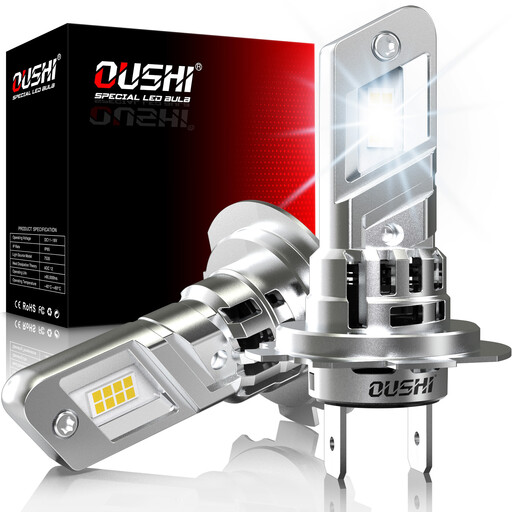
Why It Stands Out: The OUSHI H7 bulbs are notable for their focus on enhanced CANbus compatibility. The manufacturer states they incorporate a latest-generation CANbus system, making them a strong candidate for European vehicles or others with sensitive onboard computers that are prone to errors with LED upgrades.
Pros:
Who is it for? This is an excellent choice for owners of modern European cars or any vehicle with a known sensitive CANbus system. If your main concern is avoiding dashboard warning lights while still getting a significant brightness upgrade, the OUSHI H7 is designed to meet that need.
These three products represent a strong cross-section of what's available, but every car and driver is different. If you're looking for a different specification or want to browse more lighting technologies, we have a wider selection.
Explore our full range of White LED solutions to find the perfect fit for your vehicle.
1. Are H7 LED bulbs legal for road use in the UK? According to current UK MOT testing standards, fitting LED bulbs into a headlight unit that was originally designed for halogen bulbs is considered a test failure. These upgrades are therefore generally intended for off-road or show use. Some drivers choose to refit the original halogen bulbs before their annual MOT test. Always check the latest DVSA guidelines for the most up-to-date information.
2. Will I definitely need a CANbus decoder for my car? It depends on your vehicle. Most modern cars, especially from brands like Audi, BMW, Volkswagen and Mercedes-Benz, have sensitive CANbus systems. While many H7 LED bulb models come "CANbus ready" with built-in components, some highly sensitive systems may still require an additional, external decoder to fully prevent dashboard errors or flickering. It is wise to check your vehicle's requirements beforehand.
3. Is a fan really necessary for an H7 LED bulb? Yes, effective cooling is crucial. While the light-emitting part of an LED is cool, the electronic components at its base generate significant heat. A cooling system, whether an active fan or a passive heat sink, dissipates this heat. Without it, the LED chips would overheat, leading to a drastic reduction in brightness and a much shorter lifespan. Bulbs with active fans are often more efficient at managing heat, especially in compact headlight housings.