
24/7 Customer Support

Free returns

Same-day & Next-day Delivery

Quality Guaranteed

Unlock Your Welcome Offers: FREE Delivery | Up to 80% OFF | Free 30-day JoyPlus trial
Download the APP
Upgrading your car's standard halogen bulbs to modern LEDs can transform your night-time driving experience. A quality H7 LED headlight bulb replacement promises not just a brighter, clearer view of the road but also a sleek, contemporary look. However, the market is filled with confusing specifications and bold claims that can easily lead to a frustrating purchase.
As a Joybuy Product Recommendation Officer, my role is to help you navigate these choices. This guide cuts through the marketing clutter, focusing on the practical details that matter for UK drivers. We will look at the common pitfalls to avoid and the key features that ensure your car headlight upgrade is a successful one.
Many drivers end up with bulbs that flicker, throw dashboard errors or produce a dangerous, scattered beam. Here are the three most common traps to watch out for.
To avoid the pitfalls above, focus on these three non-negotiable features before making a purchase.
Modern cars use a Controller Area Network (CANbus) to monitor vehicle functions, including the headlights. Halogen bulbs have a specific electrical resistance; when you install an LED with a different resistance, the system can register it as a fault. A well-designed CANbus ready H7 bulb has built-in circuitry or an intelligent driver that mimics the load of a halogen bulb, preventing dashboard errors and ensuring stable, flicker-free operation. For UK drivers with brands like VW, BMW, Audi or Mercedes, this is a critical feature.
The single most important factor for safety and performance is the beam pattern. The position of the LED chips on the bulb must precisely replicate the position of the filament in a standard H7 halogen bulb. This 1:1 mini size design ensures the light is correctly focused by your car's reflector or projector housing. The result is a sharp cut-off line that illuminates the road and verges without blinding other road users. Look for bulbs that explicitly mention a 1:1 design and ultra-thin chip spacing for optimal focus.
LEDs generate heat, and managing that heat is essential for both brightness and longevity. Without effective cooling, an LED chip will quickly dim and eventually fail. There are two main types of cooling systems:
Both can be effective, but high-performance, bright H7 LED bulbs typically use a fan combined with a quality aluminium body to ensure a long operational life, often cited as over 50,000 hours.
Instead of a generic list, we have matched our recommendations to specific driver profiles to help you find the right fit.
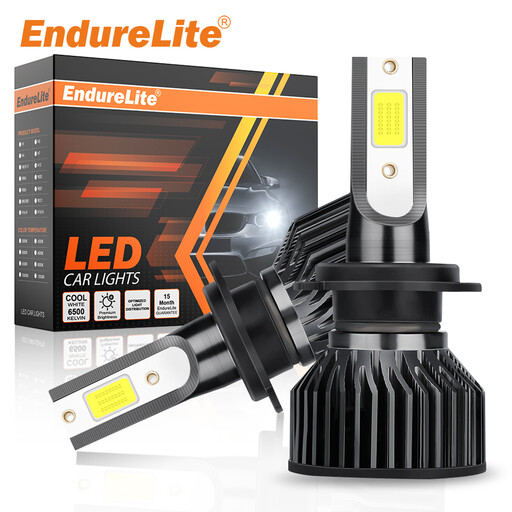
Why This Fits Their Persona: This is an excellent starting point for a car headlight upgrade. It offers a significant improvement in visibility and a modern 6000K xenon white H7 bulb colour without a premium price tag, making it ideal for the DIYer looking for a straightforward and effective enhancement.
It features a 1:1 size profile and a plug-and-play design, avoiding the trap of needing modifications. Its built-in driver and CANbus-ready design aim to prevent errors on most common UK vehicles.
A balanced option offering a noticeable brightness increase, a 10,000 RPM fan for reliable cooling and a simple installation process.

Why This Fits Their Persona: For those who frequently drive on unlit B-roads or motorways at night, maximum visibility is a priority. This bulb is geared towards high output, providing a wider and farther lighting range to spot hazards earlier.
It tackles the heat issue associated with high-power bulbs by using a high-speed turbo fan and aviation aluminium housing, ensuring the impressive brightness doesn't fade over time or lead to premature failure.
Focuses on high brightness output (30,000 lumens per pair) and an efficient cooling system for sustained performance and a long lifespan of up to 60,000 hours.
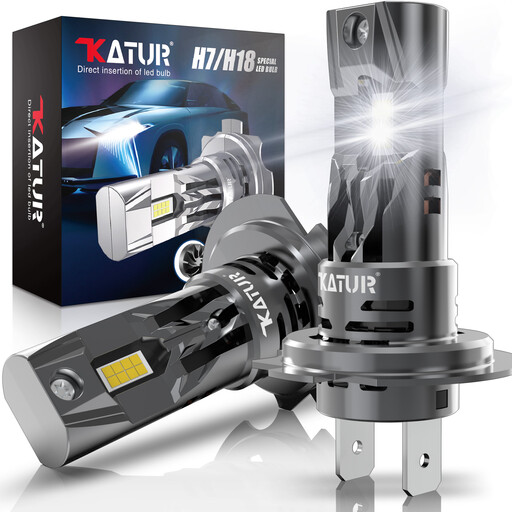
Why This Fits Their Persona: This driver values a hassle-free experience above all. They own a modern car, possibly European and want an upgrade that installs in minutes without errors or modifications. Reliability and compatibility are paramount.
Its key feature is the 1:1 mini size, which is identical to a halogen bulb. This, combined with a smart external driver, directly addresses the "plug and play" and "CANbus ready" pitfalls, ensuring a high degree of compatibility.
Designed for maximum compatibility and ease of installation. The powerful 16,000 RPM fan and IP65 waterproof rating ensure long-term reliability.
We have compiled a complete, real-time list of products that fully satisfy these strict selection criteria and UK safety regulations.
This is an important consideration for UK drivers. Currently, fitting aftermarket LED bulbs into a headlight unit that was designed for halogen bulbs is not considered road legal and may result in an MOT failure. Regulations are subject to change and we always advise you to check the latest guidelines from the DVSA before fitting them for on-road use.
Not always. Many of the latest plug and play H7 LED bulbs are designed with a 1:1 mini size that fits directly into the original socket using the car's existing retaining clip. However, some vehicle models have unique clips, so it is always a good idea to check your specific car's requirements before purchasing.
This is almost always a CANbus compatibility issue. The flickering is caused by the car's computer running a bulb-check sequence and not getting the expected response from the low-power LED. Choosing a high-quality CANbus ready H7 bulb with an intelligent driver is the most effective way to prevent this. For particularly sensitive systems, an additional CANbus decoder may sometimes be required.