
24/7 Customer Support

Free returns

Same-day & Next-day Delivery

Quality Guaranteed

Unlock Your Welcome Offers: FREE Delivery | Up to 80% OFF | Free 30-day JoyPlus trial
Download the APP
Driving at night with standard halogen H7 bulbs can often feel like a compromise. The dim, yellowish light can reduce visibility on unlit roads, making it harder to spot hazards and causing eye strain. If you're looking for a straightforward H7 headlight upgrade that enhances safety and gives your car a more modern appearance, switching to an H7 LED headlight bulb is a popular solution.
As the Joybuy Product Recommendation Officer, my role is to help you navigate the options. This guide cuts through the technical jargon to explain what really matters when choosing a bulb and presents some of our top recommendations for 2026, helping you make an informed decision for your vehicle.
Upgrading your headlights should be simple. Keep these key factors in mind to ensure you select a bulb that performs well and fits correctly.
While many products advertise as being bright H7 LED bulbs, sheer brightness (measured in lumens) is only half the story. The most critical factor for safety is the beam pattern. A well-designed LED bulb should mimic the precise filament position of a halogen H7. This creates a sharp, clean cut-off line, illuminating the road ahead without scattering light upwards and dazzling oncoming drivers. Look for bulbs described as having a "1:1 design" or "perfect beam pattern" to ensure light is focused where you need it most.
The colour of the light, measured in Kelvin (K), significantly affects night-time visibility. Standard halogens typically produce a warm, yellowish light around 3200K. An H7 LED bulb 6000K provides a crisp, cool white H7 bulb light. This colour is much closer to natural daylight, improving contrast and making it easier to distinguish objects, road markings and potential hazards from a distance.
For most DIY enthusiasts, ease of installation is paramount. A plug and play H7 LED bulb is designed to fit directly into your car's existing headlight housing and connect to the factory socket without any cutting or splicing of wires.
Additionally, many modern vehicles use a CANbus (Controller Area Network) system to monitor the car's electronics. Because LEDs use less power than halogens, the system can sometimes mistakenly report a bulb failure. A CANbus H7 LED bulb has integrated circuitry to prevent these error codes or flickering, ensuring seamless compatibility with the majority of vehicles.
Based on their features, design and user-focused specifications, here are a few standout options to consider for your H7 headlight upgrade.
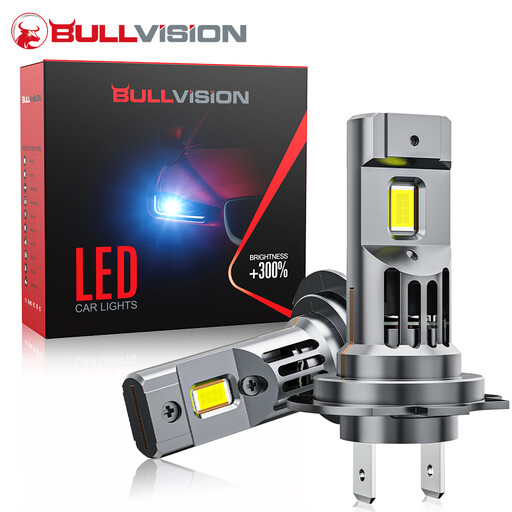
Why It Stands Out: The Bullvision H7 bulb focuses on a true 1:1 size match with original halogen bulbs. This compact, wireless design makes it a genuine plug and play H7 LED solution, simplifying installation even in headlight housings with limited space. It aims to deliver a focused beam pattern, which is essential for safe and effective road illumination.
Pros:
Who is it for: Car owners seeking a simple, no-fuss upgrade. Its compact design is ideal for those concerned about fitment issues and who want a balanced improvement in brightness and clarity. Please note: The manufacturer states that an additional CANbus decoder is required for certain Volkswagen, Mercedes-Benz and BMW models.
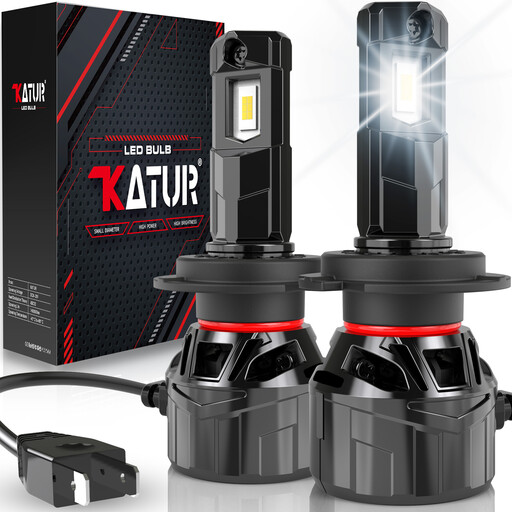
Why It Stands Out: This KATUR H7 bulb is built for high performance, with impressive power and lumen figures (120W, 30000LM per pair). Its standout feature is a highly efficient cooling system, combining a powerful 16,000 RPM turbo fan, a copper heat pipe and a hollow-carved heat sink. This robust thermal management is crucial for maintaining brightness and ensuring a long operational life.
Pros:
Who is it for: Drivers who prioritise maximum brightness and want a high-output bright H7 LED bulb. The advanced cooling system makes it a compelling choice for those looking for sustained performance over long journeys.
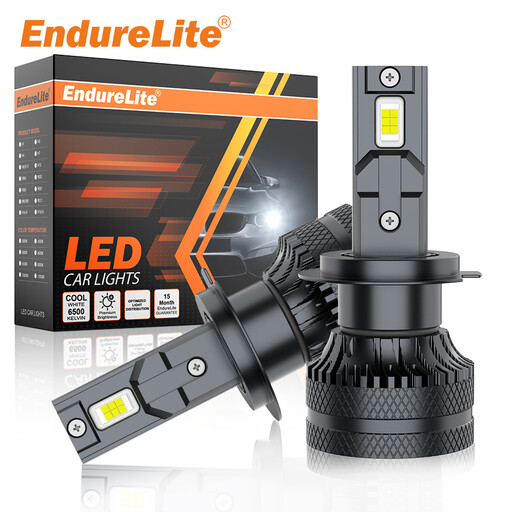
Why It Stands Out: While marketed for fog lights, the ENdureLite H7 bulb shares many of the key features required for a quality headlight upgrade. It combines a halogen-like 1:1 design for a focused beam with modern CSP chip technology. This makes it a versatile and reliable performer, offering a substantial brightness boost in a simple, easy-to-install package.
Pros:
Who is it for: Users looking for a dependable, all-around bulb that is easy to fit and offers a significant improvement over halogen. Its versatile design makes it suitable for use in either headlights or fog light housings.
If these recommendations aren't the perfect match for your vehicle, or if you'd like to see a wider variety of lighting solutions, there are many other options available.
Explore our complete collection of cool white light bulbs to find the ideal fit for your car's needs.
1. Are H7 LED bulbs legal for road use in the UK? The regulations regarding aftermarket LED headlight bulbs can be complex. For an MOT test, a headlight conversion must use an LED bulb that is E-marked for your specific headlamp unit. Many aftermarket kits are sold for "off-road use only". We advise checking the product's specifications and consulting the latest DVSA guidelines to ensure compliance for road use.
2. Will I need a CANbus decoder for my car? It depends on your vehicle. Most cars manufactured since the mid-2000s use a CANbus system. While many CANbus H7 LED bulbs have built-in systems to prevent errors, some highly sensitive vehicle systems (often from European brands) may still require an additional, external decoder to function without dashboard warnings.
3. Is 6000K the right colour for headlights? A 6000K colour temperature is a very popular choice for an H7 headlight upgrade. It produces a modern, cool white light that is noticeably clearer and less fatiguing on the eyes than the yellowish light from halogen bulbs. This colour provides excellent contrast on dark roads, helping you identify potential hazards more quickly.