
24/7 Customer Support

Free returns

Same-day & Next-day Delivery

Quality Guaranteed

Unlock Your Welcome Offers: FREE Delivery | Up to 80% OFF | Free 30-day JoyPlus trial
Download the APP
Driving on poorly lit British B-roads with standard halogen headlights can feel like navigating by candlelight. It’s no surprise that many UK drivers look to upgrade to a brighter, more modern H7 LED headlight bulb. However, the market is flooded with options and it's easy to fall into common traps that waste both time and money.
As the Joybuy Product Recommendation Officer, my role is to help you see through the marketing clutter. Before you buy, be aware of these frequent pitfalls:
To make a smart purchase, focus on the specifications that actually matter for UK roads, not just the marketing headlines.
The single most important factor for a road-legal and effective headlight is the beam pattern. A well-designed LED bulb will mimic the precise filament position of a halogen H7. This creates a sharp, clean cut-off line for the dipped beam, putting light on the road and out of the eyes of other drivers.
Look for a colour temperature around 6000K. This produces a crisp, modern white light that improves contrast and visibility without being overly blue, which can cause eye strain and attract unwanted attention. A bright H7 headlight bulb is only useful if that brightness is controlled.
How a bulb dissipates heat is critical to its lifespan and reliability.
Modern vehicles use a CANbus (Controller Area Network) system to monitor vehicle functions, including the headlights. Because LEDs draw less power than halogens, they can sometimes trigger a "bulb out" warning on the dashboard. To avoid this, look for bulbs specified as "CANbus-ready" or "error-free," which have built-in components to prevent this issue.
Finally, given the UK's climate, ensure any bulb you consider is a waterproof car light bulb with a rating of at least IP65. This ensures it is protected from dust ingress and jets of water, guaranteeing performance through rain, sleet and car washes.
Based on these practical criteria, we've matched some options to different types of UK drivers.
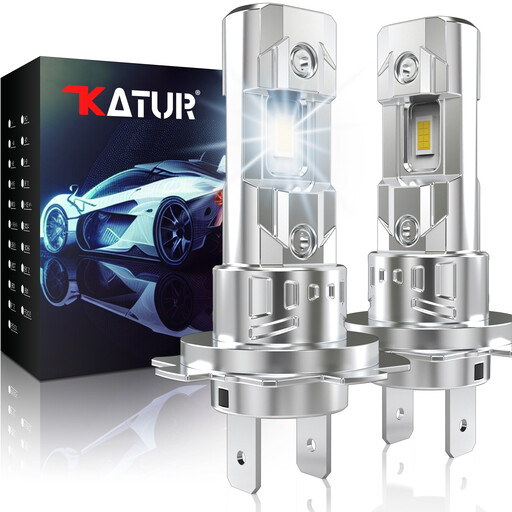
Why This Fits Their Persona: For the driver who wants a straightforward, reliable upgrade without any fuss. Its compact, 1:1 halogen size means it fits into tight headlight housings where bulkier, fan-cooled bulbs won't.
The fanless H7 LED design eliminates the risk of fan failure and annoying noise. Its all-in-one, mini-size build is a true plug and play H7 bulb, avoiding the "complex installation" pitfall.
Silent operation and enhanced reliability due to no moving parts. The 6063 aviation aluminium body provides excellent passive heat dissipation.
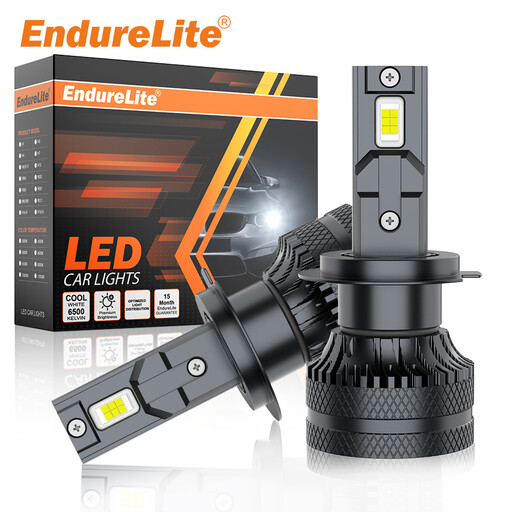
Why This Fits Their Persona: Ideal for those who frequently drive on motorways or unlit country lanes and prioritise sustained light output. The active fan cooling is designed to manage heat during long periods of use.
This bulb focuses on a perfect beam pattern to avoid the "blinding brightness" trap, ensuring its high output is directed onto the road. The built-in CANbus driver helps prevent dashboard errors on most vehicles.
Features an active cooling fan for effective heat management. It also has an IP68 waterproof rating, offering high resistance to water and dust.
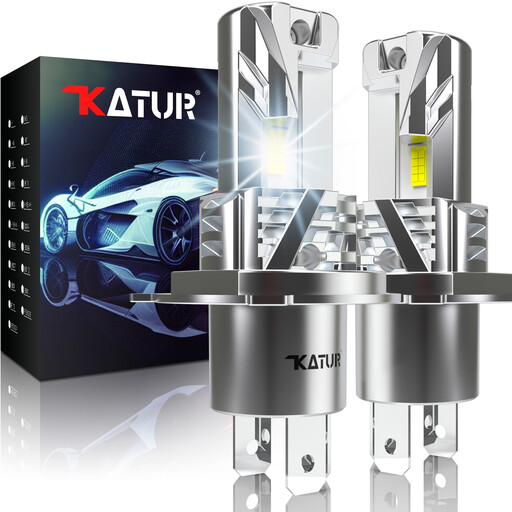
Why This Fits Their Persona: This is for drivers whose cars use H4 bulbs, not H7. An H4 bulb contains two filaments to handle both high and low beams in one unit. It's a crucial reminder to always check your vehicle's manual before purchasing.
This recommendation helps you avoid the biggest trap of all: buying the wrong fitment. An H7 bulb will not fit an H4 socket, and vice versa. This H4 option offers the same fanless, plug-and-play benefits for the correct vehicle.
Provides a Hi/Lo beam function in a single bulb. Its fanless, compact design makes it an easy upgrade for compatible cars, SUVs and motorcycles.
We have compiled a complete, real-time list of products that fully satisfy these strict selection criteria and UK safety regulations.
Yes, an H7 LED bulb can pass an MOT, but only if it meets specific criteria. The key is the beam pattern. The bulb must produce a clean, sharp cut-off line on the dipped beam setting, without causing glare. It must also be of a suitable colour, typically in the white to yellow range. Bulbs that produce a scattered, unfocused beam will fail. Always choose a bulb designed to replicate the original halogen beam pattern.
This depends on your vehicle. Many modern cars, particularly from European manufacturers like VW, BMW and Audi, use a CANbus system that can detect the lower power draw of an LED and register it as a fault. Bulbs advertised as "CANbus-ready" have circuitry to prevent this. However, for some highly sensitive systems, a separate, external CANbus decoder may still be required to eliminate dashboard warning lights or flickering.
A well-engineered fanless H7 LED bulb can have an exceptionally long lifespan, often quoted at over 30,000 hours. This is because its solid-state design with an aluminium heat sink has no moving parts that can wear out or fail. A bulb with a fan can provide very effective cooling, but the fan itself is a mechanical component that is vulnerable to failure from dust, dirt and moisture over time, potentially shortening the bulb's overall useful life.