
24/7 Customer Support

Free returns

Same-day & Next-day Delivery

Quality Guaranteed

Unlock Your Welcome Offers: FREE Delivery | Up to 80% OFF | Free 30-day JoyPlus trial
Download the APP
Struggling with dim, yellow halogen headlights on dark country lanes? You're not alone. An increasing number of UK drivers are choosing an H7 LED headlight bulb upgrade to improve visibility, enhance safety and give their vehicles a more modern appearance. However, the market is filled with technical jargon and bold claims, making it difficult to know which bulbs are right for your car.
This guide is designed to cut through the clutter. As the Joybuy Product Recommendation Officer, my role is to help you understand the key features to look for. We will explore what makes a quality H7 LED bulb and present some of our top recommendations for 2026, helping you make an informed decision for your vehicle.
Before diving into specific products, let's cover a few essential factors to consider. Keeping these points in mind will ensure you select a bulb that not only performs well but also fits your car correctly.
The most noticeable change from an LED upgrade is the improvement in brightness and light colour. Brightness is often measured in lumens (LM), but a higher number doesn't always tell the whole story. A well-designed bulb focuses its light effectively, creating a clear beam pattern without dazzling oncoming traffic.
Colour temperature, measured in Kelvin (K), determines the colour of the light. Standard halogen bulbs are typically around 3500K, producing a yellowish light. Most bright H7 LED bulbs are rated between 6000K and 6500K. A 6000K H7 bulb emits a crisp, cool white light that is very similar to natural daylight, making it easier to spot road signs and potential hazards at night.
For many car owners, ease of installation is paramount. Look for bulbs advertised as plug and play H7 LED. These are often designed with a 1:1 mini size, meaning they have the same dimensions as the original halogen bulb they are replacing. This eliminates the need for extra adapters or modifications to your headlight housing.
Furthermore, many modern vehicles, particularly European models, use a Controller Area Network (CANbus) to monitor the car's electrical systems. Because LED bulbs draw less power than halogens, they can sometimes trigger a "bulb out" error message on the dashboard. A CANbus H7 LED bulb has integrated circuitry to prevent this, ensuring seamless compatibility with 99% of vehicles. However, some sensitive models may still require an additional decoder.
A key advantage of LED technology is its long lifespan, often rated for over 50,000 hours. This longevity is heavily dependent on effective heat management. High-performance LEDs generate heat, and if it isn't dissipated properly, their performance and lifespan will degrade. Quality bulbs are constructed from aviation-grade aluminium and incorporate cooling systems, such as high-speed micro-fans or passive heat sinks, to maintain optimal operating temperatures.
Here are a few standout options that offer a compelling combination of performance, design and value for those looking to upgrade their car headlight bulbs H7.
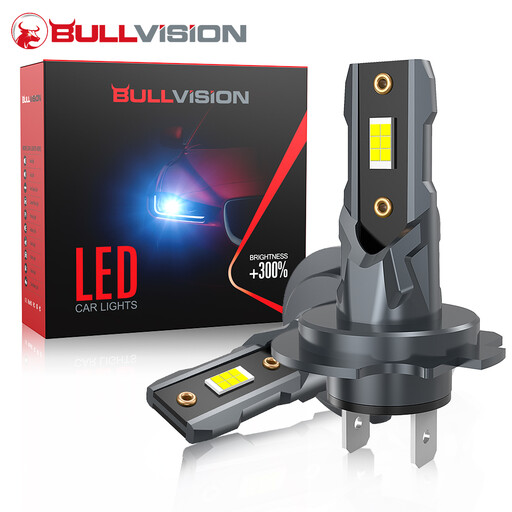
Why It Stands Out: The Bullvision H7 bulb is a well-rounded option that focuses on delivering a significant lighting improvement with minimal installation fuss. Its 1:1 design mimics the original halogen bulb, making it a true plug-and-play solution for most vehicles. The built-in fan and aluminium alloy shell provide effective cooling for a long operational life.
Pros:
Who is it for? Drivers seeking a reliable and straightforward upgrade from standard halogens. It's an excellent choice for those who prioritise ease of installation and a balanced performance boost. Note that for some premium German vehicles, an additional CANbus decoder may be required.
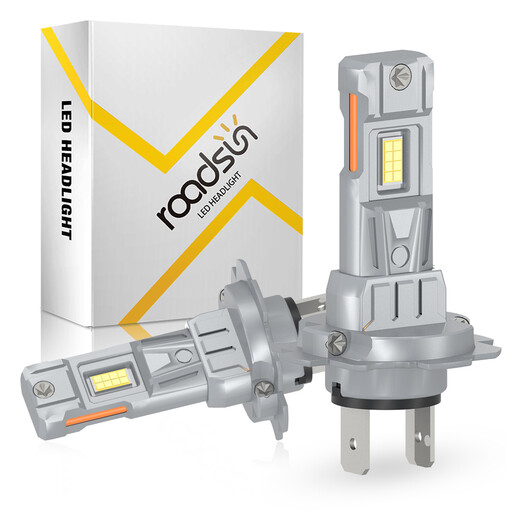
Why It Stands Out: According to Roadsun, these H7 bulbs deliver an 800% increase in brightness over halogen bulbs. Their main appeal is the true 1:1 mini size, which ensures a perfect fit into factory H7 sockets without needing any adapters. This makes them one of the most user-friendly options available. Their durable, all-weather construction also makes them suitable as an H7 fog light bulb or for powersports vehicles.
Pros:
Who is it for? Ideal for the DIY car owner or powersports enthusiast who wants a powerful lighting upgrade with the simplest possible installation process.
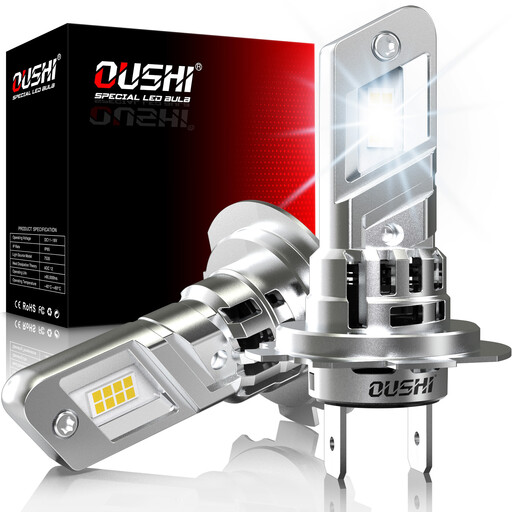
Why It Stands Out: The OUSHI H7 bulbs are designed for high performance, with a claimed output of 30,000 lumens per pair and a slightly cooler 6500K xenon white colour. A key feature is the latest-generation CANbus system, which is engineered for enhanced compatibility with European vehicles that often have sensitive onboard computers.
Pros:
Who is it for? This bulb is particularly well-suited for owners of modern European cars who need a powerful bulb with a robust, built-in CANbus solution to avoid error codes.
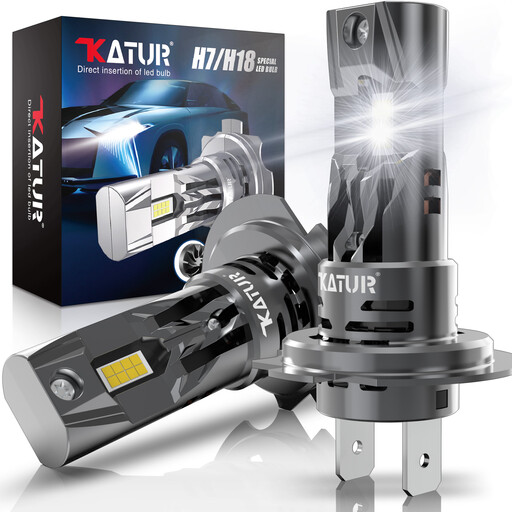
Why It Stands Out: The KATUR H7 bulb distinguishes itself with a high-power design and an external smart driver. Separating the driver from the bulb body helps with heat management and can contribute to a longer service life. It also features a very high-speed 16,000 RPM turbo fan and a hollow-carved heat sink, demonstrating a clear focus on thermal efficiency and durability.
Pros:
Who is it for? This is a great option for vehicle enthusiasts who appreciate robust engineering and want a high-output bulb with a sophisticated cooling system designed for maximum longevity.
If you haven't found the perfect fit for your vehicle yet, don't worry. The world of automotive lighting is vast, with options to suit every car, budget and preference.
Explore our full range of car headlight bulbs H7 and other lighting solutions in our comprehensive car light category.
1. Are H7 LED bulbs legal for road use in the UK? It is important to be aware of UK regulations. According to DVSA guidelines, retrofitting LED bulbs into a headlight unit originally designed for halogen bulbs is an MOT failure for cars, vans and motorcycles first used on or after 1 April 1986. This means they are primarily intended for off-road use or for vehicles that fall outside this classification. Always check the latest government regulations before fitting aftermarket bulbs for road use.
2. Will I need a CANbus decoder for my H7 LED bulb? It depends on your vehicle. Many modern cars, especially from European manufacturers like Audi, BMW and Volkswagen, use a CANbus system that may detect the lower power draw of an LED as a fault. While many CANbus H7 LED bulbs have built-in systems to prevent this, some highly sensitive vehicles might still require an external decoder to eliminate dashboard warning lights or flickering.
3. What is the difference between a 6000K and a 6500K H7 bulb? The "K" stands for Kelvin, which measures colour temperature. A 6000K H7 bulb produces a pure, cool white light that is very effective for night driving. A 6500K bulb is slightly cooler still, with a more distinct blueish tint often marketed as "xenon white". The choice between them is largely a matter of personal preference, as both offer a dramatic improvement in clarity over the yellowish glow of a traditional halogen bulb.