
24/7 Customer Support

Free returns

Same-day & Next-day Delivery

Quality Guaranteed

Unlock Your Welcome Offers: FREE Delivery | Up to 80% OFF | Free 30-day JoyPlus trial
Download the APP
Driving on poorly lit B-roads or navigating motorways in the rain can be a stressful experience with standard halogen headlights. It's no surprise that many UK drivers are looking for a car headlight upgrade. An H7 LED headlight bulb promises a brighter, clearer view of the road ahead. However, the market is filled with options, and it's easy to fall into common traps that lead to wasted money, dashboard error lights or even an MOT failure.
As a Joybuy Product Recommendation Officer, my role is to help you see through the marketing clutter. This guide will focus on the critical factors for choosing a reliable H7 halogen replacement, ensuring you get the improved visibility and safety you're looking for without the headache.
Before you add any bulb to your basket, be aware of these common issues that catch out many buyers:
To make a smart choice, focus on these three non-negotiable specifications.
The single most important factor is the beam pattern. A good LED bulb should replicate the sharp, controlled cut-off line of a high-quality halogen bulb. This ensures the light is focused on the road and out of the eyes of other drivers. Look for bulbs that specify a design that mimics the original halogen filament placement.
For colour, a 6000K H7 bulb (or 6500K) is a popular choice. This produces a crisp, modern-looking cool white light that is very effective at illuminating road signs and hazards at night, closely resembling natural daylight.
If your car was made in the last 15 years, it almost certainly has a Controller Area Network (CANbus). As mentioned, this system can cause issues with LED upgrades. To avoid dashboard errors, you need a canbus H7 LED bulb. These have built-in resistors or advanced driver circuits to communicate correctly with your car's computer. While many bulbs are "CANbus ready," some highly sensitive vehicle systems may still require an additional decoder. Reputable sellers are usually upfront about this.
An H7 halogen replacement should fit into your headlight housing without modification. The ideal choice is a bulb with a 1:1 mini size design, meaning its dimensions are identical to the original halogen bulb. This avoids any issues with fitting dust covers back on.
Equally important is the cooling system.
Both can be effective, but the design must be robust enough to handle the heat generated by the bulb.
Instead of a generic list, we've matched some options to specific types of UK drivers.
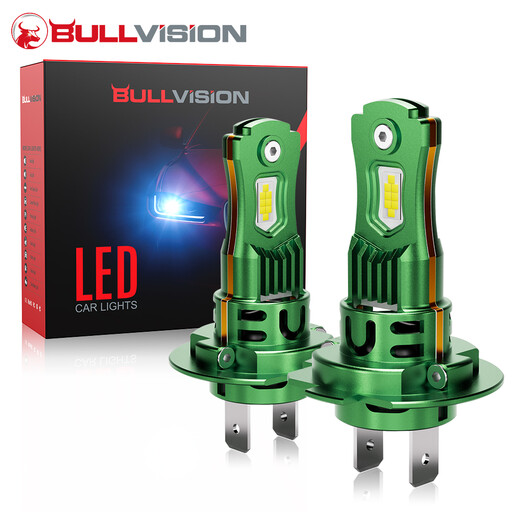
Why This Fits Their Persona: This is a great entry point for those new to LED upgrades. It offers a noticeable improvement in brightness and clarity over stock halogens without being overly aggressive, making for a confident first step into better night-time driving.
It tackles the CANbus pitfall with honesty, stating its built-in driver is compatible with 99% of systems but notes that some sensitive European cars may require an extra decoder. This manages expectations and avoids the false "universal" promise.
The 1:1 size design makes it a direct replacement for the stock bulb, simplifying installation. It also features an active cooling fan to maintain stable performance.
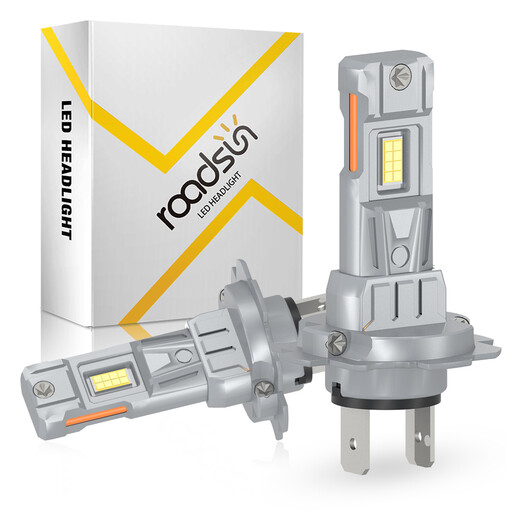
Why This Fits Their Persona: Perfect for the car owner who values their time and wants a straightforward, no-fuss upgrade. This bulb is designed for a quick and easy DIY installation, getting you back on the road with better lights in minutes.
It directly counters the "plug and play" pitfall by engineering a true 1:1 mini size that requires no extra adapters or modifications, fitting seamlessly into factory H7 sockets and allowing dust covers to be re-sealed properly.
The main benefit is its hassle-free installation. The compact, all-in-one design means even a beginner can fit them without needing special tools or wiring knowledge.
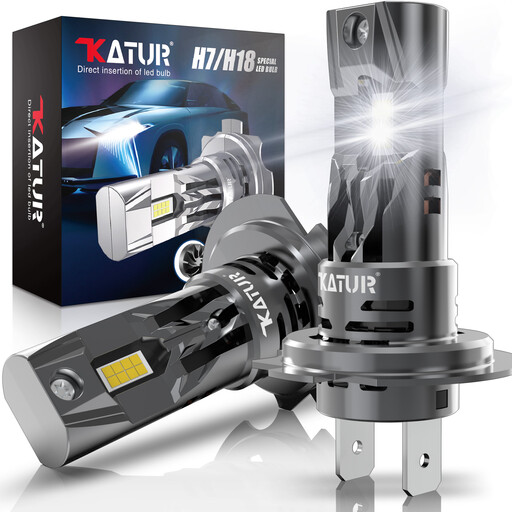
Why This Fits Their Persona: For the driver who frequently travels on unlit rural roads or wants the maximum possible safe illumination. This bulb's high power output provides a significantly wider and farther field of vision, making it easier to spot hazards early.
It avoids the overheating pitfall by pairing its high-output chips with a powerful 16,000 RPM turbo fan and an aviation-grade aluminium body. This robust cooling system is designed to manage the extra heat and ensure long-term, stable performance.
The combination of high lumen output and an active cooling system delivers sustained, bright H7 car lights. It also features an external driver which can help with CANbus compatibility and longevity.
We have compiled a complete, real-time list of products that fully satisfy these strict selection criteria and UK safety regulations.
As of 2021, the rules for MOT testing on headlights were updated. The key is not the type of bulb (halogen, HID or LED) but its performance. To pass, an LED conversion must produce a clear and correct beam pattern without causing glare, be securely fitted and be an appropriate white or yellow colour. Choosing a bulb designed to mimic a halogen beam pattern is crucial for compliance.
It depends entirely on your vehicle's make, model and year. Many modern cars, especially from German brands like VW, BMW and Mercedes-Benz, have very sensitive CANbus systems. While many H7 LED bulbs are "CANbus ready" and work fine on most cars, these sensitive systems may still register an error. If you are unsure, it is wise to choose a bulb that explicitly mentions high compatibility or be prepared to fit an additional decoder if a warning light appears.
Manufacturers often quote lifespans of 50,000 hours or more. While the LED chips themselves are very durable, the real-world lifespan of the bulb assembly depends heavily on its heat management. A bulb with a high-quality fan or a large, efficient heat sink will prevent the chips from overheating and will last significantly longer than a poorly designed, cheap alternative. A realistic expectation is many years of service, far exceeding that of a typical halogen bulb.