
24/7 Customer Support

Free returns

Same-day & Next-day Delivery

Quality Guaranteed

Unlock Your Welcome Offers: FREE Delivery | Up to 80% OFF | Free 30-day JoyPlus trial
Download the APP
Driving on unlit British roads at night can be a nerve-wracking experience, especially when your car is fitted with standard halogen bulbs. Their dim, yellowish glow often feels inadequate, reducing visibility and reaction times. An H7 LED headlight bulb upgrade seems like the obvious solution, promising brighter, whiter light. However, the market is flooded with options, and many drivers fall into common traps that lead to wasted money, installation headaches and even potential safety issues.
As a Joybuy Product Recommendation Officer, my role is to help you navigate these choices. Before you buy, be aware of these frequent pitfalls:
To ensure you get a reliable and effective H7 bulb replacement, focus on these core technical features rather than just marketing hype.
This is arguably the most critical factor for a hassle-free upgrade. A true 1:1 design means the LED bulb has the exact same physical dimensions and locking collar placement as the original H7 halogen bulb it's replacing. This ensures it fits perfectly into the headlight housing without any need for modification or extra adapters. More importantly, it allows you to securely refit the original dust cover, maintaining the weather-sealed integrity of your headlight unit. Always check for an all-in-one, compact design that doesn't rely on external boxes or trailing wires.
High-performance LEDs generate significant heat. Without efficient heat dissipation, the LED chips will quickly degrade, causing the light to dim and leading to premature failure. Look for bulbs constructed from aviation-grade aluminium and featuring an integrated cooling system. This is typically either a high-speed fan or a passive heat sink. A robust cooling mechanism is the key to achieving the long lifespan (often advertised as 50,000+ hours) that makes an H7 LED conversion kit UK a worthwhile investment.
For any car manufactured in the last 15-20 years, a CANbus H7 LED bulb is essential. The Controller Area Network (CANbus) is your car's onboard computer system. When you replace a 55W halogen with a low-power 25W LED, the system can mistakenly think the bulb has failed, triggering a dashboard warning light. A quality LED bulb will have an intelligent IC driver or decoder built directly into its body, making it compatible with the vast majority of vehicle systems without causing errors or flickering.
Instead of a one-size-fits-all approach, we've matched specific H7 LED bulbs to different types of UK drivers.
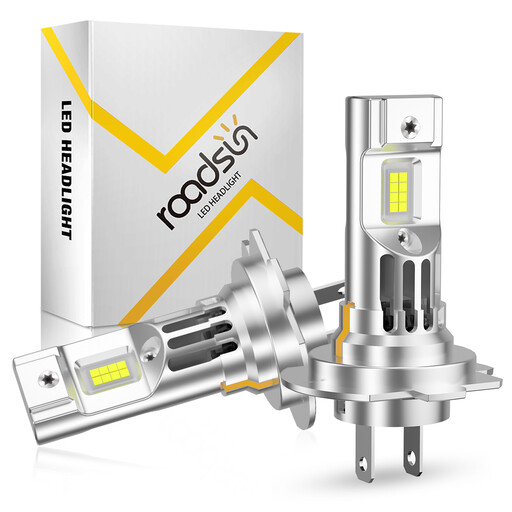
Why This Fits Their Persona: Ideal for the first-time upgrader who wants a guaranteed straightforward installation. The main appeal is the confidence that no extra parts or modifications will be needed to get the job done.
This bulb directly counters the "plug and play myth" by being designed with a true 1:1 body that requires no additional adapters, ensuring it fits correctly and allows the dust cover to be re-sealed.
Its main benefit is the simple, no-fuss installation. It also features a high-speed fan for effective cooling and a crisp 6500K H7 bulb colour for a modern look.
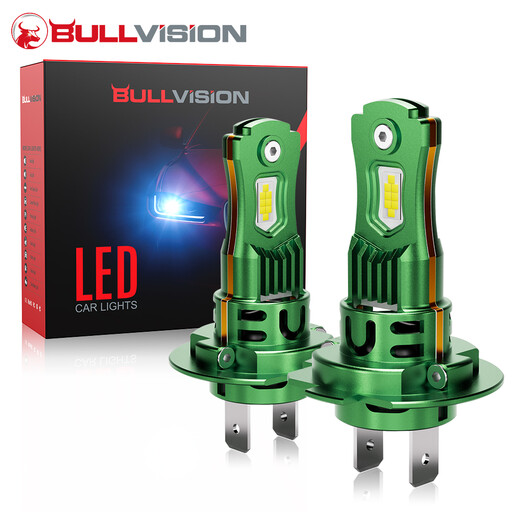
Why This Fits Their Persona: A great all-round choice for the everyday commuter who needs a reliable, noticeable improvement in night-time visibility for their daily journeys without over-complication.
It tackles the CANbus compatibility gamble with a built-in intelligent driver designed for high vehicle compatibility, reducing the risk of dashboard errors on most UK cars.
This bulb offers a balanced package: a 1:1 size for easy fitting, a focused beam pattern that improves visibility without glare and a durable aluminium build with a cooling fan.
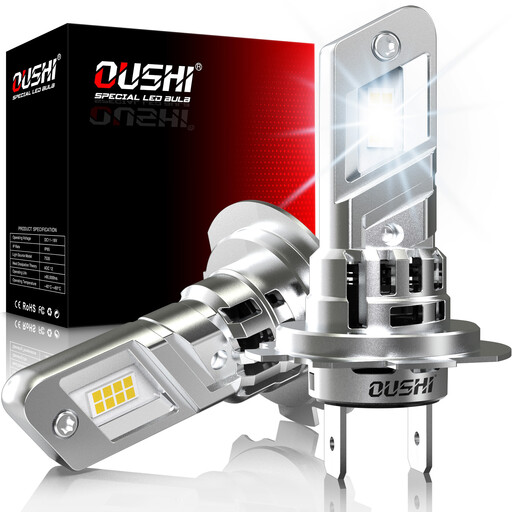
Why This Fits Their Persona: For the enthusiast who wants a significant jump in performance. This bulb is aimed at delivering a powerful, bright H7 LED bulb experience with a sharp, modern aesthetic for their vehicle.
It avoids the "overstated brightness" trap by pairing its high output with an efficient high-speed turbo fan and aluminium housing, ensuring the brightness is sustained and the bulb has a long operational life.
The primary benefit is the high lumen output for a much wider and farther field of vision. It also features an advanced CANbus system, making it well-suited for sensitive European vehicles.
We have compiled a complete, real-time list of products that fully satisfy these strict selection criteria and UK safety regulations.
This is an important consideration. According to DVSA guidelines, fitting LED bulbs into a headlight unit originally designed for halogen bulbs is technically an MOT failure. The reasoning is that the housing and reflector are not type-approved for an LED light source. However, enforcement can vary. If the LED bulb has a correct beam pattern that doesn't cause glare to other road users, it may not be flagged by the tester. For guaranteed compliance, you should refit the original halogen bulbs before your MOT test. Many drivers use them for the significant safety benefits in night-time driving and swap them out once a year for the test.
No, a 6500K H7 bulb produces a colour temperature that is best described as pure or cool white, very similar to natural daylight. It is on the cool end of the white spectrum but does not have a strong blue tint. This crisp white light provides excellent contrast, making road signs and hazards easier to see and gives a vehicle a much more modern appearance compared to the yellowish 4300K of a typical halogen bulb.
While many products advertise lifespans of 50,000 hours or more, the real-world longevity depends almost entirely on the quality of the bulb's cooling system. A well-engineered bulb with an effective fan or a large aluminium heat sink can genuinely last for many years, far outliving multiple sets of halogen bulbs. Conversely, a cheaply made bulb with poor heat management will overheat, causing its brightness to fade rapidly and leading to failure in a matter of months. This is why choosing a bulb with a proven cooling design is crucial for long-term value.