
24/7 Customer Support

Free returns

Same-day & Next-day Delivery

Quality Guaranteed

Unlock Your Welcome Offers: FREE Delivery | Up to 80% OFF | Free 30-day JoyPlus trial
Download the APP
Driving on poorly lit British roads after dark can be a challenge, especially with the dim, yellowish glow of standard halogen bulbs. If you find yourself straining to see the road ahead or wanting to give your vehicle a more modern appearance, upgrading to an H7 LED headlight bulb is a practical solution. These bulbs offer improved visibility, a longer lifespan and a crisp, clean light.
This guide is designed to help you navigate the options. We will outline key features to look for and present a selection of H7 bulbs that offer reliable performance and straightforward installation, helping you make a confident choice for your car, van or motorcycle.
Before purchasing, consider these factors to ensure you get the right fit and performance for your vehicle and UK driving conditions.
The performance of an LED bulb is often described by its brightness (lumens) and colour temperature (Kelvin). While many brands claim significant brightness increases, focus on the colour temperature. A 6000K H7 bulb or 6500K bulb produces a cool, white light that is very similar to natural daylight. This can make it easier to spot hazards on the road and may reduce eye strain during long night-time drives compared to the warm yellow of halogens.
For many UK motorists, a simple DIY upgrade is the goal. Look for a plug and play H7 LED bulb with a "1:1 mini size" design. This means the LED bulb has the same dimensions as the original halogen bulb it's replacing, allowing it to fit directly into the headlight housing without needing extra adapters or modifications to the dust cover.
Additionally, many modern vehicles use a CANbus (Controller Area Network) system to monitor the vehicle's electrics. A standard LED bulb can sometimes trigger a dashboard error message because it draws less power than a halogen. A CANbus H7 LED bulb has a built-in decoder or resistor to communicate correctly with the car's computer, preventing these errors.
A crucial aspect of any headlight upgrade is the beam pattern. A well-designed H7 LED bulb will mimic the filament position of a halogen bulb, ensuring the light is focused correctly on the road. This creates a sharp cut-off line that illuminates your path without dazzling oncoming drivers, a key consideration for road safety and passing an MOT test. Also, look for bulbs with effective cooling systems (like fans or heat sinks) and a good IP rating (e.g., IP68) for resistance to water and dust, ensuring longevity in all weather conditions.
Here are a few H7 LED options that stand out for their features and design, catering to different user needs.
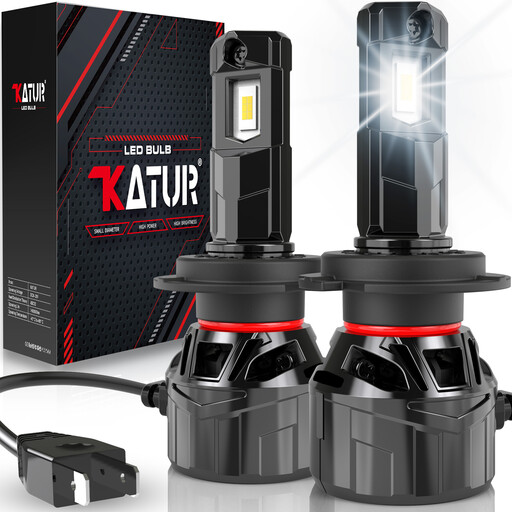
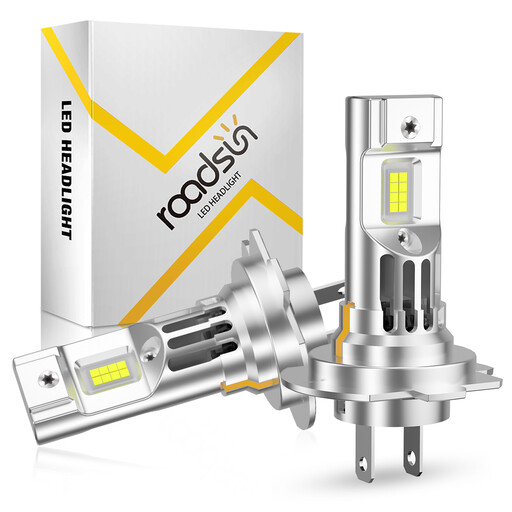
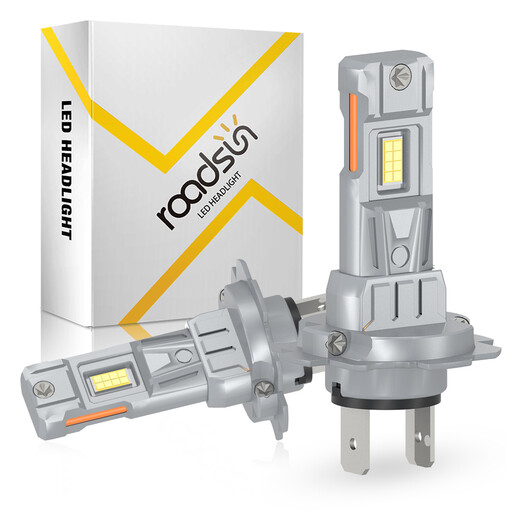
If these specific H7 headlight bulbs aren't the right fit for your vehicle, or if you're looking for a different bulb type, there are many other solutions available.
Explore our full range of vehicle headlights to find the perfect match for your car.
As of 2026, regulations require that any replacement headlight bulb maintains the original beam pattern to be road legal and pass an MOT. While many aftermarket LED bulbs are designed to do this, it's important to choose a quality product that focuses the light correctly. Always ensure your headlights are properly aligned after installation to avoid dazzling other drivers. Some products may be designated for off-road use only, so it is wise to check the product details.
This depends on your vehicle. Many modern cars, particularly from European manufacturers (like VW, BMW, Audi and Mercedes-Benz), use a CANbus system. If you install an LED bulb without a decoder in these cars, you may see a "bulb out" warning on your dashboard. Many H7 LED bulbs now come with a CANbus-ready design built-in, but for some highly sensitive systems, a separate external decoder might still be necessary.
Both 6000K and 6500K fall into the "cool white" light spectrum. A 6000K H7 bulb emits a pure, neutral white light. A 6500K bulb has a slightly cooler, more bluish tint, which is very close to the colour of natural daylight at noon. The difference is subtle and the choice between them is largely a matter of personal preference.