
24/7 Customer Support

Free returns

Same-day & Next-day Delivery

Quality Guaranteed

Unlock Your Welcome Offers: FREE Delivery | Up to 80% OFF | Free 30-day JoyPlus trial
Download the APP
Upgrading your car’s standard halogen bulbs to an H7 LED headlight bulb can transform your night-time driving experience. The promise of a brighter, clearer view of the road and a modern, crisp white light is appealing. However, the market is filled with confusing claims and technical jargon, making it easy to choose a product that underdelivers or, worse, causes new problems.
As the Joybuy Product Recommendation Officer, my role is to help you navigate these choices. This guide cuts through the clutter, focusing on the practical details that matter for UK drivers. We will look at the common pitfalls to avoid and the key features to check before you buy, ensuring your car headlight upgrade kit is a success.
Many drivers find their excitement for a lighting upgrade quickly turns to frustration. Here are three frequent issues and how to sidestep them:
To ensure you get a reliable and effective upgrade, focus on these three non-negotiable specifications.
The Controller Area Network, or CANbus, is the system that allows your car's electronic components to communicate. When you replace a 55W halogen bulb with a lower-wattage LED, the system can misinterpret this as a fault, triggering an error. For a hassle-free installation, look for an H7 canbus led bulb with a high-quality, built-in intelligent driver specifically designed to work with the sensitive systems found in many UK and European vehicles. This minimises the risk of errors without needing extra parts.
A genuine plug and play H7 bulb should require no adapters or modifications. Before purchasing, verify that the bulb has a truly compact, all-in-one design. This means no external driver boxes or wires that need to be tucked away. Pay close attention to the cooling mechanism. While fanless designs can be good for very tight spaces, a high-speed (e.g., 10,000+ RPM) turbo fan integrated into an aviation-grade aluminium body is generally more effective at actively dissipating heat, which is crucial for maintaining brightness and ensuring a long operational life.
A brighter bulb is only useful if the light is directed properly. A poorly designed bulb will scatter light, creating glare that can dazzle oncoming drivers and may not pass an MOT inspection. Look for bulbs that explicitly mention a design that mimics the original halogen filament placement to ensure a focused beam pattern without dark spots. For colour, a 6500K H7 bulb is a popular choice, producing a crisp, modern white light that is close to natural daylight, improving visibility and reducing eye strain during long drives. This colour is also suitable for use as an H7 fog light bulb.
We have filtered the options based on the criteria above. Here are our recommendations, matched to different driver needs.
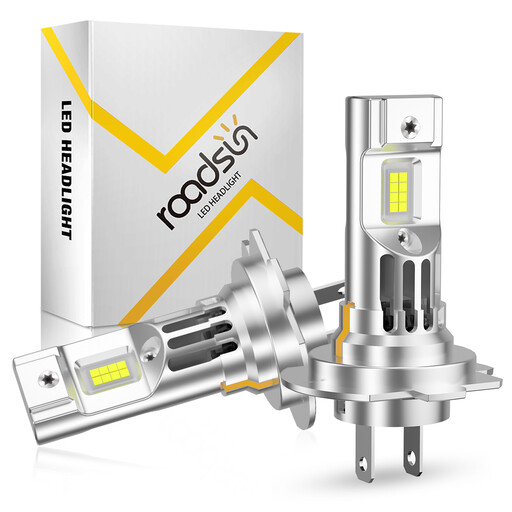
Why This Fits Their Persona: This user wants a straightforward, noticeable improvement over stock halogen bulbs without overspending. They value reliability and a simple DIY installation for their daily driver.
Its design requires no additional adapters or external drivers, directly countering the "1:1 size" deception. This ensures a true plug-and-play fit where the dust cap can be properly re-sealed.
Features a built-in high-speed fan for active heat dissipation, promoting a more realistic lifespan. The 6500K white light provides a significant visual upgrade for both headlights and fog lights.

Why This Fits Their Persona: This driver prioritises maximum illumination and has a modern vehicle, possibly a European make. They want a very bright H7 LED bulb and are looking for a high-performance solution that minimises electronic compatibility issues.
It directly addresses the CANbus pitfall by incorporating an advanced CANbus system designed for high compatibility with 98% of vehicles, reducing the likelihood of dashboard errors or radio interference.
The combination of high lumen output (30,000LM per pair) and a high-speed turbo fan for cooling delivers on the promise of intense, sustained brightness. The 1:1 mini size ensures it fits without modification.
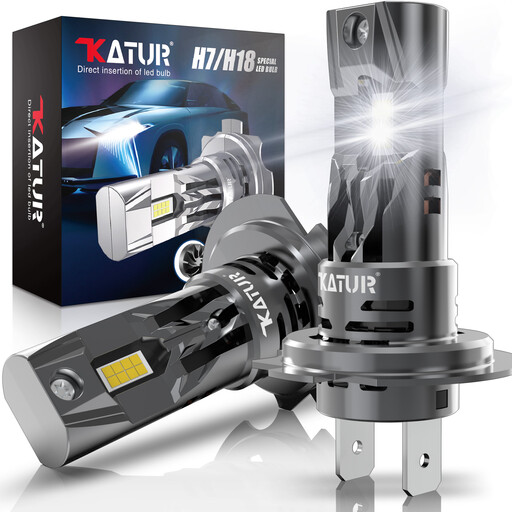
Why This Fits Their Persona: This user is comfortable with DIY projects but owns a car with notoriously tight headlight housings. For them, a guaranteed fit without needing to cut or modify the dust cover is the most important factor.
This bulb's "1:1 mini size" and wireless, all-in-one design is its main strength. It is specifically engineered to fit into factory sockets with limited space, ensuring a quick 5-minute installation is achievable.
Despite its compact size, it doesn't compromise on performance. It features a powerful 16,000 RPM turbo fan and a smart external driver for CANbus compatibility, offering high brightness in a small package.
We have compiled a complete, real-time list of products that fully satisfy these strict selection criteria and UK safety regulations.
The regulations surrounding aftermarket LED headlight bulbs in the UK are specific. For a vehicle to be road legal, the entire headlight unit (the housing and the light source) must be type-approved and carry an 'E' mark. Retrofitting an LED bulb into a halogen unit means the unit is no longer in its type-approved state. Therefore, they are generally not considered road legal and may cause an MOT failure. Many drivers use them for off-road purposes or accept the risk for on-road use. It is advisable to check the latest DVSA guidelines before fitting them to a road-going vehicle.
First, check your vehicle's owner's manual or look at the existing bulb to confirm the fitment code is H7. This ensures the base will match your car's socket. Secondly, pay close attention to the bulb's dimensions, especially the length and the size of the cooling fan at the rear. Compare these measurements to the available space inside your car's headlight housing to ensure you can refit the dust cover after installation.
Not always, but it is becoming more common. Vehicles from manufacturers like Volkswagen, Audi, BMW and Mercedes-Benz are particularly sensitive. To avoid potential issues, it is a good practice to choose an H7 LED bulb that has a high-quality, integrated CANbus decoder system. While many claim 98-99% compatibility, be aware that a small number of very sensitive vehicles may still require an additional, external decoder.