
24/7 Customer Support

Free returns

Same-day & Next-day Delivery

Quality Guaranteed
Download the APP
Categories
Straining to see the road ahead on a dark, rainy night? You are not alone. Many UK drivers find their vehicle's standard halogen headlights produce a dim, yellowish light that can reduce visibility and increase fatigue. Upgrading to H7 LED headlight bulbs is a popular solution, offering a brighter, whiter light that can transform your nighttime driving experience.
However, the market is filled with technical jargon and ambitious claims, making it difficult to choose the right product. This guide is designed to cut through the clutter. As a Joybuy Product Recommendation Officer, my role is to provide clear, practical advice to help you find a reliable and effective lighting upgrade for your car. We will explore key features to look for and highlight some of our top recommendations for 2026.
Before diving into specific products, let's cover the essential factors to consider. Understanding these will help you make a more informed decision for your H7 headlight bulb replacement.
While high brightness, measured in lumens (lm), is a key benefit of LED technology, it is only half the story. A quality H7 LED bulb must also have a precise beam pattern. This ensures the light is focused correctly on the road ahead, illuminating your path without creating glare that can dazzle oncoming drivers. Look for bulbs designed with a 1:1 halogen filament placement, as this helps replicate the original, safe beam pattern your car's headlights were designed for.
Colour temperature, measured in Kelvin (K), determines the colour of the light. Traditional halogens are typically around 3200K, giving them a warm, yellowish hue. Most H7 LED conversion kits are rated between 6000K and 6500K. This produces a crisp, cool white light, similar to daylight, which can improve contrast and make it easier to spot hazards, road signs and markings at night.
For many drivers, ease of installation is paramount. A plug and play H7 LED bulb is designed to be a direct replacement for your halogen bulb, with no need for complex wiring or modifications. Another critical factor is your car's computer system. Many modern vehicles use a CANbus (Controller Area Network) system to monitor bulb function. Installing a non-compliant LED can trigger dashboard error warnings or flickering. A CANbus H7 LED bulb has built-in circuitry to prevent these issues, ensuring seamless integration with most vehicles.
Here are a few H7 LED bulb options that stand out based on their features and design.
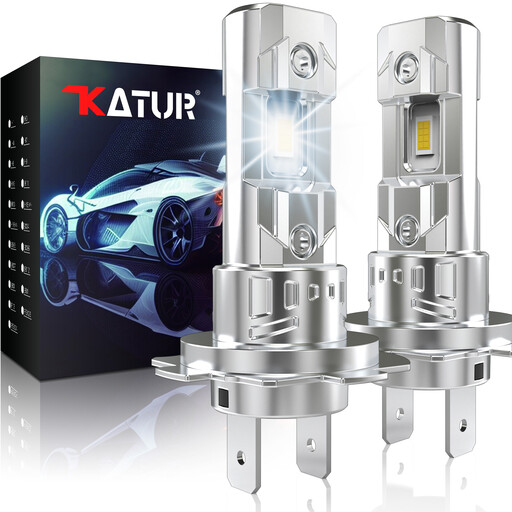
Why It Stands Out: The KATUR H7 bulb's main advantage is its fanless, all-in-one design. By using an aviation-grade aluminium body for passive heat dissipation, it eliminates the potential noise and failure point of a mechanical fan, making it a durable and silent option.
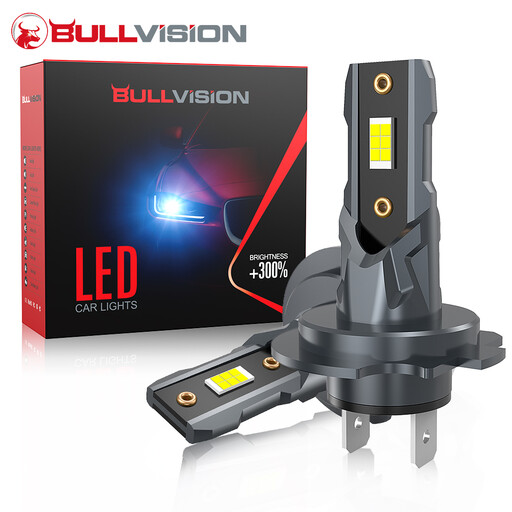
Why It Stands Out: Bullvision focuses on replicating the original halogen beam pattern with its 1:1 design and ultra-thin chip spacing. This aims to provide a focused light beam that maximises visibility down the road while minimising glare for other road users.
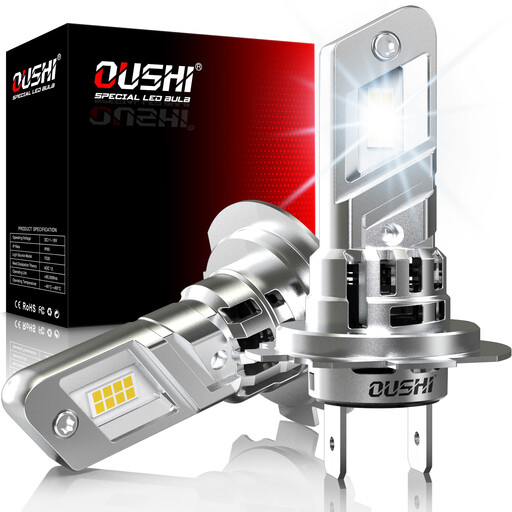
Why It Stands Out: According to OUSHI, these bulbs offer a significant increase in brightness over standard halogens. They combine high light output with an integrated high-speed fan and an advanced CANbus system, making them a powerful option for modern vehicles, including many European models.
The H7 fitment is one of the most common, but every car is different. If these recommendations do not quite match your vehicle's requirements or you are looking for a different type of lighting, there are many other solutions available.
️ Explore our full range of Car Lights on Joybuy.co.uk
1. Are H7 LED bulbs legal for road use in the UK? The legal situation in the UK regarding aftermarket LED bulbs is complex. As of our last update, fitting LED bulbs into a headlight unit originally designed for halogen bulbs is generally not considered road legal for MOT purposes. They are often sold for "off-road" use. We strongly advise you to check the latest DVSA guidelines and verify the legality for your specific vehicle and usage before purchasing.
2. Will I need a separate CANbus decoder for my car? Many modern H7 LED bulbs are "CANbus ready," meaning they have the necessary components built-in to work with most vehicles without causing errors. However, some highly sensitive vehicles, particularly from European brands, may still require an additional external CANbus decoder to prevent flickering or dashboard warnings. The product descriptions often provide guidance on this.
3. How difficult is an H7 headlight bulb replacement? For most vehicles, replacing an H7 bulb is a relatively simple task. The plug and play models featured here are designed to fit directly into the factory socket without any modification, making the installation process similar to changing the original halogen bulb. We always recommend consulting your vehicle's owner manual for specific instructions.