
24/7 Customer Support

Free returns

Same-day & Next-day Delivery

Quality Guaranteed

Unlock Your Welcome Offers: FREE Delivery | Up to 80% OFF | Free 30-day JoyPlus trial
Download the APP
Replacing dim standard halogen bulbs can make night driving more comfortable, but choosing H7 LED headlight bulbs based only on a large lumen number can lead to wasted money, fitting problems or an unsuitable beam pattern. UK drivers also need to consider vehicle compatibility, headlamp design and road-use requirements before ordering.
This guide explains the practical checks to make when comparing H7 LED bulbs for cars, vans, motorcycles, ATVs and UTVs.
Listings may promote figures such as 20,000LM or 30,000LM LED headlight bulbs, or describe an upgrade as several hundred per cent brighter than halogen. These figures are useful for comparing listed specifications, but they do not alone confirm how much usable light reaches the road.
Beam control matters just as much. A poorly positioned LED chip can create dark patches, excessive foreground light or glare for oncoming drivers. Look for a design that places the LED chips in a position intended to replicate the original filament and check the beam after installation.
An H7 socket confirms the bulb base type, not that every H7 car headlight bulb will fit the housing. Dust-cover clearance, retaining clips, projector or reflector design and the vehicle’s onboard monitoring system can all affect installation.
A CANbus-ready LED bulb may reduce flickering or dashboard warnings on many vehicles, but it does not guarantee compatibility with every car. Some Volkswagen, Mercedes-Benz, BMW and similar models may require an additional decoder. Always compare the product details with your vehicle’s make, model, generation and production year before purchase.
LEDs use less power than many halogen bulbs, but they still produce heat around the LED chips. A small bulb with an integrated cooling fan may fit neatly, yet fan noise or eventual fan wear can become a consideration. Fanless designs avoid moving parts but need a suitable aluminium heat sink and enough space inside the headlamp.
Look beyond claims about long service life and check the actual cooling method, bulb dimensions and whether the original dust cover can be refitted.
First, remove the existing bulb only after switching off the ignition and allowing the lamp to cool. Confirm that the original bulb is marked H7. Do not rely solely on a vehicle registration lookup or a “universal” description.
A 1:1 mini-size LED bulb is shaped to approximate the dimensions of a standard halogen bulb. This can be useful where the headlamp housing has limited room. Measure the rear clearance and check whether the bulb has an external driver, cable or bulky cooling assembly.
Many H7 LED bulbs list 6000K cool white LED bulbs, while some products specify 6500K. Cool white light can appear sharper than the warmer colour of a halogen bulb, but colour temperature is not a direct measurement of road illumination.
For high and low beam LED bulbs, look for:
After installation, check the beam height and cut-off. If the replacement produces glare or an uneven pattern, refit the original bulbs or seek professional advice.
An LED bulb with cooling fan may use a high-speed fan, aluminium housing or hollow heat sink to move heat away from the chips. Fanless H7 LED bulbs instead depend on passive heat dissipation and can be attractive where quiet operation and compact installation are priorities.
For UK weather, a listing may specify IP65 or IP68 waterproof protection. This describes resistance to dust and water under stated test conditions; it does not mean the bulb can be submerged or that a poorly sealed headlamp becomes weatherproof.
Finally, check the voltage range, polarity requirements and CANbus information. “Plug-and-play” usually means the bulb connects to the original socket, but it does not remove the need to inspect the fitting, test both lamps and confirm that no warning light appears.
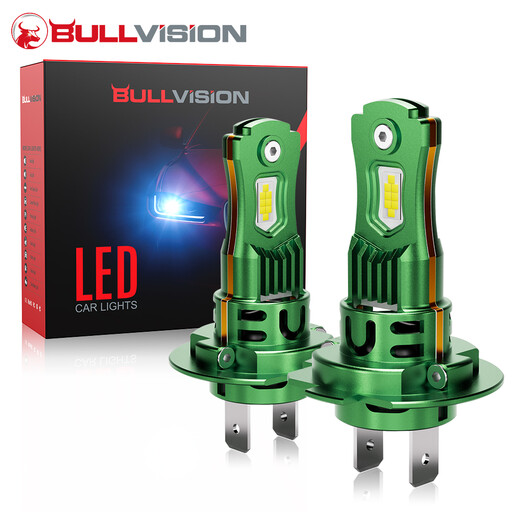
Why This Fits Their Persona: A straightforward option for DIY motorists seeking 6000K light, 1:1 sizing and a direct replacement format for a compatible H7 socket.
The listing identifies a 1:1 design, cooling fan and waterproof construction rather than relying only on a brightness figure. It also warns that some vehicles need a CANbus decoder.
6000K cool white output; pack of two; listed 50,000-hour operating life and IP68 waterproof specification.
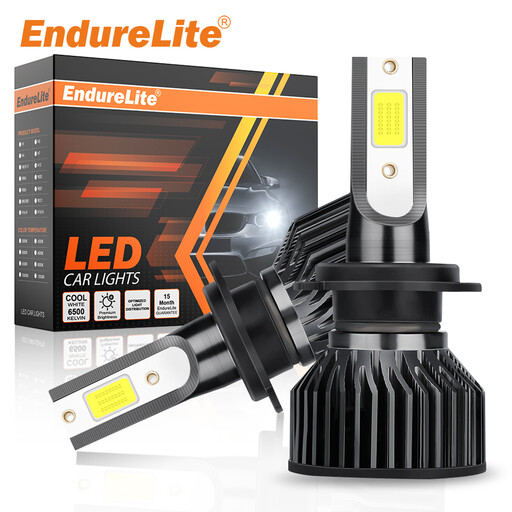
Why This Fits Their Persona: Suitable for drivers who want a multi-fit kit with an integrated driver, active cooling and a stated focus on beam positioning.
The product information lists a 1:1 beam-pattern approach, built-in fan and CANbus-ready driver. These features should still be checked against the specific vehicle.
6000K colour temperature; IP68 specification; aluminium alloy shell and built-in fan rated at 10,000 RPM in the listing.
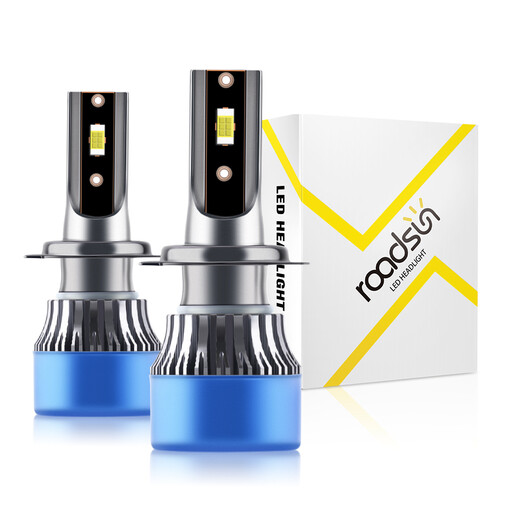
Why This Fits Their Persona: Designed with cars, motorcycles, ATVs and UTVs in mind, making it relevant for outdoor driving and powersports use where compact, weather-resistant lighting is important.
The listing gives a 1:1 mini-size design, direct H7 connection and stated resistance to dust, water, vibration and temperatures from -40°C to +85°C.
6000K output; plug-and-play format; suitable for listed H7 headlight and fog-light applications.
Before fitting, switch off the vehicle, remove the key and allow the original bulbs to cool. Wear gloves, avoid touching the LED chips and retain the original clips. If a bulb does not illuminate, check its polarity or rotate the connector if the instructions allow this.
Test both sides and inspect the beam against a flat wall. The beam should remain even, with the correct cut-off and no obvious glare. Headlamp alignment may need adjustment after replacement.
A bulb being advertised as plug-and-play does not automatically confirm approval for every UK public-road application. Check the vehicle handbook, product documentation and applicable UK lighting requirements. Some LED retrofits may be suitable for off-road or powersports use but not appropriate for a particular road vehicle or headlamp housing. If uncertain, ask a qualified garage to check the installation and beam pattern.
We have compiled a complete, real-time list of products that fully satisfy these strict selection criteria and UK safety regulations.
Some H7 LED bulbs are listed for both applications, but suitability depends on the lamp housing, beam pattern and vehicle approval requirements. Confirm that the original fog-light or headlight bulb is H7 before ordering.
Product listings commonly state operating-life figures of 50,000 to 60,000 hours. These are stated specifications rather than a guarantee of real-world service life. Heat, vibration, moisture, electrical conditions and fan wear can affect longevity.
They may have a lower listed wattage than the original halogen bulb, but compare the complete pair’s wattage and the vehicle’s electrical system. Lower consumption does not compensate for an incorrect beam pattern, poor fit or CANbus warning.