
24/7 Customer Support

Free returns

Same-day & Next-day Delivery

Quality Guaranteed

Unlock Your Welcome Offers: FREE Delivery | Up to 80% OFF | Free 30-day JoyPlus trial
Download the APP
By Joybuy Product Recommendation Officer
Navigating poorly lit country lanes or driving through a downpour at night can be a stressful experience with standard halogen headlights. That familiar, dim yellow glow often doesn't provide the clarity needed to spot hazards in advance. If you're looking for a straightforward way to improve your nighttime visibility and give your vehicle a more modern appearance, an H7 LED headlight bulb upgrade is a popular choice.
The market is filled with options, each claiming to be brighter and better than the last. My role is to help you understand the key features that matter. This guide will walk you through what to look for in an H7 bulb replacement and present a few carefully selected options to help you make an informed decision.
Before diving into specific products, let's cover the essential features you'll encounter. Understanding these will help you choose the right bulbs for your car and your driving needs.
The two most important specifications here are lumens (lm) and Kelvin (K).
One of the biggest advantages of modern LED conversion kits is their ease of installation. Look for bulbs described as plug and play H7 LED. This means they are designed to fit directly into your car's existing headlight housing and connect to the factory socket without any complicated wiring or modifications. A mini size H7 LED is often beneficial, as these bulbs mimic the 1:1 dimensions of a traditional halogen bulb, ensuring they fit even in housings with limited space and allow the dust cover to be refitted correctly.
Many modern vehicles, particularly those from European manufacturers, use a Controller Area Network (Canbus) system to monitor the vehicle's electrical components. Because LED bulbs draw less power than halogens, the Canbus system can mistakenly interpret this as a fault, leading to a dashboard error message or flickering lights. To avoid this, it's wise to choose a Canbus ready H7 bulb. These bulbs have built-in resistors or an external driver to communicate correctly with the car's computer, ensuring smooth, error-free operation for the vast majority of vehicles.
Based on features that offer a balance of performance, reliability and ease of use, here are our recommendations for your consideration.
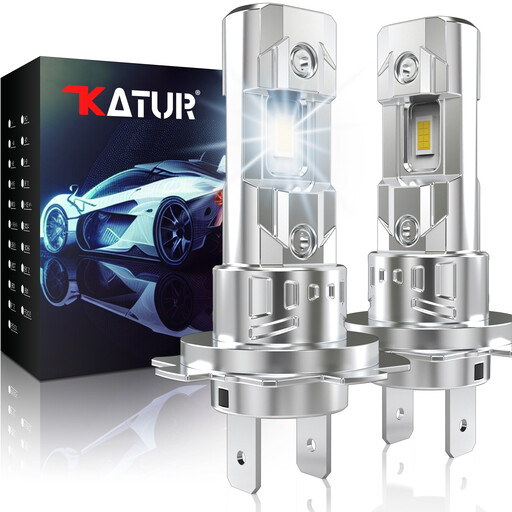
Why It Stands Out: This bulb's main advantage is its fanless design. By using an aviation-grade aluminium body for passive heat dissipation, it operates silently. This eliminates any potential noise from a cooling fan and removes a mechanical part that could fail over time.
Pros:
Who is it for? This is an excellent choice for drivers who prioritise reliability and silent operation, and for those with compact headlight housings where a simple, direct-fit bulb is essential.
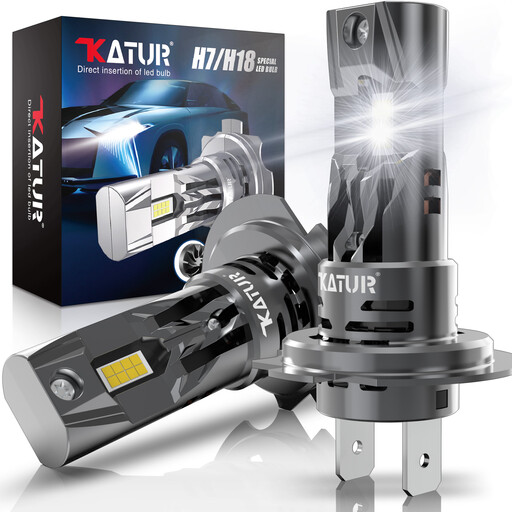
Why It Stands Out: This model focuses on high light output, featuring a powerful 16,000 RPM turbo fan to actively cool the LED chips. This active cooling helps maintain consistent brightness during long periods of use, making it a strong performer for those who frequently drive at night.
Pros:
Who is it for? Ideal for drivers who want exceptionally bright H7 headlight bulbs for maximum illumination on dark roads and motorways.
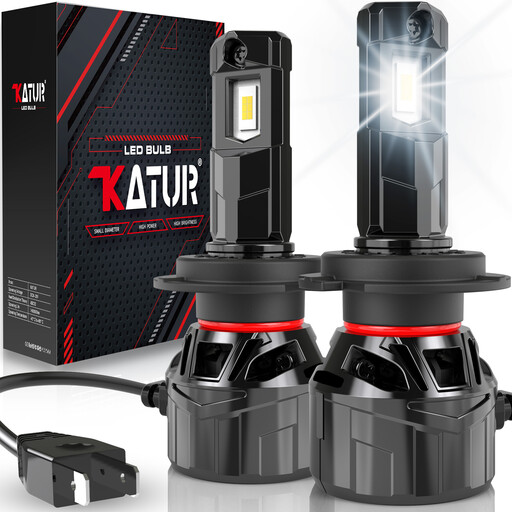
Why It Stands Out: This option combines high power with a robust cooling system designed for longevity. With a stated power of 120W per pair and an efficient heat dissipation structure, it's built for sustained high performance.
Pros:
Who is it for? This bulb is suited for the enthusiast looking for a high-output lighting solution that also incorporates features designed for long-term durability.
While these three models represent a solid starting point for many drivers, we understand that every car and owner has unique needs. If you're looking for different specifications or simply wish to browse a wider selection of vehicle upgrades, we invite you to explore our full range.
[Explore More in Car Exterior Accessories](https://www.joybuy.co.uk/explore/car-exterior-accessories/2a3egTmI)
The regulations for aftermarket headlight bulbs in the UK can be specific. For a bulb to be road legal and pass an MOT test, it must be E-marked, produce the correct beam pattern without causing glare and maintain the correct colour. We advise you to check the latest DVSA guidelines and ensure any bulbs you fit are installed and aligned correctly to meet these standards.
A good rule of thumb is that most cars manufactured from the mid-2000s onwards, especially from European brands like Audi, BMW, Volkswagen and Mercedes-Benz, use a Canbus system. If your car's dashboard currently displays a warning when a standard bulb fails, it almost certainly requires a Canbus ready H7 bulb to avoid similar errors with an LED upgrade.
This is a valid concern. Dazzle is typically caused by a poor beam pattern or incorrect headlight alignment, not just brightness alone. Reputable LED bulbs are designed with precise chip placement to replicate the beam pattern of a halogen bulb. This focuses the light down onto the road and away from the eyes of oncoming drivers. After installing any new H7 LED bulb, it is always good practice to check your headlight alignment to ensure it is correct.