
24/7 Customer Support

Free returns

Same-day & Next-day Delivery

Quality Guaranteed

Unlock Your Welcome Offers: FREE Delivery | Up to 80% OFF | Free 30-day JoyPlus trial
Download the APP
Struggling to see clearly on dimly lit roads with your vehicle's standard halogen headlights? You're not alone. That warm, yellowish glow often lacks the power and clarity needed for modern driving, especially during the UK's long winter nights or in poor weather. Upgrading to an H7 LED headlight bulb is a popular choice for drivers seeking improved visibility, enhanced safety and a more contemporary look for their car, van or motorcycle.
However, the market is filled with technical jargon and bold claims, making it difficult to choose the right product. This guide is designed to cut through the jargon. As the Joybuy Product Recommendation Officer, my role is to provide you with practical, objective information to help you find a reliable car headlight upgrade that suits your needs and vehicle.
Before diving into specific products, let's cover a few key factors to consider. Focusing on these will help you make a more informed decision.
The primary reason for upgrading is to see better. Brightness in bulbs is measured in lumens (lm). While higher lumens generally mean bright H7 headlight bulbs, the quality of the light is equally important. Look for a colour temperature around 6000K. An H7 LED bulb 6000K produces a crisp, cool white light that is very similar to natural daylight. This reduces eye strain and makes it easier to spot hazards on the road compared to the yellow hue of halogen bulbs.
For most DIY enthusiasts, a straightforward installation is essential. The ideal solution is a plug and play H7 bulb. These are designed with a 1:1 mini size, meaning they have the same dimensions as the original halogen bulb they are replacing. This ensures they fit directly into the headlight housing without needing extra adapters or modifications. Additionally, many modern vehicles use a CANbus system to monitor the lighting. To avoid dashboard error messages or flickering, look for bulbs that are "CANbus ready" or consider if your vehicle might need a separate decoder.
A crucial, and often overlooked, aspect of any H7 LED conversion kit is the beam pattern. A well-designed LED bulb will precisely mimic the filament position of a halogen bulb. This creates a focused beam of light that illuminates the road ahead without scattering and dazzling oncoming drivers. A correct beam pattern is not only courteous but is also a key requirement for your vehicle to pass its MOT inspection.
Here are a few H7 LED bulb options that stand out for their design, features and user-friendly installation.
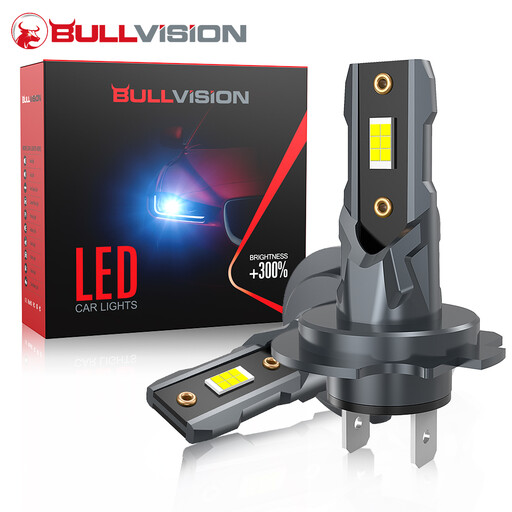
Why It Stands Out: The Bullvision H7 bulbs offer a balanced approach, combining a significant brightness increase with features designed for longevity. The inclusion of a high-speed cooling fan helps to dissipate heat effectively, which is critical for maintaining performance and extending the bulb's operational life.
Pros:
Who is it for? Drivers looking for a reliable, all-around performance upgrade that prioritises both brightness and long-term durability through active cooling.
Please note: The manufacturer states that an additional CANbus decoder may be required for certain Volkswagen, Mercedes-Benz and BMW models.
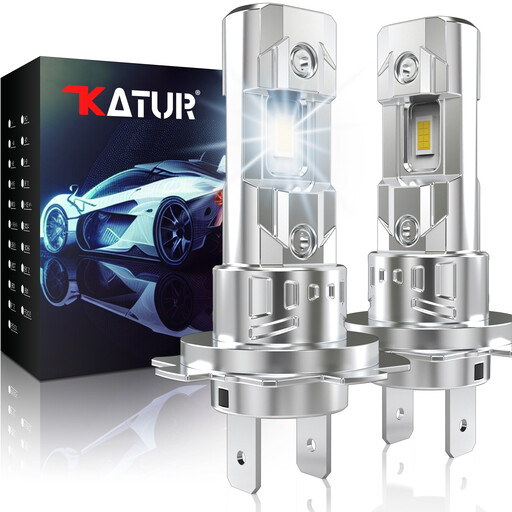
Why It Stands Out: The KATUR H7 bulbs are notable for their fanless design. By eliminating the cooling fan, they offer completely silent operation and remove a potential point of mechanical failure. This, combined with a very compact mini size, makes them an excellent choice for vehicles with tight headlight housings.
Pros:
Who is it for? Vehicle owners who value silent operation and need a particularly compact bulb for an easy installation in headlight assemblies with limited space.
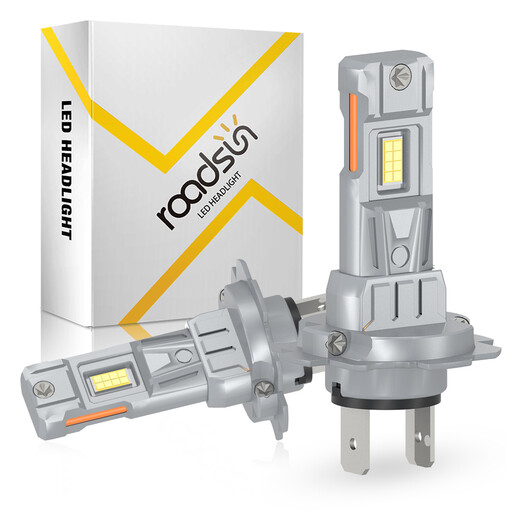
Why It Stands Out: The Roadsun H7 bulb is positioned for those seeking a very high level of brightness. According to the brand, it delivers up to 800% more light than halogen bulbs. Its versatility is also a key feature, as it's suitable for use as a main headlight, an H7 fog light and even in powersports vehicles like motorcycles and ATVs.
Pros:
Who is it for? Users who prioritise maximum illumination and need a versatile, robust bulb that can perform in a variety of vehicles and weather conditions, from daily commuting to off-road adventures.
The H7 fitting is one of the most common, but every vehicle is different. If these recommendations don't quite match what you're looking for or if you need a different fitting type, there are many other solutions available.
? Explore our full range of Car LED headlights to find the perfect fit for your vehicle.
1. Are H7 LED conversion kits legal in the UK? The use of aftermarket LED bulbs in the UK is a nuanced area. For a bulb to be road legal, it must be E-marked and the headlight unit must be designed for LED use. However, for the annual MOT test, the primary criteria are that the beam pattern is correct, does not cause dazzle and the light colour is appropriate (white or yellow). Choosing a high-quality bulb designed to replicate the original halogen beam pattern is the most important step towards compliance and safety.
2. Do I need a CANbus decoder for my H7 LED bulbs? Many modern cars, particularly European brands, use a CANbus system to check if all bulbs are working correctly. Since LEDs draw less power than halogens, the system can sometimes mistakenly report a "bulb out" error or cause the lights to flicker. While many LED bulbs are "CANbus ready" with built-in resistors, some highly sensitive vehicle systems may still require an additional, external CANbus decoder to function correctly. It's wise to check forums for your specific car model to see what other owners have experienced.
3. What is the difference between an H7 headlight bulb and an H7 fog light? The "H7" designation refers to the type of fitting—the base of the bulb that locks into the housing. There is no inherent difference in the bulb itself. If your vehicle uses an H7 fitting for both the main headlights and the fog lights, the same H7 fog light bulb can technically be used in either location. However, the performance in fog depends more on the beam pattern and colour temperature than the bulb's label.