
24/7 Customer Support

Free returns

Same-day & Next-day Delivery

Quality Guaranteed

Unlock Your Welcome Offers: FREE Delivery | Up to 80% OFF | Free 30-day JoyPlus trial
Download the APP
Straining to see the road ahead with dim, yellowish halogen headlights is a common frustration for many UK drivers. Whether you're navigating a dark country lane or driving in heavy rain, poor visibility is more than just an inconvenience—it's a safety concern. Upgrading to modern H7 LED headlight bulbs offers a significant improvement in brightness and clarity, but the market is filled with technical jargon and confusing options.
This guide is designed to cut through the jargon. As the Joybuy Product Recommendation Officer, my role is to provide clear, practical advice to help you find a reliable lighting upgrade for your vehicle. We will explore the key features to look for and present some carefully selected options to consider for your car.
Before jumping into product recommendations, it's helpful to understand a few key factors. This will ensure you select a set of bulbs that not only fits your car but also meets your expectations for performance and reliability.
The most noticeable change when moving from halogen to LED is the quality of light. This is measured in two ways:
Many car owners are looking for a straightforward plug and play headlight upgrade. The ideal H7 LED bulb should have a 1:1 design, meaning its size and base are identical to the standard halogen bulb it's replacing. This eliminates the need for special adapters, brackets or modifications to the headlight housing, making installation a simple DIY task for most people. Always check that the bulb's design is compact and matches the original halogen replacement bulbs.
Modern vehicles use a Controller Area Network (CANbus) system to monitor the car's functions, including the headlights. Because LED bulbs draw less power than halogens, the CANbus system can sometimes misinterpret this as a burnt-out bulb, resulting in a dashboard warning light or flickering. To avoid this, look for a Canbus error free H7 bulb. These are designed with built-in resistors or intelligent drivers to communicate correctly with your vehicle's computer system, ensuring smooth, error-free operation in the vast majority of cars.
Here are a few options available on Joybuy that align with the features discussed above. We've analysed their specifications to help you make an informed choice.
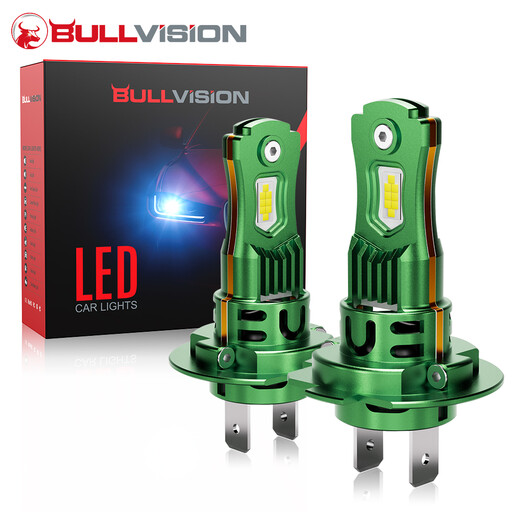
Why It Stands Out: The Bullvision H7 bulbs are designed with simplicity and performance in mind. Their main appeal is the 1:1 size match to stock halogen bulbs, which makes them a true plug-and-play option for many vehicles without requiring adapters. The manufacturer states they provide a 300% increase in brightness over stock bulbs, offering a significant boost in visibility.
Pros:
Who is it for?
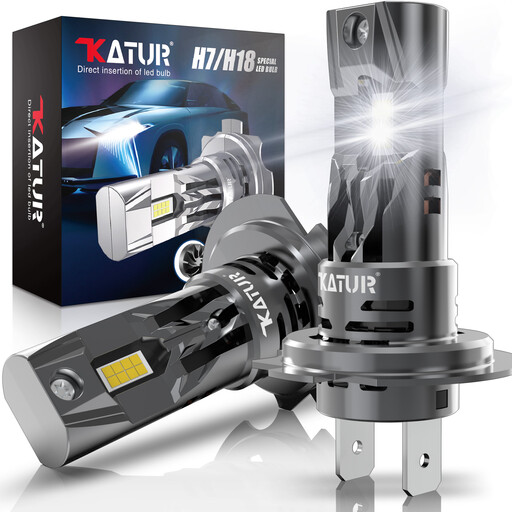
Why It Stands Out: For those seeking high-output lighting, the KATUR H7 bulbs are a compelling option. The manufacturer specifies a high power rating of 100W and 30000LM per pair, designed to deliver a powerful and far-reaching beam. Despite this high output, they maintain a 1:1 mini size for a straightforward installation. The use of an external driver helps manage heat and electronics separately from the bulb, which can contribute to a longer operational life.
Pros:
Who is it for?
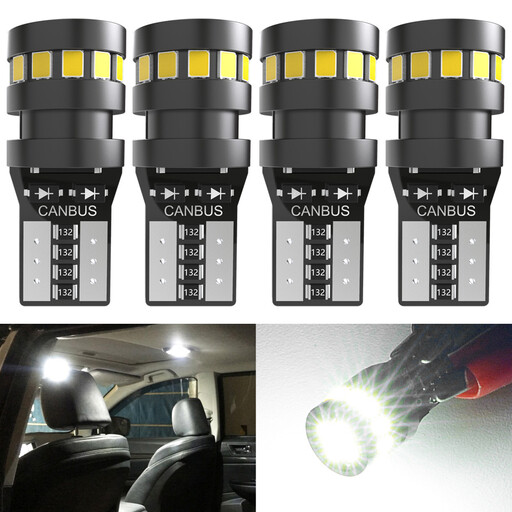
Why It Stands Out: While you're upgrading your headlights, you might notice your other exterior and interior lights now look dated and yellow by comparison. These OUSHI W5W (also known as T10 or 501) bulbs are not for your main headlights, but they are the perfect companion upgrade. They allow you to replace your side marker lights, number plate lights or interior dome lights to match the crisp 6500K Xenon White of your new headlights.
Pros:
Who is it for?
If these recommendations aren't quite what you're looking for, or if you'd like to explore a wider variety of lighting solutions, there are many more to discover.
? Browse our full collection of White LED bulb options on Joybuy.
1. Are H7 LED bulbs a direct replacement for halogens? In many cases, yes. Bulbs designed with a 1:1 size ratio, like the ones featured here, are intended to be a direct, 'plug-and-play' replacement for standard H7 halogen bulbs. This means they should fit into your car's headlight housing without any need for modification. However, it's always a good practice to check your vehicle's manual and the space available behind the headlight housing before purchasing.
2. Do I need to inform my insurance company if I change to LED headlights in the UK? Yes, it is advisable. Changing your factory-fitted halogen bulbs to LEDs is considered a modification to your vehicle. UK insurance providers generally require you to declare all modifications. Failing to do so could potentially affect your policy or a future claim. It's best to contact your insurer to inform them of the change.
3. Why are my new H7 LED bulbs flickering? Flickering is almost always related to the vehicle's CANbus system. The car's computer expects the higher power draw of a halogen bulb, and the low power draw of an LED can be misinterpreted as a fault. Choosing a Canbus error free H7 bulb with a built-in intelligent driver or resistor is the best way to prevent this. If flickering persists, an additional, more powerful CANbus decoder or anti-flicker adapter may be required.