
24/7 Customer Support

Free returns

Same-day & Next-day Delivery

Quality Guaranteed

Unlock Your Welcome Offers: FREE Delivery | Up to 80% OFF | Free 30-day JoyPlus trial
Download the APP
Struggling with dim, yellow halogen headlights on dark British roads? You're not alone. Standard H7 bulbs often fall short, especially during rainy nights or on unlit country lanes. An H7 LED bulb upgrade is one of the most effective ways to improve visibility, enhance safety and give your vehicle a modern, crisp look.
As the Joybuy Product Recommendation Officer, my role is to help you sort through the technical specifications and marketing claims. This guide focuses on practical, objective information to help you find reliable H7 LED headlight bulbs that are easy to install and compatible with your vehicle.
Choosing the right bulbs can feel complicated, but it comes down to a few key factors. Here’s what to prioritise for a hassle-free and effective upgrade.
The most noticeable change will be the brightness and colour of the light. Brightness is measured in lumens (LM), while colour temperature is measured in Kelvin (K). For a significant improvement over halogen, look for bulbs that offer a substantial increase in lumens.
Many drivers prefer 6000K H7 car bulbs or those around 6500K. This range produces a cool, clear white light similar to natural daylight, which can make it easier to spot hazards on the road. It provides a clean, modern aesthetic without being overly blue.
For most DIY enthusiasts, ease of installation is paramount. The ideal solution is a plug and play H7 LED bulb. Look for models advertised with a 1:1 mini size, meaning they are designed to be the same size and shape as the original halogen bulb. This design avoids the need for extra adapters, modifications to the headlight housing or external drivers, making the swap as simple as changing a standard bulb.
Modern vehicles, particularly European models, use a Controller Area Network (CANbus) system to monitor the vehicle's functions, including the headlights. A standard LED bulb draws less power than a halogen, which can cause the CANbus system to think a bulb has failed, resulting in a dashboard error message or flickering lights.
To prevent this, look for CANbus H7 LED bulbs. These have built-in resistors or intelligent drivers to communicate correctly with the vehicle's computer, ensuring smooth, error-free operation for the vast majority of cars. However, some sensitive vehicles may still require an additional decoder.
Here are a few H7 LED bulb options that stand out for their features, design and user-focused benefits.
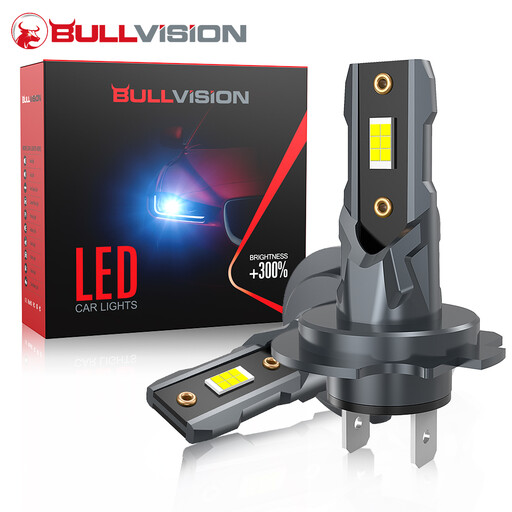
Why It Stands Out: This bulb focuses on delivering a balanced upgrade. Its 1:1 design makes it a direct replacement for stock halogens and the integrated 10,000 RPM cooling fan helps manage heat to maintain performance over its projected lifespan. The beam pattern is designed to mimic the original bulb, which helps prevent glare for oncoming drivers.
Pros:
Who is it for? Drivers looking for a straightforward and reliable H7 LED bulb upgrade with a focus on easy installation and a well-defined beam pattern. Note the manufacturer's advice: an additional CANbus decoder is required for certain Volkswagen, Mercedes-Benz and BMW models.
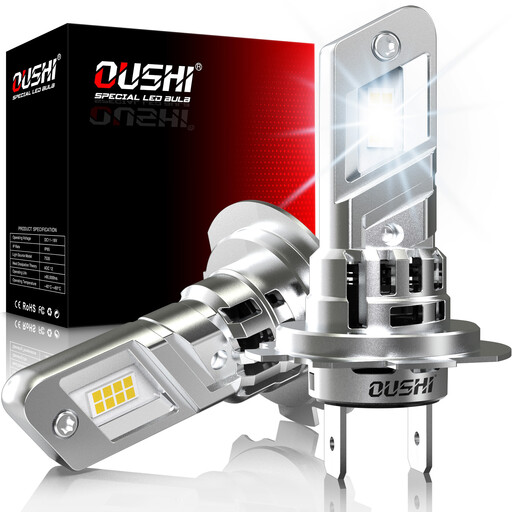
Why It Stands Out: The OUSHI H7 bulbs are geared towards maximum brightness and compatibility. They feature a high-power output and an updated CANbus ready system designed to work with a wide range of vehicles, including many European cars that can be sensitive to LED upgrades. The 6500K colour provides a slightly cooler, xenon-like white light.
Pros:
Who is it for? Car owners, especially those with modern European vehicles, who want one of the brightest H7 bulbs available and prioritise strong CANbus compatibility straight out of the box.
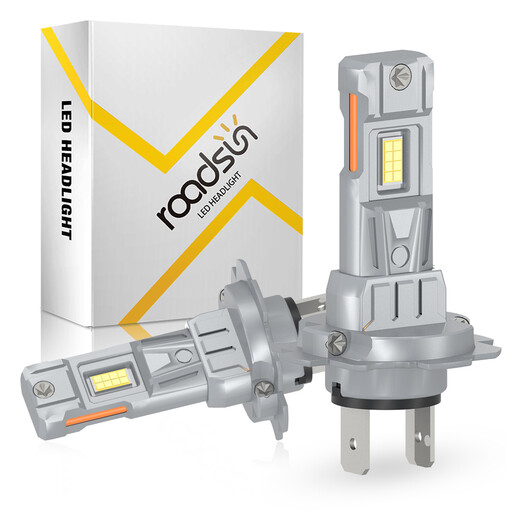
Why It Stands Out: Versatility is the key feature of the Roadsun H7. It is engineered not only as a headlight but also as a durable H7 fog light bulb. Its true 1:1 mini size means no adapters are needed, making it one of the simplest plug-and-play options. The durable build is designed to withstand harsh weather and vibrations, making it suitable for cars, trucks and even powersports vehicles like motorcycles and ATVs.
Pros:
Who is it for? Anyone seeking a simple, no-fuss installation. It's an excellent choice for drivers who want to upgrade both their headlights and fog lights or for powersports enthusiasts needing a robust lighting solution.
If these recommendations aren't quite what you're looking for, or if you'd like to compare more models, there is a wider selection available.
? Explore our full range of Cold White LEDs to find the perfect fit for your vehicle.
For the most part, yes. Many modern H7 LED bulbs are designed as plug and play replacements with a 1:1 size matching the original halogen. This means you can typically install them without special tools or modifications. Always check the product specifications to confirm a 1:1 design for the easiest installation.
It depends on your vehicle. Most modern cars, especially those from European manufacturers (like Audi, BMW, VW and Mercedes-Benz), use a CANbus system. While many CANbus H7 LED bulbs have built-in compatibility, some highly sensitive systems may still trigger an error. If you own such a vehicle, it's wise to choose a bulb with an advanced CANbus system or be prepared to add an external decoder if needed.
Both 6000K and 6500K produce a cool, modern white light and are popular choices. The main difference is subtle: 6000K is often described as a pure or diamond white, while 6500K is slightly cooler and can have a very faint blueish tint, similar to factory-fitted xenon HID lights. Both offer a dramatic improvement in clarity over the yellowish light of halogen bulbs.