
24/7 Customer Support

Free returns

Same-day & Next-day Delivery

Quality Guaranteed

Unlock Your Welcome Offers: FREE Delivery | Up to 80% OFF | Free 30-day JoyPlus trial
Download the APP
Straining to see the road ahead with dim, yellow halogen headlights is a common frustration for many UK drivers. Not only does it make night-time driving more tiring, but it can also impact your ability to react to hazards. An H7 bulb upgrade to modern LED technology offers a straightforward solution, providing a brighter, clearer view of the road and giving your vehicle a more contemporary look.
However, the market is filled with technical jargon and bold claims, making it difficult to choose the right product. As the Joybuy Product Recommendation Officer, my role is to help you navigate these options. This guide provides practical advice and highlights a few carefully selected H7 car headlight bulbs to help you make an informed decision.
Before choosing a bulb, it's helpful to understand a few key specifications. Focusing on these will ensure you get a product that performs well and is compatible with your vehicle.
While many brands advertise high lumen (LM) counts or percentage increases in brightness, the most critical factor is the beam pattern. A well-designed LED bulb will mimic the filament position of a halogen H7, placing light exactly where it's needed on the road. This creates a sharp cut-off line, illuminating your path effectively without dazzling oncoming traffic. A poorly focused beam, no matter how bright, will scatter light and reduce visibility. Look for bulbs that specify a "perfect beam pattern" or "360-degree illumination" for more controlled and useful light output.
Colour temperature is measured in Kelvin (K) and determines the colour of the light. Standard halogen bulbs are typically around 3200K, producing a warm, yellowish light. For a significant clarity upgrade, look for a 6000K to 6500K H7 bulb. This range produces a crisp, cool white light that is very similar to natural daylight, which can help reduce eye strain and make it easier to spot potential hazards, road signs and markings from a distance.
For a hassle-free upgrade, a plug and play H7 bulb is essential. These are designed with a 1:1 ratio to the original halogen bulb, meaning they fit directly into the factory housing without needing extra adapters or wiring modifications.
Furthermore, many modern vehicles, particularly European models, use a Controller Area Network (CANbus) to monitor the car's electrical systems. Because LEDs draw less power than halogens, they can sometimes trigger a "bulb out" warning on the dashboard. A CANbus H7 LED bulb has integrated circuitry to prevent these errors, ensuring seamless compatibility with your vehicle's onboard computer.
Based on their features, design and user-focused benefits, here are our recommendations for your next headlight upgrade.
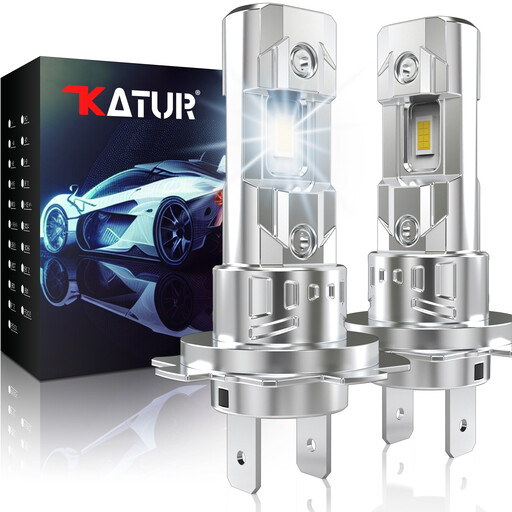
Why It Stands Out: The KATUR H7 bulb's main advantage is its fanless design. By using an aviation-grade aluminium body for passive heat dissipation, it operates in complete silence and eliminates the risk of fan failure—a common point of concern in other LED bulbs. Its compact, 1:1 mini size makes it a true plug and play H7 bulb, ideal for headlight housings with limited space.
Pros:
Who is it for? Drivers looking for a reliable and straightforward upgrade, especially those with vehicles where space behind the headlight assembly is tight. Its silent operation is also a bonus for those who value a quiet cabin.
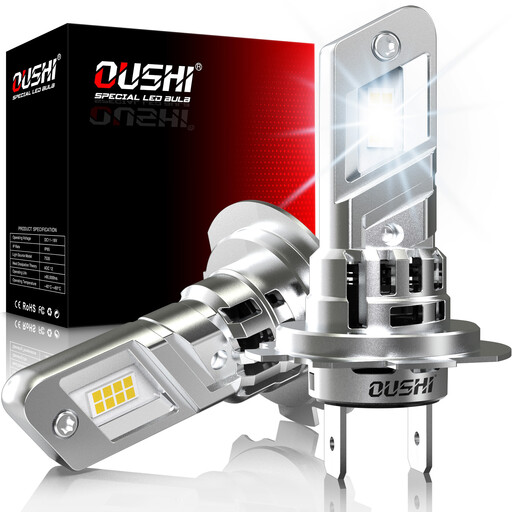
Why It Stands Out: This OUSHI H7 bulb is built for performance and compatibility. It features a high-speed turbo fan to actively cool the LED chips, allowing it to sustain a high light output. According to the manufacturer, it is 600% brighter than halogen bulbs. Its key feature is the integrated, latest-generation CANbus H7 LED system, making it highly compatible with the sensitive electronics of most modern European cars.
Pros:
Who is it for? Owners of modern vehicles, especially from brands like VW, Audi, BMW or Mercedes, who need a powerful bulb with robust CANbus integration to avoid dashboard warning lights.
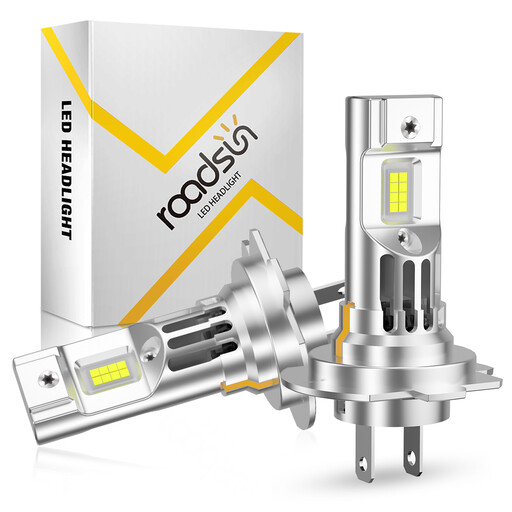
Why It Stands Out: The Roadsun H7 bulb offers excellent versatility and durability. It is engineered to function equally well as a main headlight or as an H7 fog light bulb, providing a consistent 6500K pure white light in either application. Its robust construction, featuring an IP68 waterproof and dustproof rating, ensures reliable performance in all weather conditions, from heavy rain to fog. The true plug-and-play design requires no extra adapters, making installation quick and simple.
Pros:
Who is it for? Practical car owners who want a durable, all-weather lighting solution that can be used for multiple applications and appreciate a simple, DIY-friendly installation.
Our recommendations cover some of the most common needs, but every vehicle and driver is different. If you're looking for a different specification or just want to browse a wider selection of bright H7 LED bulbs, explore our full range of LED lamp bulbs to find the perfect fit for your car.
1. Are H7 LED bulbs legal for road use in the UK? In the UK, the regulations regarding aftermarket LED headlight bulbs can be complex. For a vehicle to pass its MOT, the headlights must produce a compliant beam pattern. While many high-quality LED bulbs are designed to do this, they may not have the official ECE approval required for use in a car originally fitted with halogen bulbs. They are often sold for "off-road" use. It is advisable to check the latest DVSA guidelines and ensure your headlights are correctly aligned after installation to avoid dazzling other drivers.
2. Will I need a CANbus decoder for my car? It depends on your vehicle. Many modern cars, especially those from European manufacturers, use a CANbus system that can detect the lower power draw of LEDs and trigger a dashboard error. Bulbs with built-in CANbus H7 LED drivers, like the OUSHI model mentioned, are designed to prevent this. However, for some highly sensitive vehicle systems, a separate, external CANbus decoder may still be required.
3. What is the difference between a 6000K and a 6500K H7 bulb? The difference is subtle and mostly comes down to personal preference. A 6000K bulb produces a pure, neutral white light. A 6500K bulb has a slightly cooler tone with a hint of blue, often marketed as "xenon white." Both provide a stark, modern contrast to the yellow of halogen bulbs and significantly improve night-time visibility.