
24/7 Customer Support

Free returns

Same-day & Next-day Delivery

Quality Guaranteed

Unlock Your Welcome Offers: FREE Delivery | Up to 80% OFF | Free 30-day JoyPlus trial
Download the APP
Replacing tired halogen lighting can make a noticeable difference to how your car looks and feels at night. However, choosing H7 LED headlight bulbs is not simply a matter of selecting the largest lumen figure. Fitment, beam control, heat management and road-use requirements all matter.
This guide from the Joybuy Product Recommendation Officer explains what to check before buying, where common listings can be misleading and which options may suit different UK drivers.
Listings may advertise figures such as 12,000LM, 20,000LM or 30,000LM per pair. These figures can be useful for comparing specifications within a listing, but they do not automatically indicate how much light reaches the road in the correct pattern. Marketing brightness figures may also refer to theoretical output rather than measured illumination from the installed lamp.
A well-positioned LED chip, suitable reflector or projector compatibility and controlled beam shape are more important than choosing the highest number alone. Poor alignment can create dark areas or glare for approaching drivers.
An H7 designation identifies the bulb base and electrical connection, not every detail of the vehicle’s headlight housing. Some cars have limited space behind the lamp, retaining clips, dust covers or sensitive onboard monitoring systems.
Check your handbook or remove the existing bulb to confirm that the original fitting is H7. Also check whether your vehicle uses a CANbus monitoring system. CANbus-ready LED bulbs can reduce warning messages or flickering, but compatibility is not guaranteed for every model. Some Volkswagen, Mercedes-Benz, BMW and similar vehicles may require an additional decoder, as stated on certain product listings.
A bulb can be physically compatible without being suitable for every public-road application. Before fitting LED bulbs for cars, check the product’s approval information and your vehicle’s lighting arrangement. UK requirements can depend on the headlamp unit, beam pattern and whether the LED replacement is approved for that use.
After installation, confirm that the beam remains correctly aimed and does not dazzle other road users. If approval or compatibility is unclear, consult a qualified vehicle lighting professional before using the bulbs on public roads.
H7 LED bulbs 1:1 mini size are designed to follow the dimensions of a standard halogen bulb. This can be useful where a large heat sink, external driver or fan would interfere with the dust cover.
Compare the listed dimensions with the space available in your headlamp. A compact design does not remove the need to check the retaining clip and rear clearance. Products described as plug and play H7 bulbs should still be checked against the vehicle’s original connector and mounting arrangement.
A H7 LED headlight bulb 6000K or cool white LED headlight bulb generally produces a crisp white appearance. Around 6000K is a common choice for drivers seeking a cooler colour than traditional halogen lighting. Some products are listed at 6500K, which may appear slightly cooler or more bluish.
Colour temperature does not measure brightness. More importantly, look for a product that describes chip positioning, 1:1 beam design or projector compatibility. These features aim to place light in a controlled pattern rather than spreading it unpredictably.
LED chips produce heat even though they may use energy differently from halogen bulbs. Cooling may be provided by an aluminium body, heat sink or built-in fan. Fan-cooled designs can dissipate heat efficiently but introduce a moving part and may need sufficient rear clearance. Fanless bulbs can be quieter and simpler, provided the housing offers enough surface area for heat transfer.
For wet UK weather and powersports use, waterproof H7 bulbs with an IP rating can offer useful protection against water and dust. IP65 and IP68 describe different levels of ingress protection, so check the exact rating rather than treating all waterproof claims as identical.
A listed operating life of 50,000 or 60,000 hours is a manufacturer specification, not a guarantee of service life in every vehicle. Heat, voltage, vibration and installation quality can affect longevity.
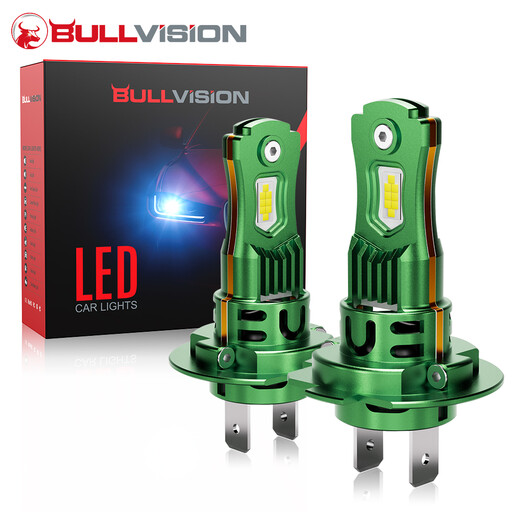
Why This Fits Their Persona: A straightforward option for drivers replacing standard H7 halogen bulbs and looking for a 6000K white light with no adapter listed as required.
The listing specifies a 1:1 size, plug-and-play installation and a beam pattern intended to follow the original bulb. Vehicle-specific compatibility should still be confirmed.
6000K cool white colour, 1:1 body size, IP-rated waterproof construction and a pair-pack format.

Why This Fits Their Persona: Suitable for owners who prioritise a compact installation and a CANbus-oriented design when upgrading a frequently used headlight system.
The listing states a 1:1 mini size, integrated driver and CANbus compatibility for many vehicles, while noting that sensitive models may need a decoder.
6000K colour, compact plug-and-play format, built-in cooling fan and stated 60,000-hour operating life.
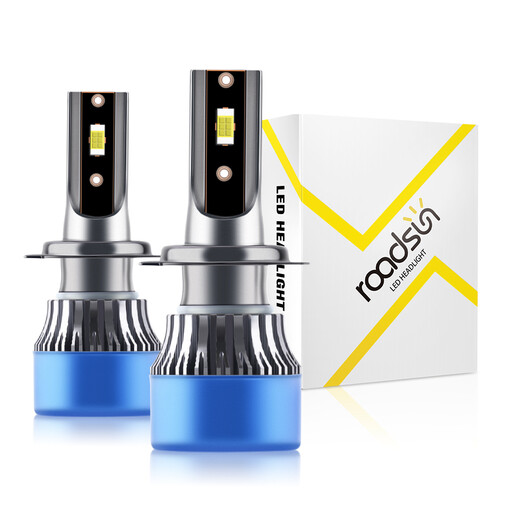
Why This Fits Their Persona: A practical match for UTV, ATV and off-road users who need H7 fog light bulbs with a compact body and weather-resistant construction.
The specification lists aluminium housing, a PC lens, IP68 protection and resistance to dust, rain, snow and vibration. Confirm the lamp is appropriate for your intended road or off-road use.
6000K cool white output, 1:1 mini design, plug-and-play connection and stated operation from -40°C to 85°C.
We have compiled a complete, real-time list of products that fully satisfy these strict selection criteria and UK safety regulations.
Legality depends on the bulb, headlamp unit, vehicle and intended use. Check approval markings and current UK requirements before installation. Correct beam alignment is essential, and an LED retrofit that causes glare or does not meet the relevant requirements may not be suitable for public roads.
Many LED designs are marketed as using less power for a comparable lighting application, but the actual wattage varies by model. Check the listed input voltage and power rating rather than assuming every LED bulb has the same consumption. A vehicle’s CANbus system may also react differently to the lower electrical load.
Listings commonly state 50,000 hours or more, but this is a manufacturer-provided operating-life figure. Actual service life can vary with heat, moisture, vibration, voltage stability and installation conditions. Efficient cooling and a properly sealed housing can help, but no stated lifespan should be treated as a guarantee.