
24/7 Customer Support

Free returns

Same-day & Next-day Delivery

Quality Guaranteed

Unlock Your Welcome Offers: FREE Delivery | Up to 80% OFF | Free 30-day JoyPlus trial
Download the APP
Replacing dim halogen lamps with H7 LED headlight bulbs can make a vehicle’s lighting feel more modern, but choosing purely by lumen figures can lead to wasted money, poor beam control or dashboard warnings. This guide from the Joybuy Product Recommendation Officer focuses on the checks that matter before ordering H7 LED bulbs for a car, van, motorcycle, ATV or UTV.
“H7” identifies the bulb fitting, not complete vehicle compatibility. The available space behind the headlamp, retaining clip, dust cover, reflector or projector design and onboard monitoring system can all affect installation.
A 1:1 H7 LED bulb may match the approximate shape of a halogen bulb, but it can still be unsuitable if the rear heat sink or fan touches the housing. Always confirm the original bulb type and compare the replacement dimensions with your vehicle manual or the existing lamp.
Listings may describe products as high-lumen H7 bulbs, with figures such as 20,000LM or 30,000LM per pair. These figures describe the stated output, but they do not alone confirm a useful road beam. Chip position, reflector compatibility and alignment determine where the light goes.
A poorly positioned LED source can create dark areas or glare for oncoming drivers, even if its headline brightness appears impressive. Look for details such as 1:1 H7 LED bulbs, focused beam design and ultra-thin chip spacing, then check the beam after fitting.
Some newer vehicles monitor bulb resistance and may display an error message, flicker or switch the lamp off when an LED conversion is installed. CANbus-ready LED bulbs can reduce this risk, but “ready” does not mean guaranteed compatibility with every vehicle. Sensitive models may still require a separate decoder.
Heat is another common weak point. H7 LED conversion kits may use an integrated fan, fanless aluminium housing or a larger heat sink. Check that the design suits the available rear clearance. Waterproofing claims such as IP65 or IP68 are useful indicators, but the complete lamp housing and connector also need to remain properly sealed.
Confirm whether you need H7 low beam bulbs, H7 high beam bulbs or H7 fog light bulbs. Some products can be used in more than one position, but the vehicle manual remains the starting point.
For a clean beam, check:
A plug-and-play design can simplify fitting, but it does not remove the need for a post-installation beam check.
Many H7 LED headlight bulbs use 6000K cool white LED bulbs, while others are listed at 6500K. Cool white light can look sharper than the warmer colour of a halogen bulb, but colour temperature is not the same as brightness or beam quality.
For UK driving, avoid choosing colour alone. Confirm that the finished lamp complies with the applicable vehicle lighting requirements and does not create excessive glare. A clean, correctly aimed beam is more important than a very blue-looking output.
LED chips create heat that must be moved away from the light source. Common solutions include:
Several products below list operating-life estimates of 50,000 or 60,000 hours. Treat these as manufacturer or listing specifications rather than a guarantee of actual service life. Installation quality, vibration, voltage, heat and moisture can all affect performance.
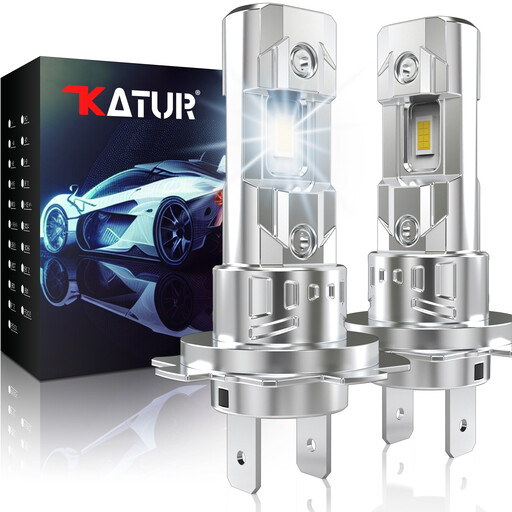
Why This Fits Their Persona: A compact option for DIY drivers who want a straightforward 6000K replacement without an external driver or bulky wiring.
Its listing specifies a 1:1 mini halogen-style design, helping reduce space and fitment concerns. Confirm the vehicle before ordering.
Fanless aluminium construction, 6000K colour temperature and pack-of-two format.
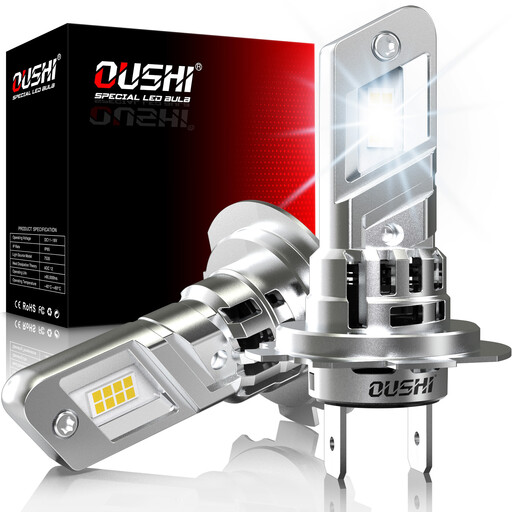
Why This Fits Their Persona: Suits drivers prioritising a compact installation and onboard-system compatibility features for regular UK commuting.
The listing identifies a 1:1 mini format and CANbus system, while also warning that some sensitive vehicles may need a decoder.
70W per pair stated output, 6500K colour and no external driver listed.
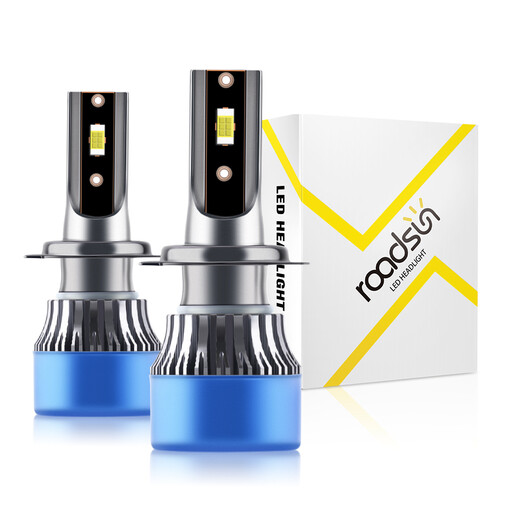
Why This Fits Their Persona: Designed in the listing for UTV, ATV and off-road applications where vibration, dust and changing weather are practical concerns.
The product description specifies weather resistance and a plug-and-play H7 format, but road legality still needs checking for the intended vehicle.
6000K cool white output and stated operating range of -40°C to 85°C.
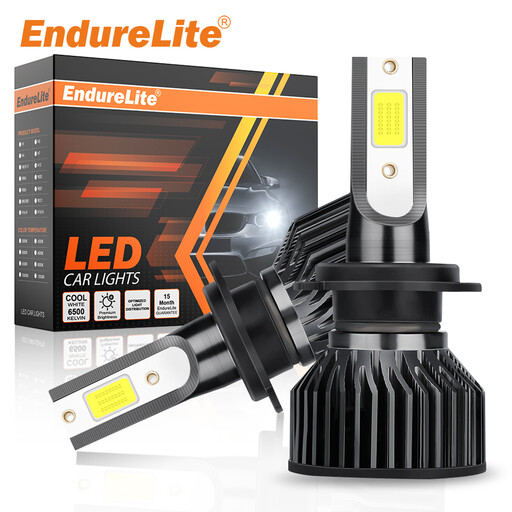
Why This Fits Their Persona: A practical choice for drivers who prefer a fan-cooled bulb for frequent night driving, commuting or mixed-weather use.
The listing combines a 1:1 beam-position design with an integrated fan and CANbus-ready driver, addressing beam and warning concerns.
13,000LM stated output per listing, aluminium housing and IP68 waterproof specification.
We have compiled a complete, real-time list of products that fully satisfy these strict selection criteria and UK safety regulations.
Before using car LED headlight bulbs on public roads, check the bulb’s approval markings, vehicle compatibility and the requirements that apply to your headlamp type. A replacement being physically compatible does not automatically make it road legal.
For a safer installation:
For motorcycles, trucks, SUVs and powersports vehicles, also check vibration, connector sealing and available space before purchase.
It depends on the product approval, vehicle, headlamp assembly and intended use. Confirm relevant UK requirements, approval markings and MOT considerations before fitting. A bright bulb that creates glare or an incorrect beam may cause a compliance or safety issue.
Not always. Some CANbus-ready LED bulbs work without an additional decoder, while sensitive vehicles may still show errors or flicker. Volkswagen, BMW, Mercedes-Benz and similar vehicles should be checked especially carefully against the product notes.
LED products may use less electrical power than equivalent halogen lamps, but actual consumption varies by model. Compare the stated wattage rather than relying on brightness marketing, and remember that cooling fans may also draw a small amount of power.