
24/7 Customer Support

Free returns

Same-day & Next-day Delivery

Quality Guaranteed

Unlock Your Welcome Offers: FREE Delivery | Up to 80% OFF | Free 30-day JoyPlus trial
Download the APP
Driving at night on British roads, from winding country lanes to busy motorways, demands clear visibility. If your car's standard halogen headlights cast a dim, yellowish light, you might find yourself straining to see what lies ahead. An H7 bulb upgrade is a popular choice for drivers looking to improve night-time safety and give their vehicle a more modern appearance.
This guide is designed to help you understand the key features of H7 LED headlight bulbs. We will walk through what to look for when choosing a set and present some of our top recommendations to help you make an informed decision for your vehicle.
Upgrading from a standard H7 halogen replacement can seem complex, but focusing on a few key areas will simplify the process. Here are the essential factors to consider.
The performance of a headlight is about more than just brightness. While a bright H7 LED bulb, measured in lumens (LM), offers greater illumination, the beam pattern is equally important. A well-designed bulb focuses light onto the road where you need it, preventing glare that can dazzle oncoming drivers. The colour temperature, measured in Kelvin (K), determines the colour of the light. A 6000K H7 bulb produces a crisp, cool white light, similar to that found on many new premium vehicles, which can improve the visibility of road signs and markings.
Many modern cars use a Controller Area Network (CANbus) system to monitor the vehicle's electronics, including the headlights. Since LED bulbs draw less power than halogens, the CANbus system can sometimes misinterpret this as a fault, leading to a dashboard warning light or flickering. To avoid this, look for a CANbus H7 LED bulb with a built-in driver or decoder, which is designed to work harmoniously with the majority of vehicle systems.
For many car owners, ease of installation is a priority. Many modern LED bulbs are designed as direct plug and play car headlights, matching the size and fitment of the original halogen bulbs for a straightforward swap. Pay attention to the cooling system as well. LEDs generate heat, and effective dissipation is vital for longevity. Bulbs may feature a fanless design with a heat sink or a compact, high-speed fan. Both are effective, but the physical size of the cooling system can affect fitment in tight headlight housings.
Here are a few H7 LED options that stand out for their features and design.
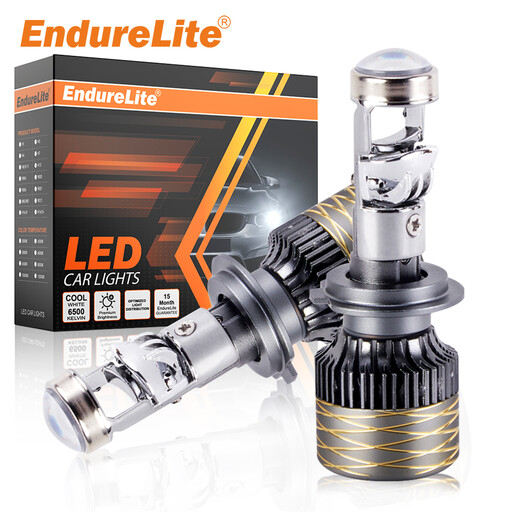
Why It Stands Out: This bulb's main feature is its integrated lens projector, which is designed to mimic the stock beam pattern precisely. This focus on light control helps to create a sharp cut-off line, illuminating the road effectively without causing glare for other road users. Its 1:1 size match with standard halogen bulbs makes it a strong candidate for a hassle-free installation.
Pros:
Who is it for?
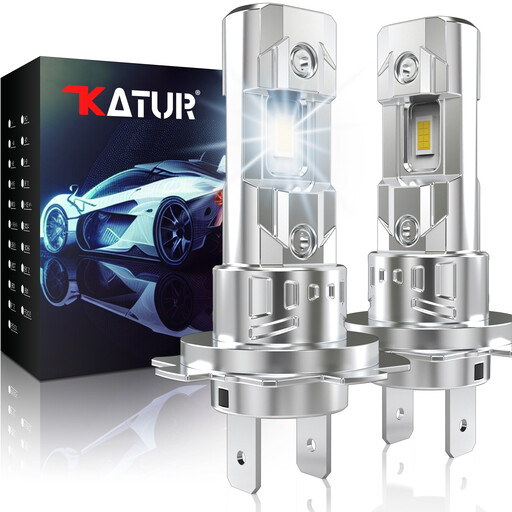
Why It Stands Out: The fanless design of this KATUR H7 bulb is its key advantage. With no moving parts, it operates silently and eliminates the risk of fan failure over time. Its compact, all-in-one construction is designed to fit into headlight housings where space is limited, making it a versatile option for a wide range of vehicles.
Pros:
Who is it for?
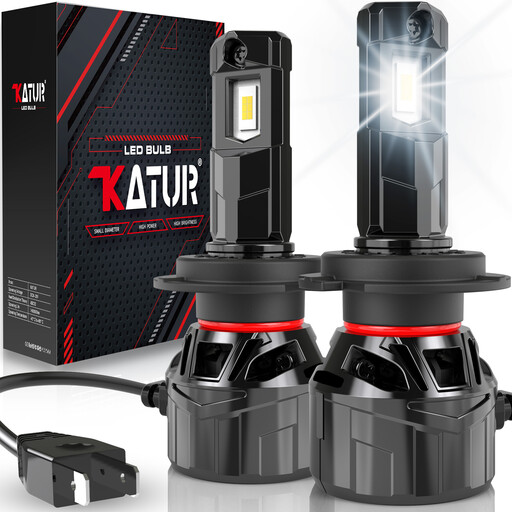
Why It Stands Out: For those seeking high levels of brightness, this 120W KATUR model delivers an impressive 30,000 lumens per pair. To manage the heat from this high output, it incorporates a powerful 16,000 RPM turbo fan and a copper tube heat pipe. This active cooling system is engineered for efficient heat dissipation, supporting a long operational lifespan.
Pros:
Who is it for?
While this guide focuses on the popular H7 fitment, vehicles use a variety of bulb types. If your car requires a different model, such as an H2 bulb or you simply wish to explore more options, you can browse our wider collection of car headlight bulbs UK.
Explore More Headlight Bulbs on Joybuy UK
When upgrading to LED bulbs, it's important to be aware of UK road regulations. For a headlight to be road legal for MOT purposes, it must produce a correct and safe beam pattern that doesn't dazzle other drivers. Some aftermarket LED bulbs may not be E-marked, which is the standard for road-legal parts in Europe and the UK. We advise checking the latest DVSA guidelines and product specifications before making a purchase for road use.
H7 refers to a specific type of bulb base and fitment. If your vehicle's manual specifies H7 bulbs, then any H7-fitment bulb should lock into the socket. However, the physical size of the bulb body, especially those with large heat sinks or fans, can sometimes interfere with the headlight housing or dust cover. It is always a good practice to check the dimensions of the bulb and compare them with the space available in your vehicle's headlight assembly.