
24/7 Customer Support

Free returns

Same-day & Next-day Delivery

Quality Guaranteed

Unlock Your Welcome Offers: FREE Delivery | Up to 80% OFF | Free 30-day JoyPlus trial
Download the APP
Replacing standard halogen lamps with H7 LED headlight bulbs can offer a whiter appearance, instant illumination and a different driving experience on dark roads. However, buying by lumen numbers or colour alone can lead to poor beam control, installation problems and unexpected dashboard warnings.
This guide from the Joybuy Product Recommendation Officer focuses on the specifications that matter, common marketing traps and suitable options for different UK driving needs.
Listings for high-lumen car headlight bulbs may advertise figures such as 20,000LM or 30,000LM per pair. This number does not automatically indicate useful illumination on the road. Beam focus, chip placement, reflector compatibility and heat management also affect how light is distributed.
An unfocused bulb can create bright patches inside the headlamp while leaving dark areas ahead. It may also increase glare for other road users. Look for a 1:1 bulb design, narrow chip positioning and information about beam alignment rather than relying on output claims alone.
A plug-and-play LED bulb may connect directly to an H7 socket, but physical access can still be difficult. Some headlamp housings have limited space behind the bulb, while dust covers may interfere with a cooling fan or external driver.
Always check your vehicle manual or remove the original lamp to confirm the fitting. H7 LED bulbs are not interchangeable with H4 LED headlight bulbs, H1 LED bulbs, 9005 LED headlight bulbs or 9006 LED bulbs. These references describe different bases and electrical arrangements.
Modern vehicles may monitor bulb resistance and report flickering or error messages when an LED replacement uses less power than the original halogen lamp. CANbus-ready LED bulbs can reduce this risk, but compatibility is not guaranteed for every model. Some sensitive vehicles may still need a separate decoder.
Before purchasing, check whether the LED retrofit is approved for your vehicle and intended use. UK road lighting requirements can differ according to the lamp, vehicle and headlamp assembly. Confirm the relevant approval markings and consult the vehicle manufacturer or an MOT-qualified garage if you are unsure. A brighter-looking bulb is not a substitute for a compliant beam pattern.
Confirm that your existing lamp is H7 before ordering. The H7 fitting is commonly used for a single-beam headlight or fog-light application, but the exact role differs between vehicles. Some cars use H7 for dipped beam, others for main beam or H7 LED fog light bulbs.
Check:
Many products use 6000K LED headlight bulbs, producing a cool white appearance. A 6500K option appears slightly bluer. Colour temperature describes the tone of the light, not its actual brightness or road coverage.
For regular UK driving, consider whether the beam remains comfortable in rain, mist and dirty conditions. Whiter light may look sharper, but the complete optical design is more important than the Kelvin figure alone.
LED chips produce heat at the rear of the bulb. Fan-cooled designs can remove heat efficiently but may create a small operating noise and include a moving component. Fanless bulbs are quieter and mechanically simpler, but their housing must dissipate heat effectively.
Look for an aluminium body, a stated ingress rating such as IP65 or IP68 and enough clearance around the bulb. An IP rating describes resistance to dust and water under specified test conditions; it does not guarantee suitability for every installation environment.
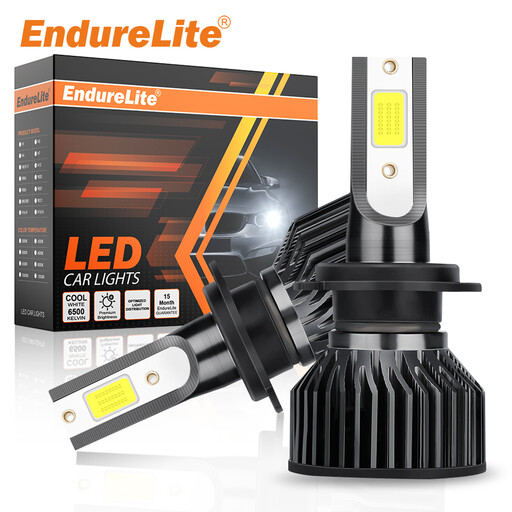
Why This Fits Their Persona: A multi-fit pack suits DIY owners comparing several common bulb codes, provided the original fitting is confirmed first.
The listing specifies a 1:1 design, plug-and-play installation and CANbus-ready electronics, addressing fitment and warning-light concerns.
6000K cool white output, fan cooling, IP68 waterproof construction and a stated 50,000-hour operating life.
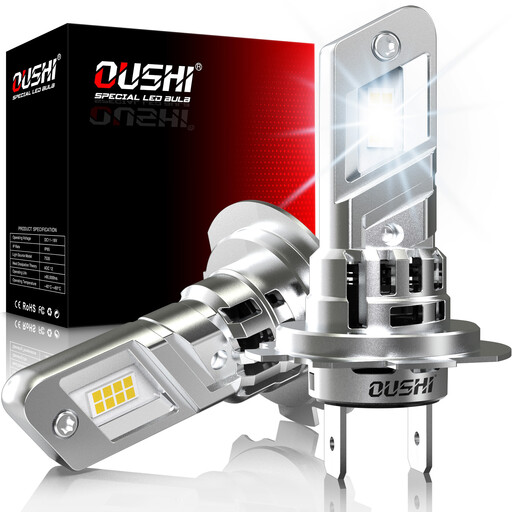
Why This Fits Their Persona: Suitable for drivers who prioritise a compact installation and a higher stated output while checking compatibility carefully.
Its listed 1:1 mini-size format is designed to avoid bulky adapters, while the product notes that some sensitive vehicles may still need a CANbus decoder.
6500K colour temperature, integrated driver, turbo fan and no external adapter stated in the listing.
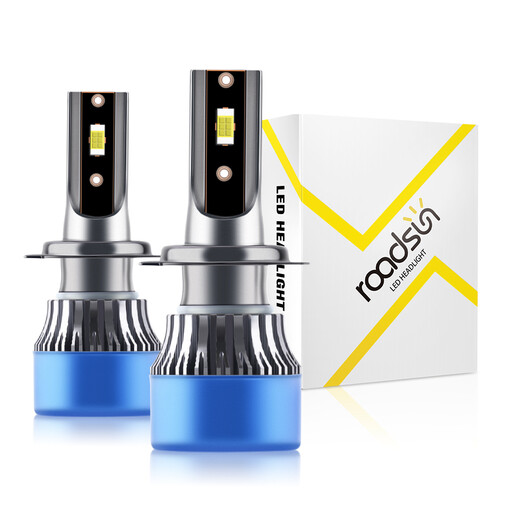
Why This Fits Their Persona: A practical match for UTV, ATV and off-road owners who need an H7 fog-light format for exposed, wet or dusty environments.
The listing gives an operating temperature range and weather-resistance details, rather than focusing only on brightness.
6000K light, 1:1 plug-and-play format, aluminium alloy housing and stated IP-rated protection.
We have compiled a complete, real-time list of products that fully satisfy these strict selection criteria and UK safety regulations.
Legality depends on the bulb, vehicle, headlamp assembly and approval status. Check the product documentation, approval markings and current UK requirements before using a retrofit on public roads. Correct beam alignment is also essential.
Many listings state operating lives of 50,000 to 60,000 hours, but actual service life depends on heat, voltage, usage and installation conditions. Treat these figures as manufacturer or seller specifications rather than a guarantee.
LEDs can use less power for a comparable lighting task, but the exact consumption varies by model. Check the stated wattage and ensure the vehicle’s electrical system and CANbus monitoring are compatible before buying.