
24/7 Customer Support

Free returns

Same-day & Next-day Delivery

Quality Guaranteed

Unlock Your Welcome Offers: FREE Delivery | Up to 80% OFF | Free 30-day JoyPlus trial
Download the APP
Replacing standard halogen bulbs can make a noticeable difference to the colour and appearance of your car’s lighting. However, choosing H7 LED headlight bulbs is not simply a matter of selecting the highest lumen figure. Incorrect fitment, poor beam control and vehicle warning errors can turn an apparently simple upgrade into wasted money.
This guide explains which specifications matter, how to avoid common marketing traps and which H7 LED bulbs may suit different UK driving needs.
Listings may advertise figures such as 13,000LM or 30,000LM per pair. These figures describe the product’s stated output, but they do not automatically guarantee better illumination on the road. Beam shape, reflector or projector design, bulb positioning and headlamp alignment also affect what the driver sees.
A high-output bulb with poor positioning may create scattered light or glare for oncoming traffic. Look for 1:1 mini-size LED bulbs, thin chip spacing and a beam pattern intended to replicate the original halogen position.
An H7 socket confirms the bulb type, but not that every H7 LED bulb will work perfectly with every vehicle. Some cars monitor bulb resistance and may display a dashboard warning, flicker or switch the light off. CANbus-ready LED bulbs can reduce this risk, although the term does not guarantee compatibility with every vehicle system.
Before ordering, check your vehicle handbook, the original bulb marking and the available space behind the headlamp. Compare the car’s make, model, trim and production range with the product information where possible.
LEDs produce less wasted heat at the light-emitting surface than halogen bulbs, but the rear of the bulb and its electronics still need heat management. Fan-cooled LED bulbs can use an aluminium housing and high-speed fan; fanless designs avoid moving parts but may require careful thermal design and sufficient space.
Water resistance ratings such as IP65 or IP68 are useful product specifications, but they do not replace correct sealing of the vehicle’s headlamp cover. Also, an aftermarket bulb may not automatically be approved for use on public roads. Check the current UK Road Vehicles Lighting Regulations, relevant approval markings and your vehicle’s MOT requirements before fitting.
Confirm that your existing bulb is H7, rather than H1, H4, H11, HB3/9005 or another fitting. H7 headlight bulb replacement products commonly use a two-pin connection, but retaining clips, dust covers and available rear clearance differ between vehicles.
A 1:1 bulb aims to match the original halogen bulb’s dimensions. This may simplify installation and help the LED chips sit in a similar position to the filament. Measure the available space if the headlamp has a narrow housing or a tight dust cover.
H7 6000K LED bulbs generally produce a cool white appearance, while 6500K bulbs may appear slightly bluer. Cool-white light can look sharper than a warm halogen colour, but colour temperature alone does not determine beam quality or visibility in rain.
For drivers who want a neutral-looking upgrade, 6000K is a practical option. Avoid choosing solely on the phrase “xenon white”; H7 xenon white bulbs are still LED products unless the listing specifically identifies a different light source.
Look for clearly stated information about:
High wattage and lumen claims should be treated as comparison information rather than a promise of road performance. Beam control and correct alignment remain essential.
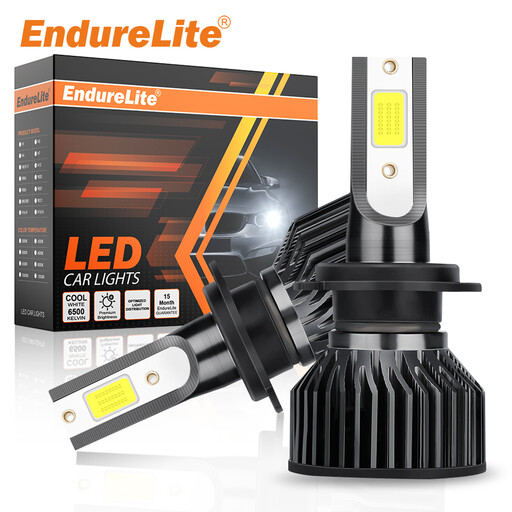
Why This Fits Their Persona: A pair of multi-fit bulbs suits drivers who want to replace H7 lamps and keep a spare-compatible option for other listed fittings.
The listing specifies a stock-size design, 1:1 beam pattern technology and CANbus-ready electronics rather than relying only on a brightness figure.
6000K cool white output, IP68 waterproof specification, built-in fan and a stated operating life of up to 50,000 hours.
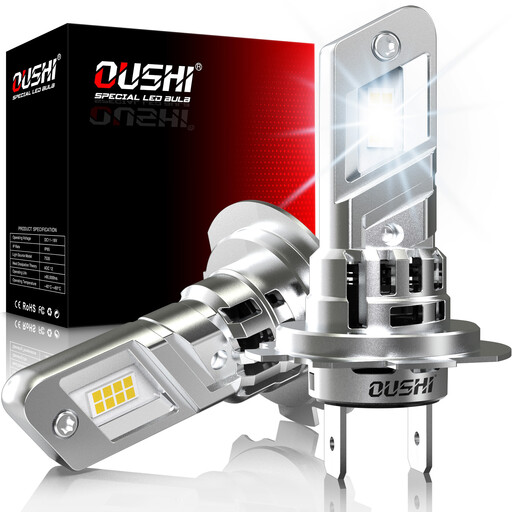
Why This Fits Their Persona: This option is suited to drivers prioritising compact dimensions, cool-white styling and integrated electronics for a cleaner installation.
Its stated 1:1 mini-size format avoids a bulky external driver, while the listing warns that some sensitive vehicles may still require an additional CANbus decoder.
6500K stated colour temperature, 1:1 plug-and-play format, integrated turbo fan and a stated 60,000-hour service life.
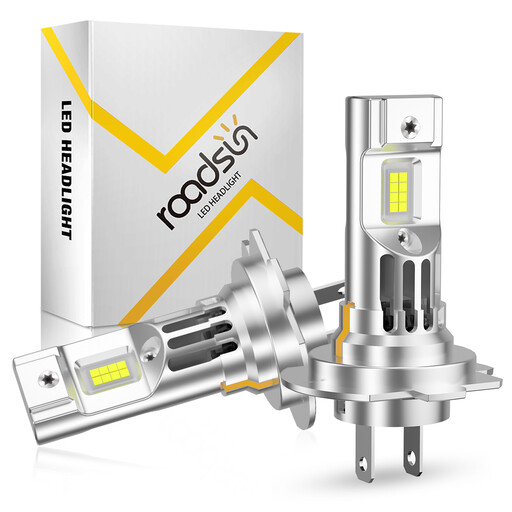
Why This Fits Their Persona: A practical match for frequent commuters and drivers seeking one H7 fitting for either headlights or H7 fog light bulbs, subject to vehicle compatibility.
The product information states IP68 protection, a built-in fan and direct connection without an external adapter; it also advises checking the original H7 fitment.
6500K white light, stated 50,000-plus-hour lifespan, aluminium housing and direct plug-and-play installation.
We have compiled a complete, real-time list of products that fully satisfy these strict selection criteria and UK safety regulations.
Legality depends on the bulb, vehicle, headlamp type and applicable approval requirements. An H7 socket alone does not confirm road legality. Check current UK lighting regulations, approval markings and MOT guidance before using an LED retrofit on public roads.
Not always. CANbus-ready LED bulbs may work with many monitored vehicle systems, but sensitive cars can still show an error or flicker. If the product listing identifies a decoder requirement for your model, factor that accessory into the total cost.
Power consumption varies by product and vehicle circuit, so compare the stated wattage rather than assuming a saving. LED products may also have longer stated service lives, but actual lifespan depends on heat, voltage, installation and operating conditions.