
24/7 Customer Support

Free returns

Same-day & Next-day Delivery

Quality Guaranteed

Unlock Your Welcome Offers: FREE Delivery | Up to 80% OFF | Free 30-day JoyPlus trial
Download the APP
As a Joybuy Product Recommendation Officer, my role is to help you navigate the choices available for your home kitchen. If you're looking to recreate the authentic Chinese hot pot experience, you know that the right ingredients are crucial. Haidilao, a name synonymous with quality hot pot, offers several types of tofu skin, and choosing the right one can elevate your meal from good to great.
This guide is designed to clarify the differences between Haidilao's popular tofu skin products. We will look at their unique textures, cooking properties and best uses, helping you select the perfect option for your next Chinese hot pot at home or as a versatile, high-protein ingredient for everyday cooking.
Before we look at specific products, understanding a few key characteristics will help you make a more informed choice. Tofu skin, also known as yuba, comes in various forms, each offering a distinct culinary experience.
dried bean curd sheets, which are flat and layered, and fried tofu skin products that are often puffed or rolled. Fried varieties tend to be crispy initially and soften quickly, while dried sheets require a brief soak to become pliable, offering a chewier texture.high protein vegan snacks or meal additions. The protein content is consistently high across most varieties, making it a nutritious choice.Here are our recommendations for Haidilao tofu skin products, selected to suit different tastes and cooking styles.
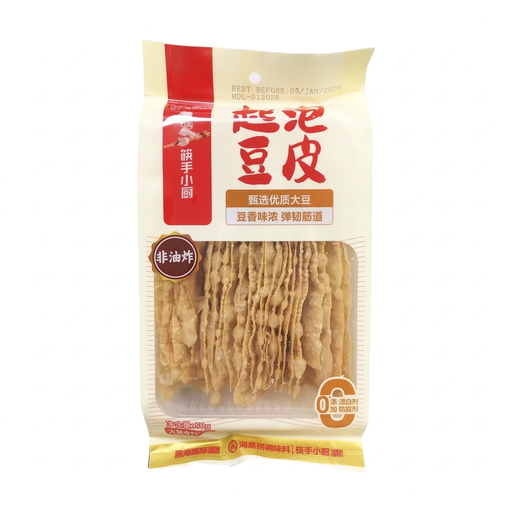
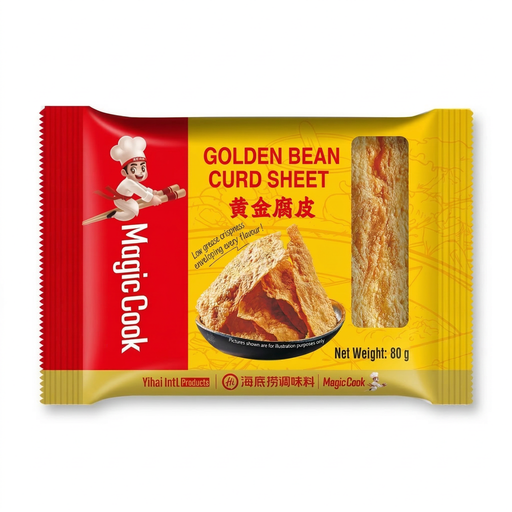
dried bean curd sheets, known for their distinct golden-yellow layers. This product offers a more traditional yuba for hot pot experience. It requires a brief cooking or soaking time to soften, resulting in a satisfyingly chewy and layered texture that holds up well in soups and stir-fries.
Haidilao bean curd roll is famous for its unique, bell-like rolled structure. This shape is not just for appearance; it creates layers that trap broth effectively while maintaining a firm, chewy bite. It offers a different textural experience compared to flat sheets or puffed pieces.hot pot ingredients.The world of tofu products is vast and varied. If the options above aren't quite what you're looking for, or if you're curious to explore other forms of bean curd, there are many more products to discover.
For a wider selection of related items, we invite you to browse our full Tofu Skin & Tofu category.
1. How do you cook Haidilao tofu skin? Cooking methods vary by type. For puffed or rolled varieties like the Haidilao Tofu Skin and Bean Curd Roll, simply dip them into your boiling hot pot broth for 3-5 seconds until they reach your desired softness. For dried bean curd sheets like the Golden Tofu Skin, you can add them directly to boiling soup and cook for 1-2 minutes, or soak them in warm water for 5-10 minutes until pliable before adding to stir-fries or salads.
2. Is Haidilao tofu skin vegan? Yes, the Haidilao tofu skin products featured here are suitable for vegans. The primary ingredient is soybeans. The Haidilao Bean Curd Roll also contains wheat flour, but all ingredients are plant-based. Always check the "Allergens" section on the product packaging for the most accurate information.
3. What is the difference between tofu skin and a bean curd roll? The main difference is their shape and resulting texture. Tofu skin (or yuba) is the film that forms on the surface of boiled soy milk, which is then harvested and dried into sheets. These can be left as flat dried bean curd sheets or processed further. A Haidilao bean curd roll is a type of fried tofu skin that has been shaped into a multi-layered roll, giving it a chewier, more complex texture compared to the softer bite of a flat sheet.