
24/7 Customer Support

Free returns

Same-day & Next-day Delivery

Quality Guaranteed

Unlock Your Welcome Offers: FREE Delivery | Up to 80% OFF | Free 30-day JoyPlus trial
Download the APP
Choosing hair and fabric dye online can seem straightforward, but colour charts and packaging do not always tell the full story. A permanent hair colour may not suit previously lightened hair, while a fabric dye can produce a disappointing result if the garment contains too much polyester. The right choice depends on the material, desired longevity, shade and application method.
A permanent hair dye uses a colourant and developer to create a longer-lasting change, making it suitable for regular grey coverage or a significant shade adjustment. It also requires more care: an allergy alert test is generally required 48 hours before use, and the instructions must be followed closely.
A semi-permanent hair dye is a lower-commitment option. It gradually fades with washing and is often selected to refresh existing colour, add visible tones or blend early greys. It should not be treated as an equivalent replacement for permanent colour.
A root concealer spray works differently again. It covers visible roots temporarily and is washed out with shampoo, making it useful between colour applications rather than for an overall colour change.
A blonde hair dye applied to dark brown hair may not create a light blonde result without suitable preparation. Porous, bleached or previously coloured hair can also absorb colour differently from untreated hair. For more predictable results, compare the product’s recommended starting shades with your own hair and carry out a strand test where the instructions advise it.
The same principle applies to brown hair dye and auburn hair dye. The final tone depends on the existing base, previous colour and hair condition. A rich auburn shade may appear more vibrant on light hair than on a deep brunette base.
Fabric dye is not suitable for every textile. Natural fibres such as cotton, linen and viscose generally absorb reactive dyes more readily. Silk and wool may be suitable for some hand-dye products, while pure polyester, acrylic and nylon can result in weak or uneven colour.
Also check the capacity. A 50 g hand-dye sachet may produce a full shade on 250 g of dry fabric but a softer colour on a larger load. A washing machine fabric dye pod can handle a different quantity, but blended fabrics may still produce a lighter result than expected.
Select the formula according to how often you want to recolour:
Do not use hair colourants on eyelashes or eyebrows. Hair colour products may cause serious allergic reactions, so follow the pack warnings and complete the required test before every use, even if you have used colourant previously.
For grey coverage, check whether the product is specifically described for grey hair and whether it recommends additional development time for resistant greys. For a subtle colour refresh, a semi-permanent formula such as plum brown may be more appropriate than a permanent formula.
When comparing blonde hair dye, brown hair dye and auburn hair dye, use the shade number and product description together rather than relying only on the model’s image. Images are illustrative, and lighting can affect how colour appears.
For fabric products, confirm:
A DYLON hand fabric dye is suited to manual basin dyeing and smaller items. A washing machine fabric dye pod is more convenient for larger suitable loads, but the machine may need an empty cleaning cycle afterwards. Protect work surfaces, wear gloves and avoid inhaling dye powder.
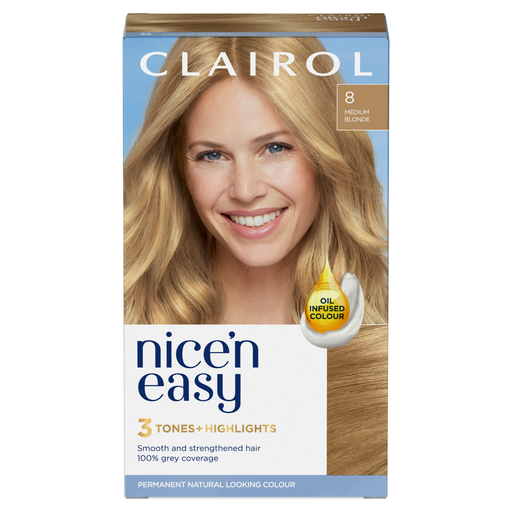
Why This Fits Their Persona: A complete at-home colouring kit for shoppers wanting a medium blonde shade with included activator, conditioner and gloves.
The pack lists its permanent format and application components clearly, helping avoid buying a temporary product when longer-lasting coverage is wanted.
Permanent colour kit; includes CC+ Colourseal Conditioner; shade 8 Medium Blonde.
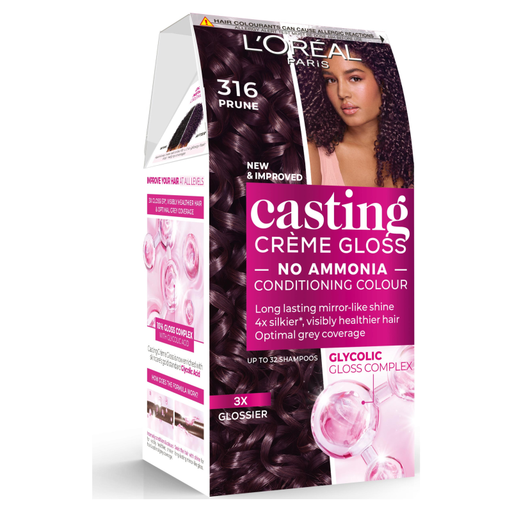
Why This Fits Their Persona: Suitable for shoppers seeking a conditioning, ammonia-free semi-permanent colour with visible plum tones on dark brown to black hair.
Its semi-permanent format makes the level of commitment clear, rather than presenting a temporary tonal change as permanent coverage.
Ammonia-free formula; non-drip cream; colour described as lasting up to 28 shampoos.
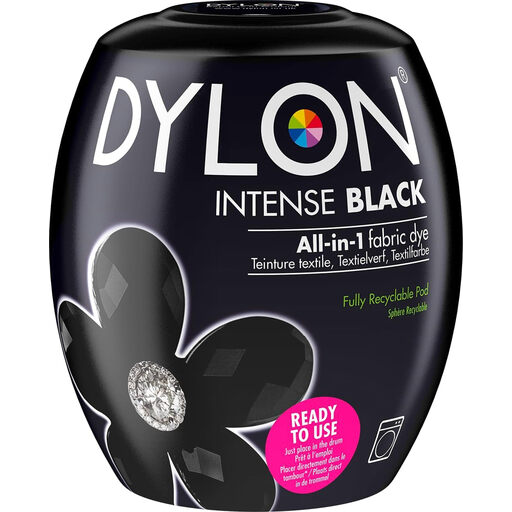
Why This Fits Their Persona: A practical option for refreshing suitable cotton, linen or viscose clothing and home textiles in a washing machine.
The all-in-one pod includes dye and salt, reducing measuring errors and making the washing-machine method clearer.
350 g pod; designed for a 30°C or 40°C wash cycle; suitable load guidance is provided.
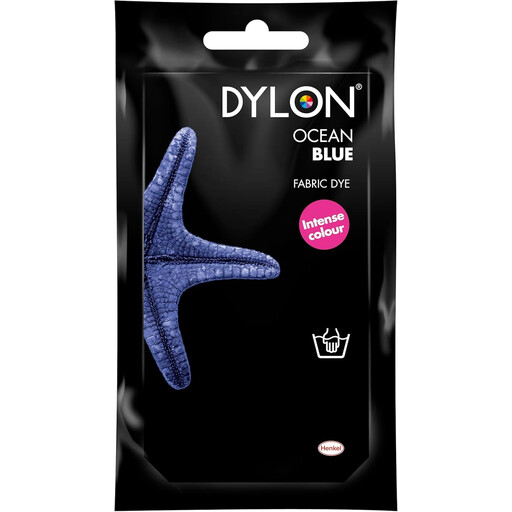
Why This Fits Their Persona: Designed for basin dyeing, small garments, delicate textiles, soft furnishings and craft projects such as tie-dye.
It is clearly a hand-dye sachet, so buyers are less likely to mistake it for a washing machine pod or overlook the need for salt.
50 g sachet; full colour guidance for 250 g fabric; ocean blue shade for suitable natural fibres.
We have compiled a complete, real-time list of products that fully satisfy these strict selection criteria and UK safety regulations.
Permanent colour remains in the hair, but visible regrowth appears as the hair grows. Product-specific descriptions may state a period such as up to six weeks or a number of washes. Semi-permanent colour fades gradually, while root concealer spray normally washes out with shampoo.
Check the product instructions first. For a washing machine fabric dye pod, use the stated temperature and run the recommended follow-up wash. An empty cycle may also be advised to remove residual pigment. Do not dye items without checking their fibre content, care label and weight.
Yes. Follow the product’s allergy alert instructions and complete the test 48 hours before colouring. Do not use the product if irritation occurs or if the packaging warns against use due to a sensitive or damaged scalp. For fabric dye, wear gloves, avoid direct contact with powder and follow the eye and inhalation warnings on the label.