
24/7 Customer Support

Free returns

Same-day & Next-day Delivery

Quality Guaranteed

Unlock Your Welcome Offers: FREE Delivery | Up to 80% OFF | Free 30-day JoyPlus trial
Download the APP
Taking control of your haircut at home offers convenience and saves money, but choosing the right tool is crucial. The market for electric hair clippers is filled with models that promise professional results, yet many fall short. As a Joybuy Product Recommendation Officer, my role is to help you navigate the options and find a reliable clipper that fits your needs, without the marketing fluff.
Before you buy, it's important to be aware of a few common pitfalls that can lead to a bad purchase and even worse haircuts.
To avoid these traps, focus on the core specifications that determine a clipper's performance and longevity. Understanding these will help you select a quality home haircut kit.
The choice between a corded and a rechargeable hair trimmer depends on your priorities.
The blades are the most critical part of any clipper. They do the actual cutting, and their quality separates a smooth trim from a painful, snag-filled experience.
The attachments determine the length of your haircut. Look for guide combs made from sturdy, durable plastic that clip on securely. Flimsy combs are a common point of failure. Some clippers use an adjustable dial or taper lever for fine-tuning lengths, which is particularly useful for blending and fading. A good range of lengths, from a close 0.5mm for tidying up to 25mm for longer styles, provides greater versatility.
Based on these practical criteria, here are a few electric hair clippers matched to different user needs.
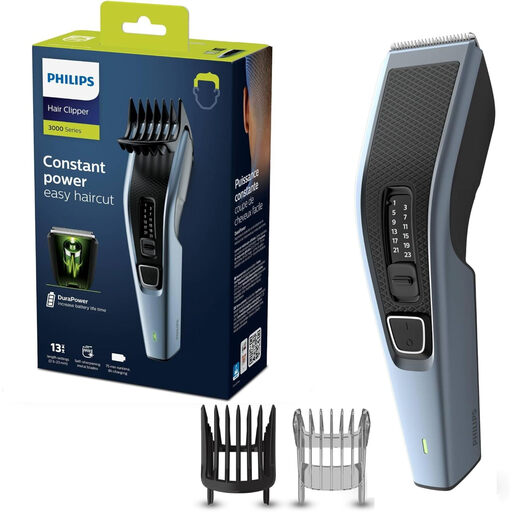
Why This Fits Their Persona: An ideal entry point for those new to home haircuts. It's a reliable, no-fuss tool from a trusted brand that delivers consistent results without a hefty price tag.
It offers both corded and cordless operation, eliminating the risk of the battery dying mid-cut. The Trim-n-Flow technology is specifically designed to prevent hair from clogging the comb, a common frustration with basic clippers.
Self-sharpening stainless steel blades ensure long-lasting performance, and the 13 length settings provide enough versatility for most basic styles.
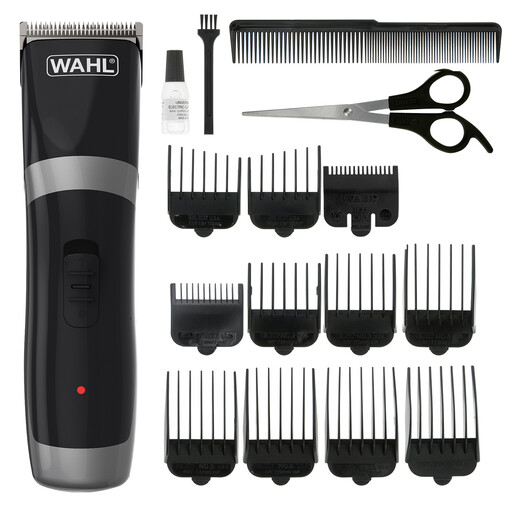
Why This Fits Their Persona: For the man who wants a single, versatile tool for his hair, beard and general tidying up. This kit is designed for head-to-toe grooming, saving space and money.
Unlike generic "mega kits," this set comes from Wahl, a specialist brand. The attachments are designed for specific functions (hair, beard and nose), ensuring the right tool for the job rather than a one-size-fits-all approach.
It features a Lithium-ion battery for reliable cordless power and precision-ground blades for a clean cut. The detachable, washable heads make hygiene simple across different grooming tasks.
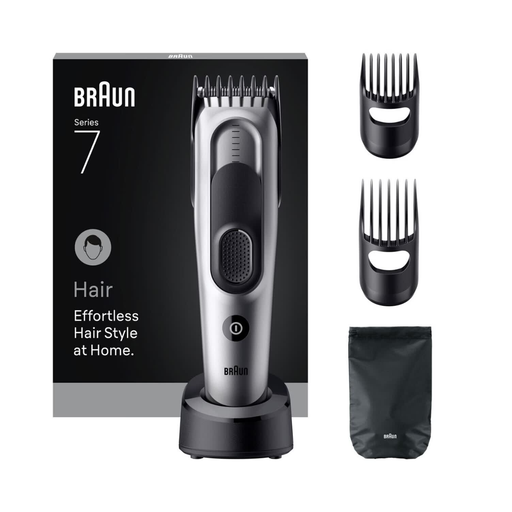
Why This Fits Their Persona: For the user who wants a high-performance tool for frequent, precise cuts like fades and buzz cuts. This clipper focuses on consistent power and cutting efficiency.
It directly counters the cordless power-fade issue with AutoSense Technology, which adjusts motor power to hair density for a smooth cut without snagging. The blades are marketed as 'lifetime-sharp', focusing on long-term performance over coatings.
A long 100-minute runtime and a 5-minute quick charge offer excellent cordless reliability. The Memory SafetyLock feature remembers your last setting, ensuring consistency between cuts.
We have compiled a complete, real-time list of products that fully satisfy these strict selection criteria and UK safety regulations.
For most models, it is good practice to oil the blades after every few uses to ensure they run smoothly and to prolong their lifespan. After brushing away loose hair, apply 2-3 drops of clipper oil across the blades, switch the clipper on for a few seconds to distribute it and then wipe away any excess. However, some modern clippers, like certain Philips models, are designed to be maintenance-free and do not require oiling. Always check the manufacturer's instructions.
Yes, many hair clippers are versatile enough to be used as a beard trimmer. Models that come with a good range of short guide combs (e.g., 1.5mm, 3mm) or an adjustable taper lever are well-suited for maintaining a beard. However, for intricate styling and very fine detailing, a dedicated beard trimmer may offer more precision with smaller blade heads and finer length increments.
The main differences are heat, sharpness retention and durability. Stainless steel is the robust, traditional choice—it's strong and resists corrosion well. Ceramic blades generate less friction, meaning they stay cooler during long grooming sessions and can hold their edge longer. Their main drawback is that they are more brittle and can crack or shatter if the clipper is dropped, whereas steel is more likely to bend or dent.