
24/7 Customer Support

Free returns

Same-day & Next-day Delivery

Quality Guaranteed

Unlock Your Welcome Offers: FREE Delivery | Up to 80% OFF | Free 30-day JoyPlus trial
Download the APP
Choosing hair clippers can look straightforward until you compare battery claims, blade types, guide combs and cleaning instructions. For UK households, the right choice depends less on promotional language and more on how the clipper will be used: occasional family haircuts, regular beard maintenance, fading, travel or high-volume grooming.
The following guide highlights common buying traps, explains the specifications that matter and matches several hair clippers to practical user profiles.
A cordless clipper may advertise up to 60, 90 or 120 minutes of use, but runtime depends on hair thickness, cutting technique, battery condition and whether the motor is working under heavy load. A long runtime is useful, but it should not be the only deciding factor.
For family use, also check whether the clipper supports corded and cordless operation. This allows continued use from a standard UK mains supply when the battery is low.
Washable hair clippers vary considerably. Some have detachable rinseable blades, while others are designed for cleaning only at the blade head. Charging ports, cables and the main handle may still need to be kept dry.
Always read the product instructions before rinsing. If the listing specifies a detachable or rinseable blade system, remove the blade where instructed and dry it thoroughly before storage.
A large number of combs does not automatically make a kit suitable for every haircut. Check the actual length range, the smallest cutting setting and whether the clipper has a taper lever for blending or fading.
For simple trims, three or four combs may be sufficient. Parents cutting several hairstyles at home may prefer hair clipper kits with a broader range, scissors, a barber comb, oil and a storage case.
Precision-ground stainless-steel blades are commonly used in electric hair clippers because they are designed for repeated cutting and can be cleaned with a brush and blade oil. A detachable blade system makes maintenance easier, while rinseable blades can reduce the time spent removing loose hair.
Look for:
Blades are sharp, so switch off the clipper before changing attachments or cleaning.
Cutting length is determined by the exposed blade and guide comb. Some models cover approximately 0.7 mm to 25 mm, which is suitable for short cuts, longer trims and basic blending. A taper lever can provide more gradual adjustment without changing the comb.
If you are new to home haircutting, colour-coded combs or a matching guide system may make length selection easier. For beard and hair trimmers, also check whether the included heads are intended for facial hair, body grooming or head hair rather than assuming one attachment suits every task.
Cordless hair clippers are convenient in bathrooms, bedrooms and gardens where a trailing cable may get in the way. Lithium-ion models can offer longer stated runtimes and less noticeable charge loss during storage, although all rechargeable batteries gradually lose capacity over time.
Before purchasing, compare:
Products with a USB cable may be convenient for travel, but do not charge or use any clipper in a wet environment. Follow the supplied safety instructions and keep charging ports dry.
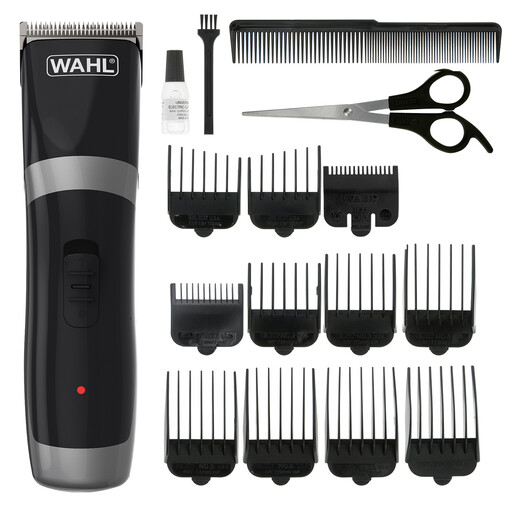
Why This Suits Their Persona: A practical starting point for occasional home haircuts, couples or families who want a broad set of attachments without relying solely on mains power.
The cordless model also supports corded use, while its detachable rinseable blades make cleaning more straightforward than a sealed, brush-only design.
Up to 60 minutes’ stated cordless runtime; 10 guide combs covering approximately 0.8 mm to 25 mm; ear taper combs included.
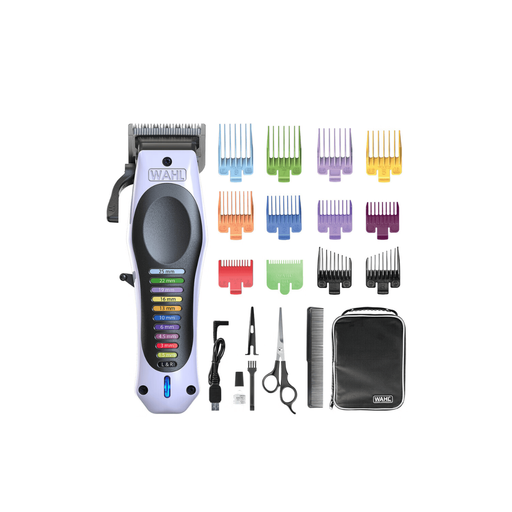
Why This Suits Their Persona: Suited to regular home barbers and households that value longer cordless sessions, clearer length selection and fine control for blending.
Its 10 colour-coded combs reduce guesswork, and cord-and-cordless operation limits disruption if the battery needs charging.
Up to 120 minutes’ stated runtime; adjustable taper lever; LED charge and low-battery indicator; lengths from approximately 0.7 mm to 25 mm.
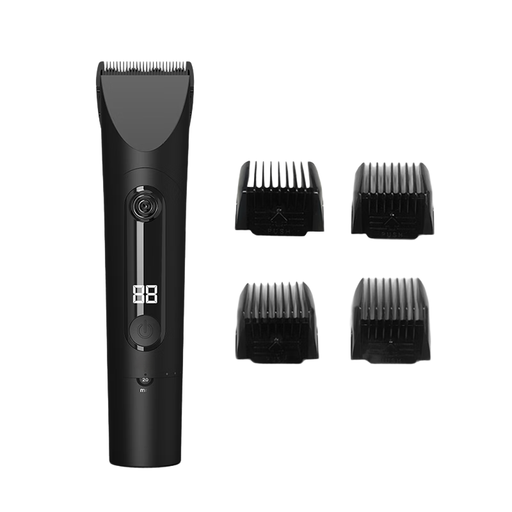
Why This Suits Their Persona: Designed for households seeking one electric hair clipper for adults, children and pet grooming, particularly where easy cleaning and lower operating noise are priorities.
The fully washable design is intended to simplify cleaning, while the product description identifies a low-noise motor for use around children or animals.
Suitable for adult, child and pet hair according to the listing; washable construction; lightweight ergonomic body with a non-slip grip.
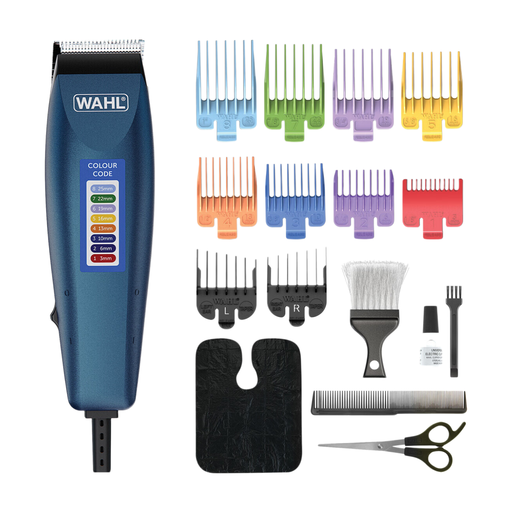
Why This Suits Their Persona: A sensible option for users who cut hair in one regular location and prefer continuous mains power over battery charging.
The corded design removes runtime calculations, while colour-coded combs make it easier to select a repeatable cutting length.
Constant mains operation; colour-coded guide combs; adjustable taper lever; self-sharpening stainless-steel blades listed.
Good maintenance can help preserve cutting consistency and reduce avoidable wear:
We have compiled a complete, real-time list of products that fully satisfy these strict selection criteria and UK safety regulations.
Yes, provided the runtime, cutting lengths and attachments match the planned haircut. Cordless models offer easier movement, while cord-and-cordless designs provide a useful backup when the battery is low.
Follow the individual manufacturer’s instructions. In general, regular oiling after cleaning helps reduce friction and supports smooth blade movement. Always switch off and disconnect the clipper before maintenance.
Most household hair clippers use relatively little electricity compared with larger grooming appliances. Running cost depends on the device’s power rating, charging frequency and electricity tariff. A rechargeable model may use less mains time per session, while a corded model avoids battery replacement and charging cycles.