At-home back-and-sides tidiers
You already wear your hair short and mainly want to restore its length and outline between haircuts. A guard that matches your usual cut and a clipper you can control at the back matter more than a large accessory kit.


For a straightforward short-hair tidy-up, choose a clipper whose guarded lengths include the cut you normally wear, then check its shortest setting and how securely you can handle it around the back and sides. Corded power avoids charging interruptions but leaves you working around a cable; cordless movement is more useful if you cut your own hair or blend lengths, provided the stated runtime, charging routine and supplied guards suit you.
You already wear your hair short and mainly want to restore its length and outline between haircuts. A guard that matches your usual cut and a clipper you can control at the back matter more than a large accessory kit.
You want to switch between short lengths or blend them yourself. Clear guard lengths and secure attachments matter; an adjustable taper lever is worth considering if you plan to practise transitions.
You want to repeat a familiar cut without much preparation. Decide whether you would rather work around a cable or remember to charge the clipper, and check the exact model’s cleaning and blade-care instructions.
Match the cutting lengths to your current style first. Then decide how much freedom of movement, blending control and upkeep you need for the way you trim.
| Concern | What to check | Who this matters to |
|---|---|---|
| Cutting length | Compare the comb-off cut and individual guard positions with the length you already wear. Do not rely on the total number of settings alone. | I want to repeat a close cut without accidentally going shorter than intended. Around 31% of consumers put predictable cutting length first. |
| Self-cutting and blending | Check whether you can handle the clipper around the back and sides; for a fade, check for an adjustable taper lever and suitable guards. | Reaching behind my head or moving between short lengths is the difficult part of my trim. For around 31% of consumers, that control is the primary concern. |
| Power format | For cordless use, compare stated runtime and charge time. For corded use, consider whether the cable reaches a suitable socket without restricting your trim. | I either need room to move around a mirror or want to start trimming without waiting for a charge. Around 23% of consumers chiefly prioritise that power choice. |
| Care and safe use | Read the exact model’s cleaning and oiling instructions, and check the supplied plug or adaptor before use. | I trim regularly and want a care routine I can follow without damaging the clipper. Ongoing care and safe use come first for around 15% of consumers. |
Some multi-groomers have a hair-cutting attachment, but its presence and guard range depend on the exact model. Philips distinguishes between its hair clippers and the hair-cutting attachments available on some multi-groomers.
Check that the model is intended for scalp hair and that its supplied guards cover your usual cut.
A larger kit does not tell you whether it includes the close cut or the steps between lengths that you need.
Compare the stated shortest cut, each relevant guard position and, if you plan to blend a fade, whether the model has a taper lever.
Care differs by model: Wahl recommends oiling its Elite Pro after each use, while cleaning instructions can distinguish removable blades from the electrical body.
Check the manual before washing or oiling any part. Keep the clipper body and adaptor out of water unless the instructions expressly permit a particular cleaning method.
Its home-clipper range includes corded models for repeatable short cuts and models with more length settings.
Its home-haircut kits include cordless options with guide combs and taper control for people who intend to blend short lengths.
Its Super-X Metal Series 7700U is an option to examine if cordless sessions and controls for more detailed short cuts matter to you.
These clippers and grooming kits offer different approaches to home trimming. Check the exact guards and power arrangements against your usual short cut; an all-in-one trimmer needs particular attention to its scalp-hair attachment.
 No image available
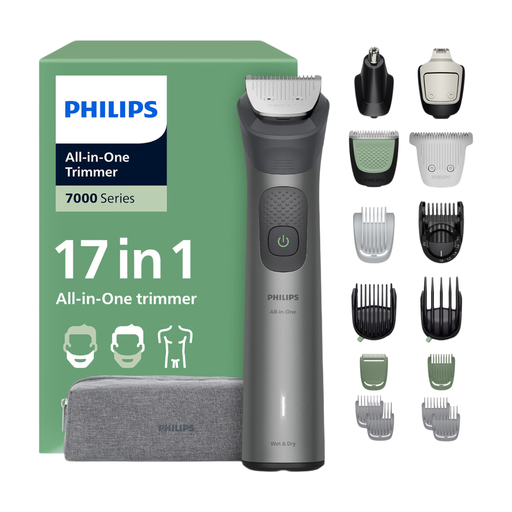
If you want one grooming device for more than one task, check which supplied attachment and guard positions are intended for scalp hair. The product title lists 22 length settings, but the positions relevant to your usual haircut are the ones to confirm.
 No image available
For home haircuts with a rechargeable clipper, confirm that the included combs match your regular short length. The product title identifies washable blades; follow the model’s instructions for cleaning them rather than immersing the clipper or adaptor.
 No image available
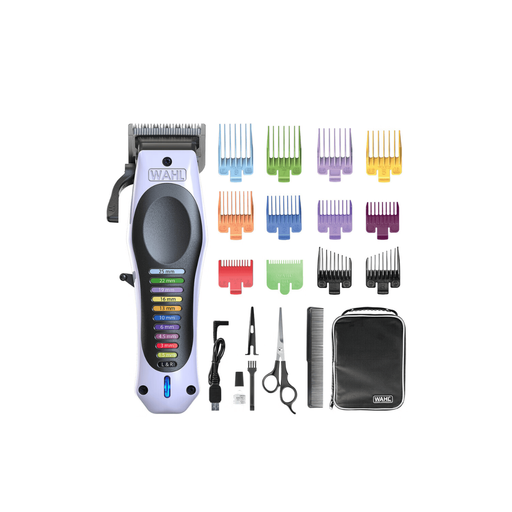
If you cut your own back and sides, a cordless kit avoids working around a cable. Check the supplied comb lengths and whether its adjustment controls suit the blending you intend to do, as well as the charge time and blade-care instructions.
 No image available
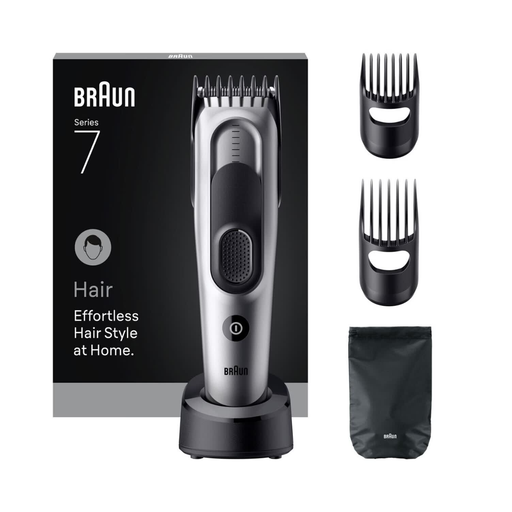
For a repeatable home trim, check that this model offers your preferred guarded length before relying on its setting count. Confirm the included styling tools and the plug or adaptor arrangement for your socket.
 No image available
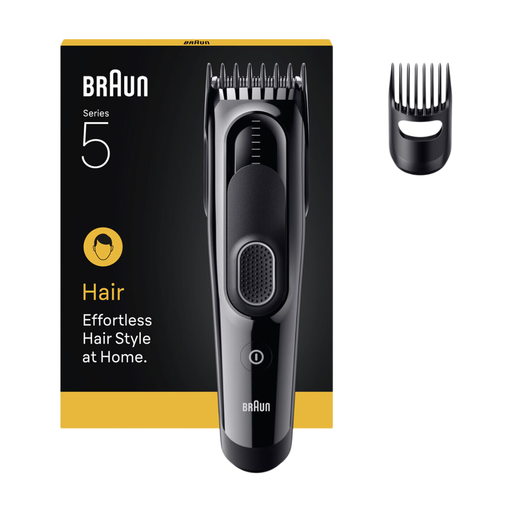
For regular home trimming, compare this model’s actual guard positions with the length you want to maintain. Confirm the setting count, supplied accessories and suitable charging adaptor for your socket before choosing it.
Start with the length you currently wear, then check that the clipper has a guard position for it and a shortest cut you are comfortable using. Philips specifies a 1–23 mm comb range and a 0.5 mm comb-off cut for the HC3510/15; other models have different positions, so their total setting counts are not a substitute for checking the actual lengths.
A taper lever is not necessary for a simple, single-length trim. Consider one if you intend to blend between short lengths or practise a fade, and check that the clipper also includes guards suited to the lengths you want.
Do not wash the whole clipper under running water unless the exact model’s instructions expressly allow it. Electrical Safety First advises against submerging a clipper or adaptor; where blades are removable or described as washable, follow the model-specific directions and keep electrical parts dry.
Check the supplied plug, adaptor and cable against the model’s instructions and your socket. Electrical Safety First says cabled hair clippers should have a fused UK three-pin plug and advises checking plugs and sockets for damage or scorch marks.
No; follow the maintenance instructions for the exact model. Wahl recommends oiling its Elite Pro after each use, whereas Philips says its HC3510/15 blades require no oil. Neither instruction should be assumed to apply to another clipper.