
24/7 Customer Support

Free returns

Same-day & Next-day Delivery

Quality Guaranteed

Unlock Your Welcome Offers: FREE Delivery | Up to 80% OFF | Free 30-day JoyPlus trial
Download the APP
Choosing a hair conditioner should be straightforward, yet the shelves are filled with products promising hydration, repair, volume, shine and colour protection. The challenge is separating useful product information from attractive packaging and broad marketing language.
A suitable conditioner can make hair easier to detangle, smoother to touch and more manageable after washing. However, the right choice depends on your hair texture, colour treatment, scalp preferences, fragrance tolerance and how often you wash. Here are the practical details to check before buying.
Conditioning agents and silicones can make hair feel softer and easier to comb immediately. That does not necessarily mean damaged strands have been permanently repaired. Hair conditioner primarily improves the feel, appearance and manageability of the hair surface.
If your concern is breakage, look for clearly listed ingredients such as panthenol, proteins, amino acids or conditioning agents, and treat claims such as “repair” or “strengthening” as cosmetic descriptions rather than medical or permanent results.
A thick, buttery formula may suit dry or coarse hair but can leave fine hair looking flat or greasy, particularly when applied near the roots. For a volumising conditioner for fine hair, consider a lightweight texture and apply it mainly from the mid-lengths to the ends.
Size can also be misleading. A 500ml bottle may offer better value for regular use, but a 200–250ml bottle can be more practical if you are testing a formula or travelling.
A purple conditioner for blonde hair contains violet pigments intended to help reduce the appearance of yellow or warm tones. It is not the same as a standard hydrating conditioner, and results vary according to hair porosity, colour and how often it is used.
Using a toning formula at every wash may not suit everyone. Alternate it with a regular conditioner if your hair needs additional softness, and follow the product directions carefully.
A silicone-free conditioner may appeal to shoppers who prefer to avoid silicones, while silicone-containing formulas can provide slip, smoothing and easier detangling. Neither option is automatically suitable for every hair type.
For a vegan hair conditioner, check the product description and packaging for the stated vegan status. “Natural”, “plant-based” and “cruelty-free” are not interchangeable terms. If you have a sensitive scalp, a sensitive scalp conditioner without artificial perfume or colour may be preferable, but fragrance ingredients can still be present in products described as gentle.
Most rinse-off conditioners work best when applied to wet, towel-squeezed hair from the mid-lengths to the ends. Leave the product on for the period stated on the label, which may range from around one to five minutes. A leave-in conditioner is a separate format and should not be rinsed away unless the instructions say otherwise.
Always check the current packaging for ingredients, warnings and storage details. Stop using a product if irritation occurs and avoid contact with the eyes.
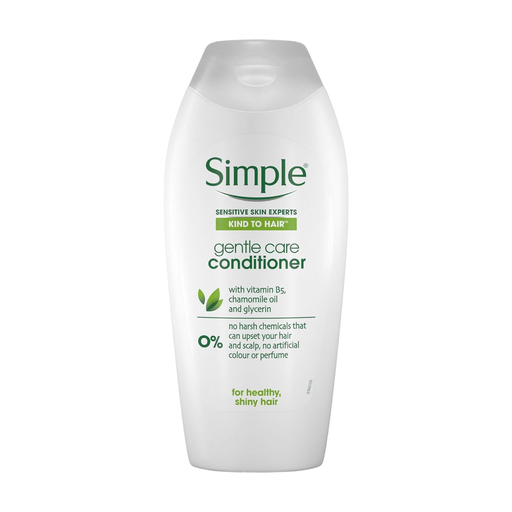
Why This Fits Their Persona: A larger 400ml format suits shoppers wanting a straightforward everyday conditioner for a regular UK washing routine.
The product description identifies no artificial perfume or colour, helping shoppers avoid choosing a heavily fragranced formula by accident.
Contains pro-vitamin B5, calendula and chamomile oil; the formula is described as suitable for sensitive scalps.
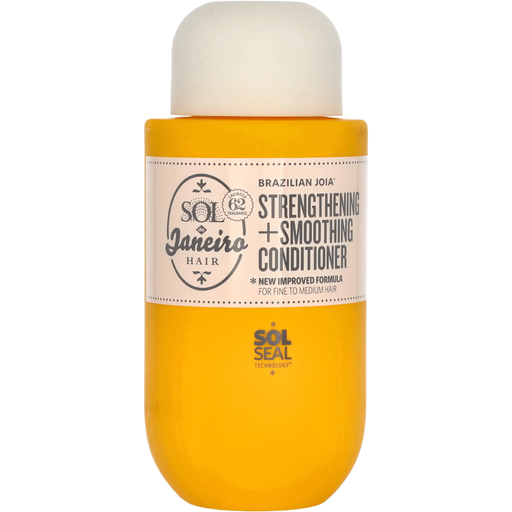
Why This Fits Their Persona: Suitable for shoppers who value a rich-feeling routine, a distinctive fragrance and smoothing care for dry or frizzy lengths.
The listing clearly identifies a strong pistachio and salted-caramel fragrance and notes that the formula contains Brazil nut, making ingredient and scent preferences easier to assess.
Sulphate-free formula with conditioning oils, shea butter, squalane and glycerin; listed as suitable for smoothing frizz.
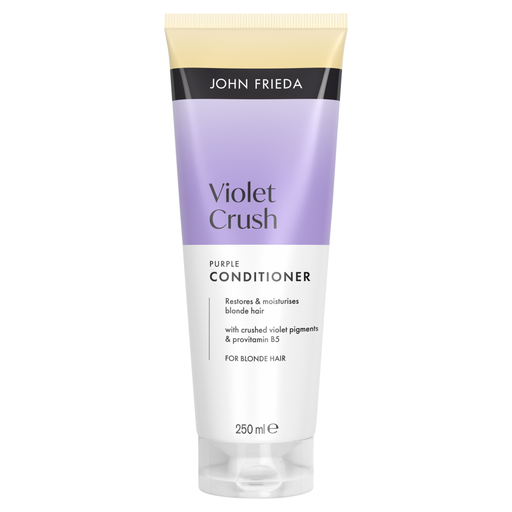
Why This Fits Their Persona: Designed for shoppers with blonde, highlighted, bleached or grey hair who want conditioning alongside occasional tone maintenance.
The violet pigment is clearly stated, so shoppers can distinguish a toning conditioner from an ordinary moisturising product.
Vegan and silicone-free formula with crushed violet pigments and pro-vitamin B5; 250ml size for controlled use.
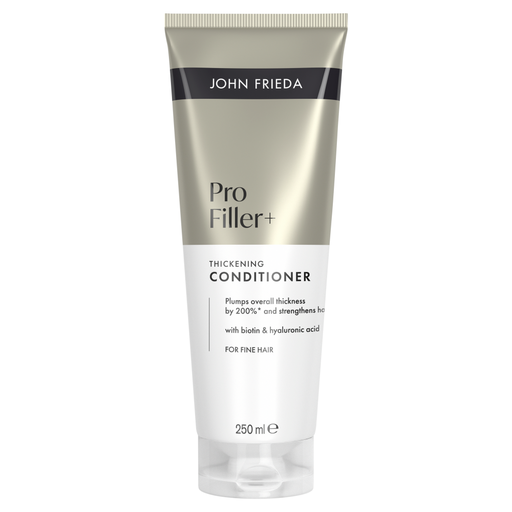
Why This Fits Their Persona: A targeted option for fine or fragile hair that needs conditioning without a heavy finish.
The lightweight, silicone-free positioning helps shoppers avoid automatically selecting a rich conditioner that may reduce movement in fine hair.
Contains hyaluronic acid and biotin; the listed formula is vegan, silicone-free and suitable for colour-treated hair.
We have compiled a complete, real-time list of products that fully satisfy these strict selection criteria and UK safety regulations.
Most people can use a rinse-off conditioner after each shampoo. Fine or oily hair may need a smaller amount, while dry, curly or damaged hair may benefit from consistent conditioning. Adjust the frequency if your hair feels coated, limp or difficult to style.
Purple conditioner is intended for blonde, silver, grey or highlighted hair where unwanted warm-looking tones are a concern. It is not essential for every blonde shade and should be used according to the label. Alternate it with a standard conditioner if your hair needs more moisture.
Usage depends on hair length, thickness, washing frequency and the amount applied. A 500ml bottle generally provides more applications than a 200–250ml bottle, but size alone does not determine value. Compare the price per 100ml and choose a dosage that suits your routine.