
24/7 Customer Support

Free returns

Same-day & Next-day Delivery

Quality Guaranteed

Unlock Your Welcome Offers: FREE Delivery | Up to 80% OFF | Free 30-day JoyPlus trial
Download the APP
A hair dryer can look impressive on a product page yet disappoint in daily use. High wattage, ion counts and motor speeds may sound persuasive, but they do not automatically guarantee quicker drying, comfortable handling or effective styling.
For UK shoppers, the most useful comparison focuses on airflow, temperature control, weight, attachments and electrical safety. Whether you need a high-speed hair dryer for busy mornings, a lightweight hair dryer for travel or a hair dryer with diffuser for curls, checking the practical details can prevent an unsuitable purchase.
A high-power hair dryer may consume more electricity without delivering noticeably stronger airflow. Drying performance also depends on the motor, fan design, nozzle shape and how effectively air reaches wet hair.
Compare the stated airflow speed or volume, motor type and speed settings rather than looking at wattage alone. For example, a compact model with a high-speed motor may feel more efficient than a traditional high-power dryer, while a 2,300W professional hair dryer may suit users who prefer forceful airflow and extended styling control.
Ionic and plasma systems are designed to help neutralise static, which may make hair feel smoother or less prone to flyaways. However, a large ion-count figure should not be treated as a guarantee of frizz-free results for every hair type.
Hair condition, humidity, brush technique and heat exposure still affect the finish. If you have frizzy, wavy or colour-treated hair, prioritise adjustable heat, a cool setting and a suitable attachment alongside ionic technology.
A dryer that feels manageable for two minutes may become tiring during a full blow-dry. Bulky handles can also be inconvenient in smaller UK bathrooms or shared accommodation. Check the product weight, handle shape, cord arrangement and whether it folds flat.
A portable hair dryer is useful for short trips, but confirm that it has a suitable 220–240V UK specification. A dual-voltage travel hair dryer may be more practical for international travel, provided the correct plug or adaptor is used.
For fast-drying results, look for a clear combination of:
A high-power hair dryer is not automatically suitable for fine or heat-sensitive hair. Strong airflow can be useful, but it should be paired with sensible distance, movement and lower heat where needed.
A hair dryer with temperature control gives you more flexibility than a single hot setting. Three temperature levels and two speed levels provide six combinations, while some advanced models offer preset modes or intelligent temperature monitoring.
For everyday use, begin with a warm or moderate setting and keep the dryer moving. Use a cool shot or cold-air mode for finishing and shaping. If the listing mentions a sensor, check what it actually monitors; temperature regulation can help provide more consistent heat, but it does not remove the need for careful use.
A hair dryer with concentrator directs air onto a smaller section, making it useful for straightening with a brush or smoothing the ends. A hair dryer with diffuser spreads airflow more gently across curls and waves, helping preserve their natural pattern while drying.
Also check how attachments fit. Magnetic or 360-degree removable nozzles are convenient, while a loose-fitting attachment may interrupt styling. If you mainly rough-dry hair, a concentrator may be sufficient. Curly or wavy hair usually benefits more from a diffuser and lower airflow.
Hair dryers are electrical appliances and should never be used near a bath, shower, sink or standing water. Unplug the appliance after use, particularly in a bathroom, and do not operate it if the cord, plug or casing is damaged.
Keep the air inlet and outlet clear, allow hot attachments to cool before removal, and clean the filter according to the manual. These simple steps can help reduce overheating and maintain airflow over time.
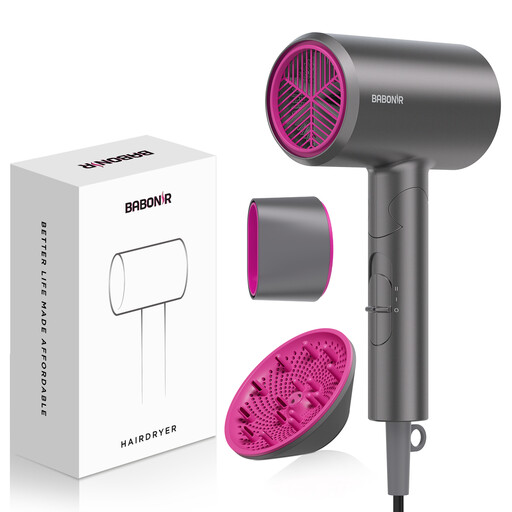
Why This Fits Their Persona: A practical everyday and short-trip option, with a foldable handle and 330g body for easier storage and handling in smaller homes.
It combines stated 1800W power with 20,000 RPM motor speed, rather than relying on wattage alone, and includes adjustable settings.
3 temperature settings, 2 power settings, diffuser and concentrator included.
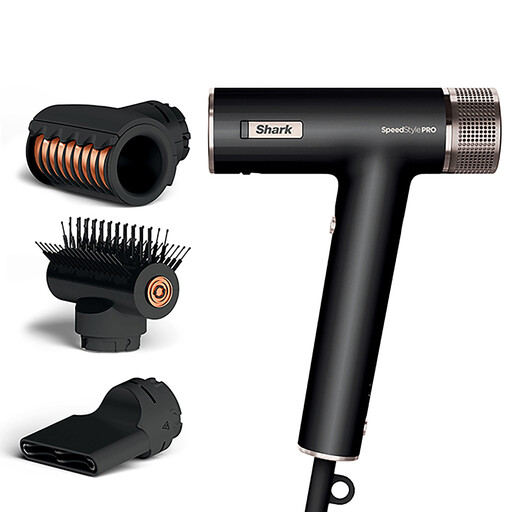
Why This Fits Their Persona: Suits shoppers who want a coordinated home styling system for straight or wavy hair, rather than a basic dryer and separate tools.
Its listing specifies Scalp Shield mode and temperature measurement up to 1,000 times per second; treat these as design features, not a promise of zero heat damage.
Three styling attachments, built-in ionising technology and a two-year guarantee upon registration in the UK and ROI.
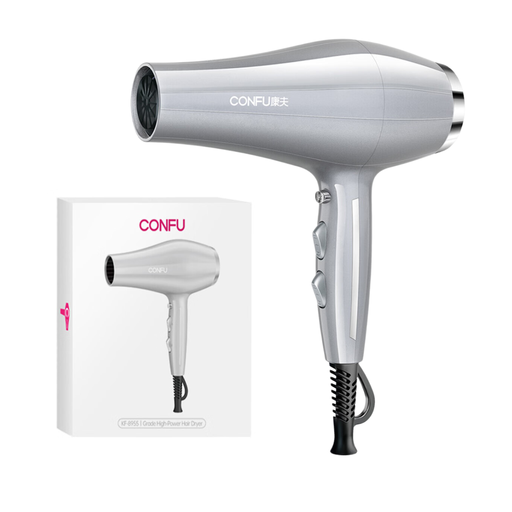
Why This Fits Their Persona: Its 2,300W output and multi-setting design suit frequent home styling or users who prefer strong, continuous airflow.
The listing provides airflow and adjustment details, including 21,000 RPM, 21m/s airflow and seven combined modes.
Constant-temperature technology and automatic overheat protection are listed alongside hot, warm and cool combinations.
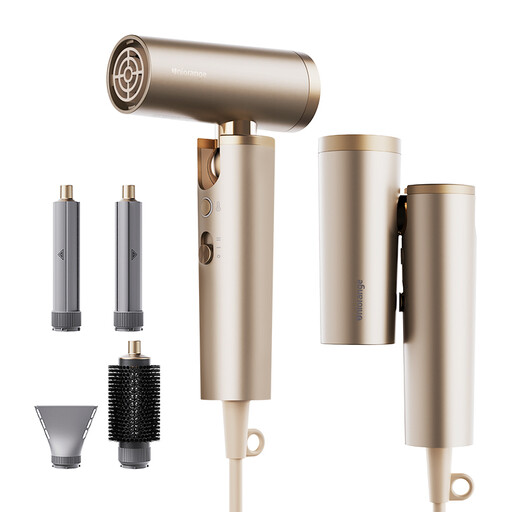
Why This Fits Their Persona: The compact foldable format is suited to suitcases, backpacks and shoppers who want one styling tool for home and travel.
It lists dual voltage from 100–240V and a detachable filter, addressing common travel and maintenance concerns.
Four attachments, including a concentrator, volumising brush and left/right curling barrels, plus a self-cleaning mode.
We have compiled a complete, real-time list of products that fully satisfy these strict selection criteria and UK safety regulations.
There is no universal replacement interval. Replace it if the cord or plug becomes damaged, the casing cracks, airflow drops significantly, or it repeatedly overheats or makes unusual noises. Regularly cleaning the filter and storing the dryer dry may help maintain performance.
Running cost depends mainly on power rating and usage time. A 1,600W dryer used for a shorter period may consume less electricity than a 2,300W model used for longer, but actual results depend on hair length, density and airflow efficiency. Compare wattage with realistic drying time rather than relying on motor RPM alone.
Check the voltage and plug before use. A dryer rated for 220–240V is generally aligned with UK domestic supply, but it must still have a suitable UK plug or an appropriate approved adaptor. Dual-voltage models are more flexible abroad; follow the manufacturer’s instructions and never use the appliance near water.