
24/7 Customer Support

Free returns

Same-day & Next-day Delivery

Quality Guaranteed

Unlock Your Welcome Offers: FREE Delivery | Up to 80% OFF | Free 30-day JoyPlus trial
Download the APP
A new hair dryer can look impressive on a product page yet still disappoint in daily use. High motor speeds, ion counts and “salon-quality” styling claims do not automatically mean a dryer will suit your hair, bathroom or routine.
For UK shoppers, the practical choice comes down to airflow, controls, attachments, weight, noise and electrical safety. This guide explains the main buying pitfalls, then matches a selection of hair dryers to different needs.
A high RPM figure can indicate a fast motor, but it does not tell you everything about the airflow reaching your hair. Fan design, outlet shape and heat control also affect performance. A dryer with a 110,000 RPM motor may be compact, while a conventional 2,300W model may provide a broader, forceful airflow.
Check the full specification for airflow speed, power output, wind settings and temperature options rather than relying on RPM alone.
An ionic hair dryer may help reduce static and the appearance of flyaways. However, large ion figures are not a universal measure of results and should not be treated as a medical or hair-health guarantee. Hair texture, products used and drying technique all make a difference.
For frizz-prone hair, look for adjustable heat, a cool-shot function and a suitable attachment alongside ionic or plasma technology.
A lightweight hair dryer is easier to hold, especially during a long styling session, but some compact models offer only a basic nozzle. If you have curls, waves or Afro-textured hair, a hair dryer with diffuser or pik attachment may be more useful than an ultra-compact body.
Also check whether attachments become hot, how securely they fit and whether the air filter can be removed for cleaning.
For everyday home use, power ratings around 1,400W to 1,800W can offer a practical balance between airflow and energy use. Higher-rated models, such as 2,300W dryers, may suit thick or longer hair but can be heavier and louder.
A high-speed hair dryer with several speed levels gives better control: use stronger airflow for initial drying and lower airflow for shaping. Do not hold hot air on one section for too long. Keep the dryer moving and follow the manufacturer’s instructions.
Look for at least two heat levels, a cool setting and, ideally, a cool-shot button. More settings make it easier to adapt the dryer for fine, thick, curly or textured hair.
Some models list temperature sensors or constant-temperature modes. These can help regulate output, but they do not remove the need for sensible use. Keep the nozzle away from the scalp and allow hot attachments to cool before removing or storing them.
A portable hair dryer is useful for short trips, small bedrooms or gym bags. Foldable handles make storage easier, but check the voltage specification before international travel. A UK-ready 220–240V model is suitable for UK mains; dual-voltage products may be more flexible abroad when used with the correct plug arrangement.
Noise figures are normally given in decibels. A quoted level such as 56–58dB can help with comparison, although room acoustics and distance affect what you hear.
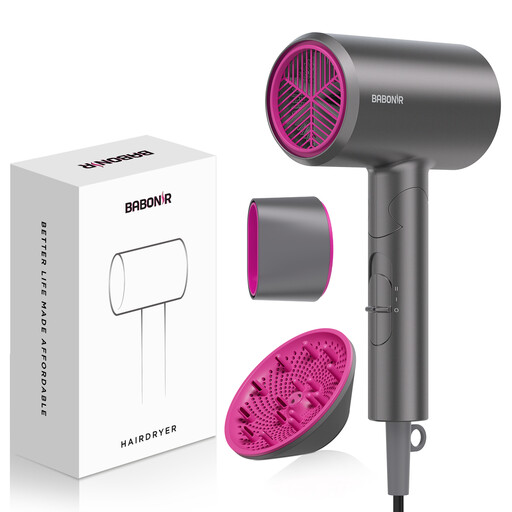
Why This Suits Their Persona: A practical everyday option for UK homes, university rooms and short trips where storage space matters.
It combines a foldable handle with a stated 330g weight, while offering three temperature and two power settings instead of relying on one fixed heat level.
1800W output, diffuser and concentrator included, 20,000 RPM motor and foldable portable design.
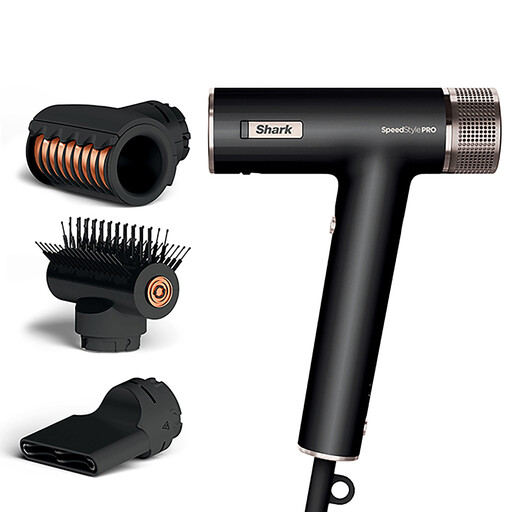
Why This Suits Their Persona: Suits shoppers wanting a dedicated styling system for straight or wavy hair, with several tools in one package.
Its listed Scalp Shield mode and temperature regulation provide more control than a basic two-setting dryer. Follow the supplied instructions for safe use.
Three styling attachments, high-velocity airflow and a listed two-year guarantee upon registration with Shark UK and ROI.
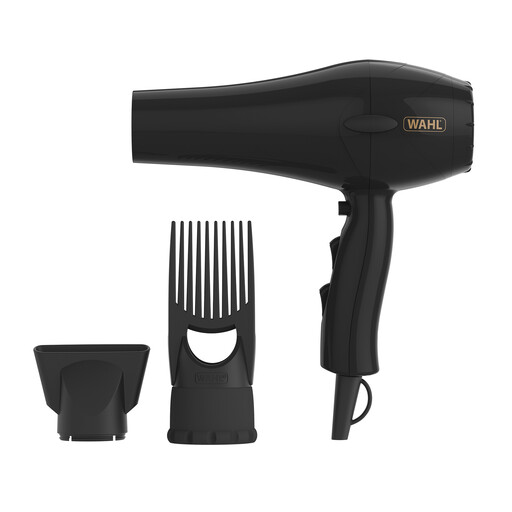
Why This Suits Their Persona: Designed for shoppers with Afro, curly and textured hair who need root access and controlled airflow.
The OnePik attachment is intended to direct airflow towards the roots, while the product guidance limits attachment use on the highest heat setting.
Three heat settings, two speed settings, cool shot, concentrator nozzles and a 3m cable.
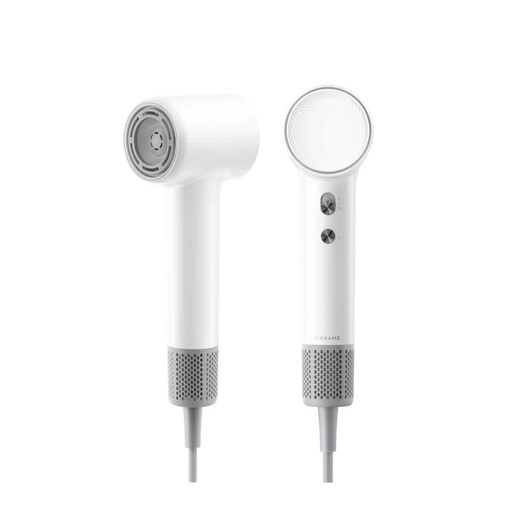
Why This Suits Their Persona: A compact choice for commuters, frequent travellers and households where lower quoted noise is important.
The stated 270g weight and ≤58dB noise rating are clear specifications to compare, rather than vague claims about being small or quiet.
100,000 RPM motor, five modes, 220–240V UK-ready specification and compact body.
A hair dryer is designed for human hair and controlled heat. A cordless leaf blower is intended for outdoor debris and can propel stones or other objects, so it requires eye and hearing protection. For garden work, the FLORA GUARD 600W model lists six speeds, up to 50m/s airflow and two batteries.
An electric air duster is more suitable for removing dust from keyboards, car interiors and small equipment. Products such as the JUFINX X7 and WOLFBOX MF100 are rechargeable cleaning tools, not substitutes for hair dryers. Do not use a blower or air duster on hair or near skin.
We have compiled a complete, real-time list of products that fully satisfy these strict selection criteria and UK safety regulations.
They may help reduce static and visible flyaways, but results vary by hair type and technique. Use moderate heat, keep the dryer moving and select a diffuser for curls or textured hair.
Running cost depends on wattage and usage time. A 1,600W dryer uses 1.6kWh if operated continuously for one hour. To estimate the cost, multiply 1.6 by your electricity tariff and by the number of hours used. Actual drying time is normally much shorter.
Lifespan depends on build quality, cleaning and frequency of use. Keep the air intake clear, clean a removable filter regularly and stop using the appliance if it smells of burning, overheats or makes abnormal noises. Always unplug it after use and keep it away from water.