Front-layer precision stylers
If you regularly shape shorter layers or a curtain fringe with a brush, you need to aim airflow at a small section without blowing the surrounding hair out of place.


For controlled drying of face-framing layers, look for a slim concentrator, adjustable heat and airflow, and a cool-shot control. If you regularly shape short sections with a brush, consider how comfortably you can hold and aim the dryer; if you often dry close to the hairline, a model with proximity-based heat adjustment is another option, provided its attachment bundle suits your routine.
If you regularly shape shorter layers or a curtain fringe with a brush, you need to aim airflow at a small section without blowing the surrounding hair out of place.
If you dry near your hairline, you may want a choice of heat settings or a model-specific feature that adjusts heat as the dryer moves closer.
If you mainly want a manageable dryer for your usual routine, a concentrator and cool shot may give you the finishing controls you need for occasional front-layer styling.
Start with the attachment and controls you will use on a small front section, then consider how the dryer feels to hold through your routine.
| Concern | What to check | Who this matters to |
|---|---|---|
| Airflow precision | Check that the exact model includes a slim concentrator and lets you adjust airflow. | When I turn short front pieces with a brush, I want air directed at the section I am shaping. Around 50% of consumers would put precise airflow first. |
| Heat near the hairline | Look for selectable heat settings; if considering automatic adjustment, check how that model’s mode works. | If I often dry close to my hairline, I want control over the heat I use there. Heat management would be the primary concern for around 30% of consumers. |
| Everyday handling | Consider the dryer’s weight and balance, and confirm whether it has a cool shot for finishing. | When I hold a dryer and brush through a longer routine, comfortable handling matters more to me than a headline power figure. Around 20% of consumers would make everyday handling their first priority. |
Electrical Safety First associates higher wattage with greater power and faster drying, but wattage does not tell you whether a dryer has the nozzle or controls you want for a small front section.
Compare the included concentrator, heat and speed settings, and cool-shot control alongside the power figure.
Dyson’s Supersonic Nural manual says some attachments may not be included. A missing styling concentrator could change how well a particular bundle fits your routine.
Check the exact product’s included-attachments list before ordering.
If the attachment you need is separate, obtaining it adds another step before you can use that styling setup.
Using an electrical appliance near water presents an electric-shock risk. Electrical Safety First advises against using a hair dryer in a bathroom or near a sink full of water.
Choose a dry styling location away from water, and unplug the dryer after use.
Terms such as ionic, ceramic or sensor-controlled describe different product features; they do not guarantee how your front layers will look.
Confirm the nozzle and controls on the exact model, then choose settings and section sizes that suit your styling routine.
BaByliss has relevant conventional and digital-motor models with concentrators and manual controls.
The Supersonic Nural is relevant if close-range heat adjustment and dedicated styling attachments matter to you.
Shark’s SpeedStyle range is another attachment-led route to consider for front-layer styling.
These dryers offer attachments or controls relevant to drying face-framing layers. Check the exact nozzle and finishing controls against your routine, particularly if you need narrowly directed airflow or a cool shot.
 No image available
Consider this model if you want a concentrator for directing air at a front section. The product name specifies 1800W and lists both a concentrator and a diffuser.
If an unheated finishing blast matters to you, check whether this exact model has a cool-shot control. Keep hot attachments away from your face and allow them to cool before storage.
 No image available
Consider its listed nozzle and temperature and air-speed controls if you want to adjust your approach to front sections. The product name also lists a diffuser.
Check the nozzle’s shape if you need a particularly narrow airflow path, and confirm whether the controls include a dedicated cool shot.
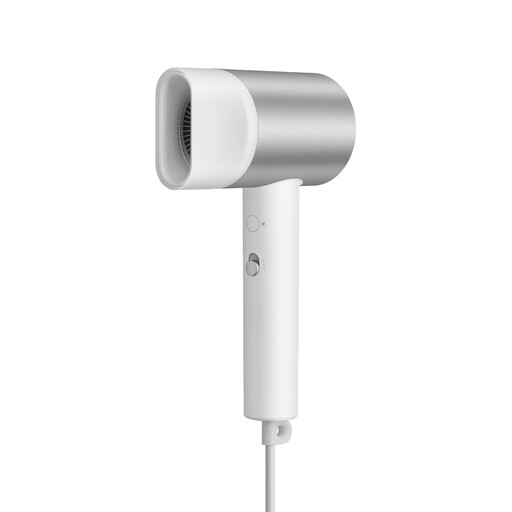 No image available
Consider this model if a magnetic styling nozzle and its listed hot-and-cool air cycle appeal to your routine. The product name specifies 20 m/s airflow, but that figure alone does not establish precision on short layers.
Check the nozzle’s shape, whether airflow can be adjusted separately and whether there is a dedicated cool-shot control.
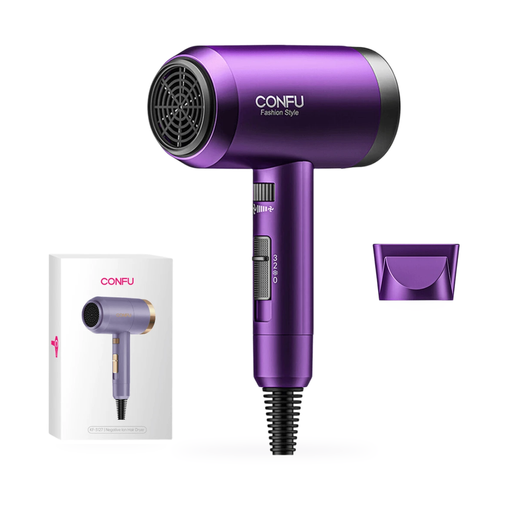 No image available
Consider this model if you want to assess a dryer listed with two nozzles for directing airflow while styling. Its product name specifies 1800W.
Check which nozzles come with this exact product and how its airflow controls work before choosing it for narrow front sections.
A slim concentrator and adjustable heat and airflow help you direct drying at a small section rather than using one fixed output. A cool shot gives you an unheated finishing option; check that the exact dryer includes both the nozzle and controls you want.
No: wattage alone does not tell you how precisely you can direct airflow. Electrical Safety First links higher wattage with greater power and faster drying, but for front-layer shaping you should also compare the nozzle and adjustable settings.
If you want a smooth, directed front section, check for a concentrator first. A diffuser serves a different styling aim when you want to work with curls, waves or texture over a wider area.
Use it away from water, and follow Electrical Safety First’s advice not to use a hair dryer in a bathroom or near a sink full of water. After use, unplug it, let it cool on a heat-resistant surface and follow the manufacturer’s cleaning instructions; stop using it if the cable or plug is damaged.