Long-hair quick-dry users
If drying thick or long hair takes time, you may want to compare airflow information without relying on maximum heat throughout the session.


For long hair dried in a bedroom, start with airflow information and separately adjustable heat and speed settings rather than choosing by wattage or motor speed alone. If you use the dryer near other people, look for independently measured noise data where available; also check that its weight, cable and attachments suit your routine.
If drying thick or long hair takes time, you may want to compare airflow information without relying on maximum heat throughout the session.
If you dry your hair early, late or near someone else, noise, comfortable handling and the length of your routine all matter.
If you dry long hair frequently, adjustable heat and speed give you more control than a single high-temperature setting.
For long hair and bedroom use, compare how the dryer moves air and lets you adjust heat, then consider disturbance, handling and the finish you want.
| Concern | What to check | Who this matters to |
|---|---|---|
| Drying time | Look for a stated airflow figure or independent wind-speed test, and check that heat and speed can be adjusted separately. | When drying my long hair takes too long, I want useful airflow information rather than another motor-speed claim; around 36% of consumers put a shorter drying routine first. |
| Heat control | Confirm the exact model’s heat and speed settings, including whether a lower-heat option is selectable. | If I dry my hair regularly, I want to change the heat as I go instead of leaving it at the highest setting; roughly 29% of consumers prioritise heat management. |
| Bedroom disturbance and handling | Seek independently measured noise data where available, and check the stated weight and cable length. | Early or late drying could disturb someone nearby, and I need the dryer to remain comfortable to hold; about 21% of consumers put disturbance and handling first. |
| Styling control | Check which attachments come with the exact variant: a concentrator for directed brush drying or a diffuser if it suits your texture and routine. | When I shape my hair while drying it, the right attachment matters more to me than extra modes I may not use; around 14% of consumers prioritise control over the finish. |
Wattage describes electrical power and RPM describes motor rotation; neither, by itself, tells you how much air reaches your hair.
Compare airflow information or independent wind-speed tests where available, then check the controls and included nozzle on the exact model.
Bedding and other soft surfaces can obstruct air openings near your bedroom styling area.
Keep the air openings clear. Electrical Safety First advises unplugging the dryer after use and letting it cool on a heat-resistant surface.
An acoustic-system or reduced-noise claim is not a comparable decibel measurement, particularly when you are trying not to disturb someone nearby.
Look for independently measured noise results where available, and check the conditions under which different dryers were tested.
A bedroom dryer is a mains appliance, so suitability for your socket and clear support if something goes wrong matter alongside styling features.
Choose a reputable retailer, confirm that the exact product has a standard UK three-pin plug, and keep your proof of purchase.
The 3000 Series BHD350/10 is a conventional dryer to consider if you want several settings and a heat-management attachment.
The Helios is a styling-focused option for people who use directed airflow and a nozzle while blow-drying long hair.
The Supersonic Nural is a sensor-led option if automatic adjustments matter to your drying routine.
These dryers offer different ways to control airflow, heat or styling while drying long hair. For bedroom use, weigh those features against the handling details and any noise information available for the exact model.
 No image available
Consider this model if you want adjustable drying and both a smoothing nozzle and diffuser. Its listing states 70 m/s airflow, two airflow speeds, four temperature levels, NTC temperature control, a 345 g weight and a 1.8 m cord. The airflow and noise figures are product claims, not independent comparisons; check the plug supplied with the exact product before buying.
 No image available
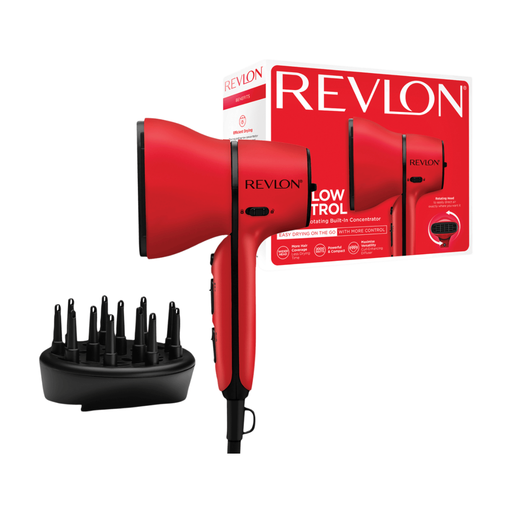
Consider this model if you direct airflow while styling or want a diffuser for your routine. The product description specifies a rotating concentrator, curl-enhancing diffuser, three heat settings, two speeds and a cool shot. If bedroom disturbance is a priority, look for noise information for this exact model and confirm its plug before buying.
 No image available
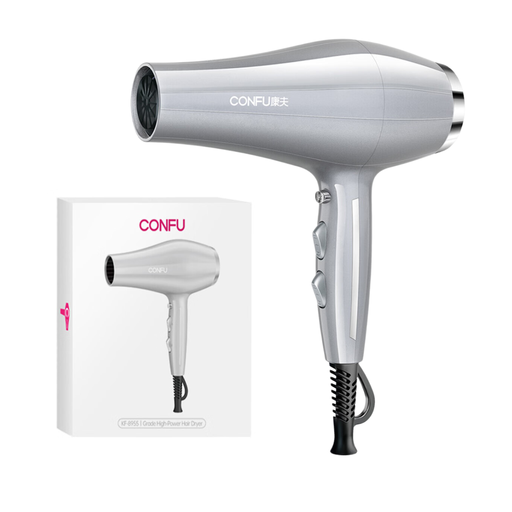
Consider this model if you want a stated airflow figure alongside adjustable heat and speed. The listing gives 21 m/s airflow, two speed adjustments and three temperature settings, and describes constant-temperature technology. Treat the airflow and temperature wording as product claims; check the attachments, bedroom-use details and plug for the exact variant.
 No image available
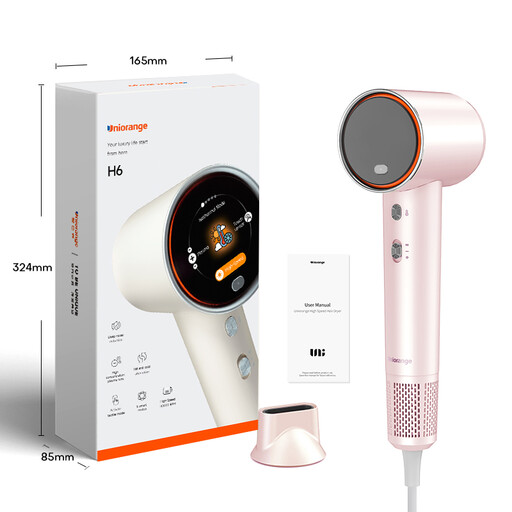
Consider this variant if a concentrator and selectable drying modes fit your routine. Its listing states airflow up to 25 m/s, five smart modes, temperature and speed control, and an LCD screen. The airflow figure is a product claim; check the individual mode settings, noise information and plug before buying.
Not necessarily: wattage describes electrical power, while motor RPM describes rotation rather than the airflow reaching your hair. Start with airflow information or independent wind-speed testing where available, then check heat and speed controls.
Keep the air openings clear and never leave a running dryer on bedding or another soft surface. Electrical Safety First advises unplugging it after use and letting it cool on a heat-resistant surface; stop using an appliance if its cable is damaged or you notice sparking or an unusual smell.
No: a reduced-noise claim alone does not tell you how one dryer sounds beside another person’s bedroom. Look for independently measured noise results where available and pay attention to the conditions of the test.
Confirm that the exact variant comes with a standard UK three-pin plug, the attachments you need and clear seller support. If you plan to use it near others, also check for useful noise, weight and cable information rather than assuming those details from the product range.