
24/7 Customer Support

Free returns

Same-day & Next-day Delivery

Quality Guaranteed

Unlock Your Welcome Offers: FREE Delivery | Up to 80% OFF | Free 30-day JoyPlus trial
Download the APP
A hair dryer and styler can simplify your routine by combining drying, smoothing, volumising or curling in one appliance. However, the wide range of one-step hair dryer brushes, hot air brushes and multi-styler hair dryers makes it easy to pay for features that do not suit your hair or daily routine.
Before choosing, look beyond phrases such as “professional performance” or “faster drying”. The useful questions are more practical: how many heat settings does it have, which attachments are included, how easy is it to clean and is it suitable for your hair texture?
Wattage indicates electrical power consumption, but it does not independently confirm airflow speed or drying time. A 2-in-1 volumising hair dryer may have a lower wattage than a conventional dryer because it is designed to brush and shape hair at the same time.
Check the complete specification, including heat settings, speed settings, motor design and attachments. For thick or Afro-textured hair, a tool with a suitable pik attachment or strong directed airflow may be more useful than wattage alone.
An ionic hair dryer may help reduce static and flyaways during styling, but results vary according to hair condition, humidity, technique and product use. Ionic technology does not replace heat protection or careful temperature control.
If your main concern is frizz, look for a concentrator, smoothing brush or diffuser as well as ionic conditioning. These accessories help you direct airflow according to your desired finish.
A multi-styler hair dryer can offer drying, curling, smoothing and volume functions, but several attachments may increase storage needs and preparation time. Check whether heads change quickly, whether the handle feels manageable and whether the device can be stored safely while hot.
For occasional waves, a simpler hair dryer brush may be more convenient. For frequent styling changes, an appliance with interchangeable brushes and curling barrels may offer better value.
At least two heat settings and two airflow speeds provide more flexibility than a single high-temperature mode. Fine hair generally benefits from lower heat, while thicker hair may need stronger airflow and sectioning rather than simply increasing temperature.
A cool shot function is useful for finishing a section and helping the shape hold. It should not be viewed as a substitute for a proper heat-protection product.
Choose accessories based on your normal styling method:
If you are comparing an Afro hair dryer with a conventional blow-dry brush, prioritise root access, attachment security and airflow control.
Corded appliances sold for UK use should be compatible with standard UK mains power. A longer cable, such as a 2.2m or 3m cord, can be useful when the nearest socket is not beside your mirror.
A removable filter is also worth checking. Hair and dust can restrict airflow, causing the appliance to work less efficiently or activate overheat protection. Always follow the supplied instructions, keep air inlets clear and allow heated attachments to cool before storage.
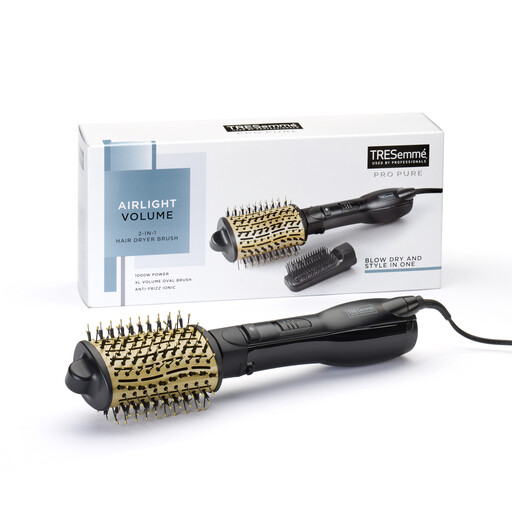
Why This Fits Their Persona: A practical starting point for UK shoppers wanting to dry, smooth and add volume without buying several separate appliances. The 1000W design includes an XL oval volumising brush and a smoothing vent brush.
The interchangeable heads make the styling purpose clear, rather than relying on one oversized brush for every finish. Three heat and speed settings plus cool shot provide basic control.
1000W performance; XL oval brush for root lift; 2.2m swivel cord and 3-year manufacturer guarantee.
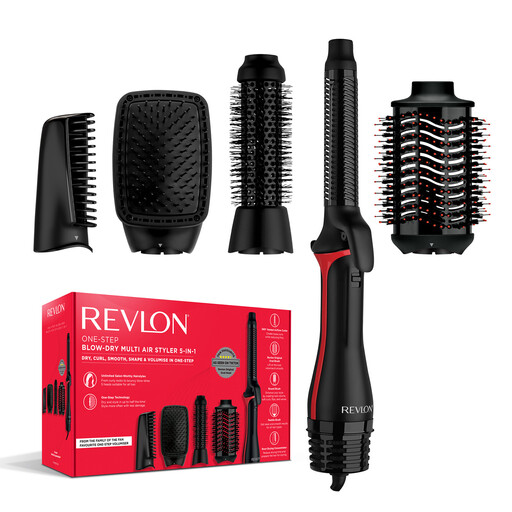
Why This Fits Their Persona: Suitable for shoppers who want one appliance for regular changes between volume, smoothing, curls and straightening. It includes five interchangeable attachments and three heat settings plus cool shot.
The root-drying concentrator separates initial drying from finishing, reducing the temptation to style soaking-wet hair with a brush attachment.
Includes oval, round, paddle and vented curling attachments; approximately 2.5m cord; UK-standard voltage.
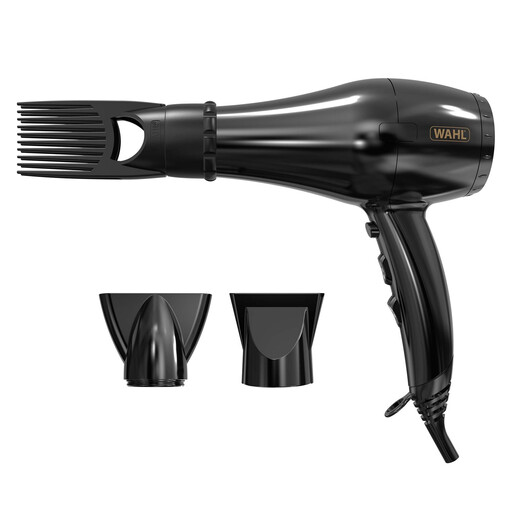
Why This Fits Their Persona: Designed for shoppers with Afro, curly or textured hair who need strong airflow and root access. The OnePik attachment, two concentrator nozzles and 3m cord support detailed home styling.
The root-focused pik attachment addresses hard-to-dry areas, while three heat and two speed settings avoid dependence on one high-temperature mode. The instructions advise against using attachments on the highest heat setting.
1800W motor; ionic conditioning; OnePik attachment and two concentrator nozzles; overheat protection system.
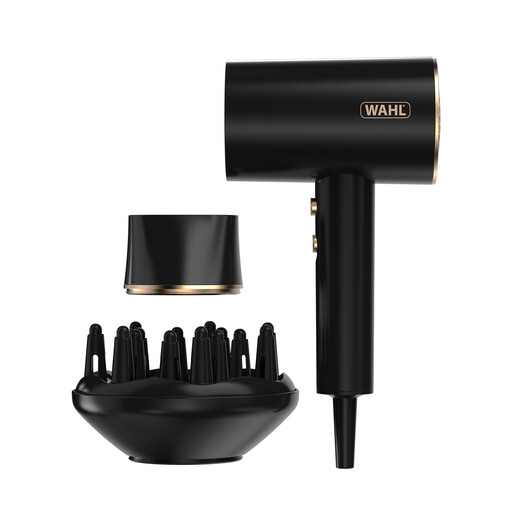
Why This Fits Their Persona: A useful everyday option for people who want a conventional dryer with a diffuser for curls and waves, plus a concentrator for smoothing. Its stated weight is approximately 280g.
It does not force every hairstyle through a fixed brush shape. The diffuser and concentrator let users select airflow distribution for curls, waves or directed smoothing.
2100W power; two heat and two speed settings; diffuser and concentrator included; cool shot and overheat protection.
We have compiled a complete, real-time list of products that fully satisfy these strict selection criteria and UK safety regulations.
Start with towel-dried, sectioned hair rather than hair that is dripping wet. Apply a suitable heat-protection product, keep the appliance moving and avoid holding a hot attachment against the scalp. Never use a corded styling appliance near a bath, basin or other water source.
Clean the filter and brush heads according to the manual. Unplug the appliance after use, allow it to cool fully and inspect the cable periodically. These simple steps can support reliable operation and reduce avoidable wear.
It can be, provided it offers a low heat setting and is not held in one place for too long. Select a smaller brush or smoothing head where available, use heat protection and allow the tool to do the shaping gradually.
A diffuser can distribute airflow more gently across curls and waves, while a pik attachment is designed to reach closer to roots and denser sections. Compare the attachment shape and temperature controls rather than relying only on the product title.
Running cost depends on the appliance’s wattage, how long it is used and the electricity tariff. A 2100W dryer uses more power per hour at full output than a 1000W hot air brush, although actual use varies with heat and speed settings. Choose the lowest effective setting and switch the appliance off when not in use.