
24/7 Customer Support

Free returns

Same-day & Next-day Delivery

Quality Guaranteed

Unlock Your Welcome Offers: FREE Delivery | Up to 80% OFF | Free 30-day JoyPlus trial
Download the APP
A hair dryer and styler can replace several separate tools, but only if its airflow, attachments and heat controls suit your routine. The wrong model may leave thick hair damp, make fine hair flat or turn a promising multi-styler hair dryer into an expensive device that spends most of its time in a drawer.
Before buying, look beyond phrases such as “professional results” or “advanced technology”. The useful questions are more practical: Can it dry your hair efficiently? Are the attachments suitable for your texture? Is the handle comfortable? Can you use it safely on damp hair without relying on excessive heat?
A 5-in-1 or 9-in-1 air styler may look economical, but attachment quality and usefulness matter more than the number printed on the box. Check whether the kit includes the tools you will actually use, such as a diffuser for curls, a concentrator for smoothing or an automatic curling hair styler attachment.
Also check how attachments connect. A loose fit can interrupt styling, while a hot barrel that must be changed frequently can be inconvenient and unsafe if you do not allow it to cool first.
Wattage describes electrical power consumption, not guaranteed airflow or styling performance. A compact high-speed motor may move air differently from a traditional 2,000W dryer. Look for the combination of motor design, airflow settings, nozzle choice and hair density.
People with thick, curly or Afro-textured hair should prioritise controlled airflow and a suitable pik or diffuser attachment rather than relying on wattage alone.
An ionic hair dryer may help reduce static and make hair feel smoother, but it cannot compensate for unsuitable technique or excessive heat. Similarly, “low heat” does not mean risk-free heat. Keep the dryer moving, avoid holding hot air close to one section and use a heat protectant appropriate for your hair.
If a listing refers to reduced damage or clinical-style results, treat those statements as product claims rather than guaranteed outcomes. More useful evidence is a clearly stated temperature system, cold-shot button and range of heat settings.
At least two heat and two speed settings provide basic flexibility, while three or four heat options make it easier to adapt the tool to fine, thick, wavy or textured hair. A cool-shot function is useful for finishing a blow-dry and helping the shape of a curl or wave settle.
For fragile, colour-treated or fine hair, a lower heat setting is generally more practical. Thick hair may need stronger airflow, but high heat should not be the default from roots to ends.
A hair dryer brush is convenient for smoothing and volume, but it may not provide the same curl options as a dedicated air styler. Choose based on your usual finish rather than the maximum number of functions.
Weight, grip shape and cable length affect comfort during a full styling session. A lightweight model can help reduce wrist fatigue, while a longer cable is useful near a mirror. For travel, check whether the appliance is foldable and whether it supports the voltage used at your destination; a UK plug alone does not guarantee worldwide voltage compatibility.
Look for a removable or accessible filter. Hair and dust can restrict airflow and trigger overheating protection. Always follow the supplied instructions, keep air inlets clear and avoid using any mains-powered appliance near water.
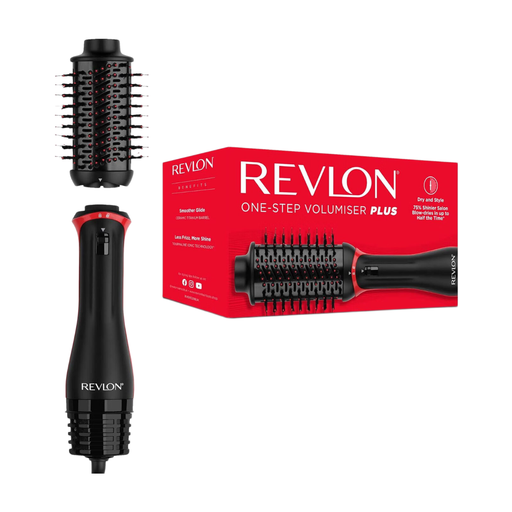
Why This Fits Their Persona: A practical choice for shoppers who mainly want a straightforward wet-and-dry styling routine with volume and smoothing in one tool.
It has four heat options, including cool, and a detachable head for simpler storage. The smaller oval head is designed for closer root styling.
Ceramic Titanium Tourmaline coating, ionic technology, mixed bristles and a detachable head.
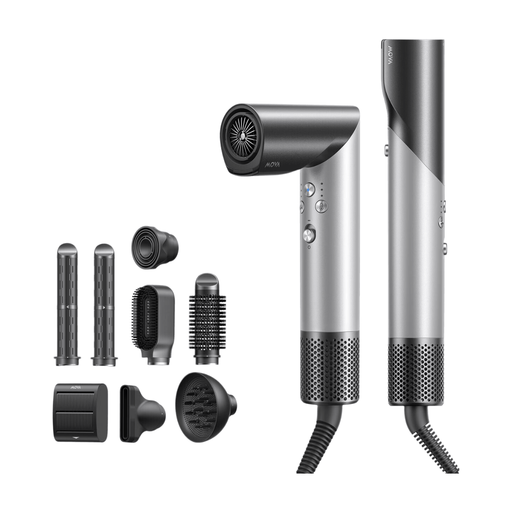
Why This Fits Their Persona: Suits shoppers who want a broad salon-style hair-styling tool set for curls, smoothing, drying and root volume.
The kit lists each attachment clearly, including a diffuser, fast dryer, volumising brush and two auto-wrap barrels, so the wider feature set is easy to assess.
110,000 RPM motor, intelligent temperature regulation and a storage case.
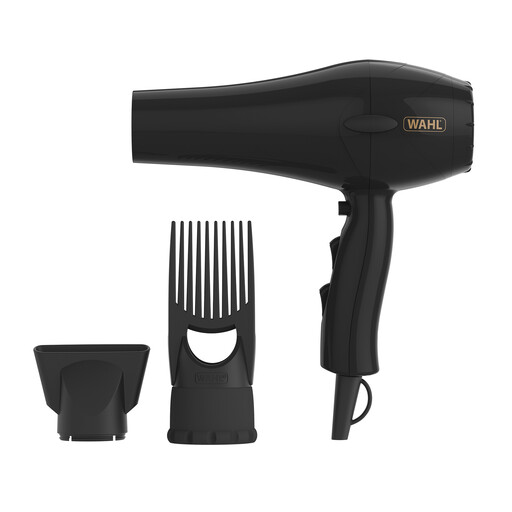
Why This Fits Their Persona: Designed for Afro, curly and textured hair, particularly where root access, controlled drying and a longer cable are priorities.
The OnePik attachment directs airflow towards roots, while three heat and two speed settings allow more adjustment than a basic dryer.
Pik attachment, concentrator nozzles, cold shot, removable filter and a 3-metre cable.
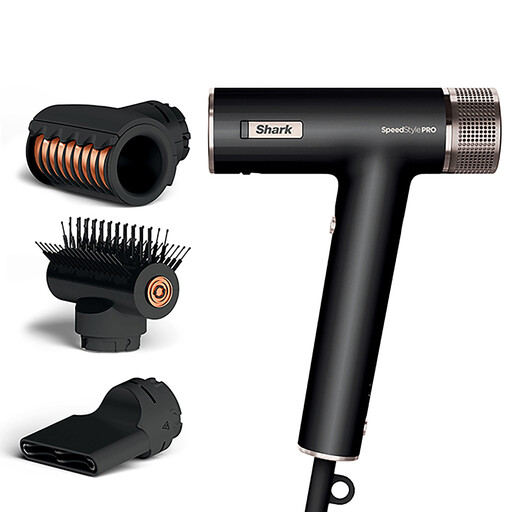
Why This Fits Their Persona: A focused option for straight and wavy hair users who want quick drying with dedicated smoothing attachments.
Its listed system includes three defined attachments rather than an unclear collection of accessories, including a concentrator, brush and finishing tool.
High-velocity airflow, Scalp Shield mode and a temperature system listed as measuring heat frequently during use.
For more consistent results, towel-dry first and divide hair into manageable sections. Start with the drying attachment to remove excess moisture, then switch to a brush, diffuser or barrel. Keep the airflow moving and avoid repeatedly passing over already-dry ends.
With curly or textured hair, use a diffuser or pik at a controlled temperature and avoid pulling sections unnecessarily. With fine hair, lower heat and smaller sections can help prevent a flat finish. Clean the filter regularly and let hot attachments cool completely before storing them.
It can be, provided the set includes a diffuser or pik attachment and adjustable heat and speed controls. Automatic curling barrels and smoothing brushes may be more suitable for stretched, wavy or straighter finishes. Always check the manufacturer’s guidance for your hair type.
Ionic conditioning may help reduce static and create a smoother-feeling finish, particularly in humid conditions or with flyaway-prone hair. Results vary according to hair texture, moisture level, technique and products used. It is not a substitute for heat protection or correct temperature selection.
Running cost depends on wattage, usage time and your electricity tariff. Calculate it by converting wattage to kilowatts, multiplying by hours used, then multiplying by your unit price. A 2,000W dryer used for 15 minutes consumes approximately 0.5kWh, although the actual cost depends on the appliance’s settings and your tariff.