
24/7 Customer Support

Free returns

Same-day & Next-day Delivery

Quality Guaranteed

Unlock Your Welcome Offers: FREE Delivery | Up to 80% OFF | Free 30-day JoyPlus trial
Download the APP
Choosing between hair dryers and stylers can be confusing. A conventional dryer may provide stronger airflow, while a hot air styler can dry and shape hair in one step. Multi-styler hair dryers add curling, smoothing and volumising attachments, but extra versatility is only useful if the tool suits your hair type and routine.
Before buying, look beyond claims such as “faster drying” or “less damage”. The design, controls, attachments and correct method of use have a greater effect on everyday results.
A heated thermal brush warms dry hair but does not necessarily blow air. It can smooth, wave or add shape, but it is not suitable for drying wet hair. By contrast, a blow-dry brush or hot air styler combines heated airflow with brushing.
Always check whether the product is designed for wet, towel-dried or completely dry hair. For example, the Wavytalk Thermal Brush is specifically described as not being a hair dryer brush and should be used on dry, detangled hair.
A higher wattage does not automatically mean faster drying. Airflow design, motor type, heat control and the condition of the filter also matter. A 2,100W dryer may offer strong airflow, while a compact brushless-motor dryer may use a different design to provide concentrated air at a lower stated power rating.
For thick, Afro or textured hair, consider root access and attachment design rather than wattage alone. A diffuser or pik attachment may be more useful than simply choosing the highest power figure.
An ionic hair dryer may help reduce static and make hair feel smoother, but highly sleek results are not always the priority. Curly and textured hair may need a diffuser or pik attachment to preserve shape and reach the roots without excessive brushing.
Ionic conditioning is a feature, not a guarantee of a particular finish. Use the cool setting, suitable heat level and a heat-protective product as part of a sensible routine.
Look for separate heat and airflow settings. At least two heat levels plus a cool shot gives more control than a single hot setting. Fine or fragile-feeling hair generally benefits from lower heat, while thick or coarse hair may require stronger airflow and careful sectioning.
Some tools offer more detailed control. The Gtech DryOnic, for example, lists four heat settings and four speed settings, with temperature levels stated at approximately 40°C, 60°C, 80°C and 100°C.
Choose attachments according to your usual style:
A volumising hair dryer with an oval brush may be suitable for bouncy blowouts, while a hair dryer for Afro and textured hair should offer enough clearance at the roots and an attachment that can move through denser sections without pulling.
For UK use, check that the appliance has a UK plug, suitable 220–240V compatibility where applicable and clear manufacturer safety information. Look for overheat protection, a cool shot function and instructions on using attachments.
Keep the air intake and removable filter clear of hair and dust. Blocked airflow can increase heat build-up and shorten appliance life. Never use a mains-powered dryer or styler near water, and allow heated attachments to cool fully before storage.
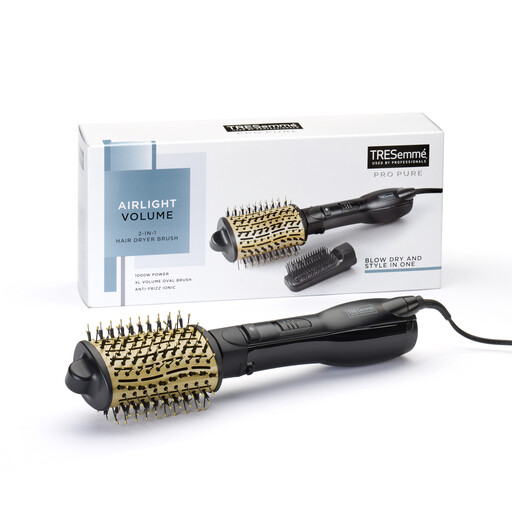
Why This Fits Their Persona: A straightforward option for UK shoppers who want drying, smoothing and root volume in one everyday tool rather than buying separate appliances.
It is clearly specified as a hot air styler, with three heat and speed settings plus a cool shot, so the controls are not hidden behind a single high-heat mode.
Includes an XL oval volumising brush, smoothing vent brush, 1,000W power and a 2.2m swivel cord.
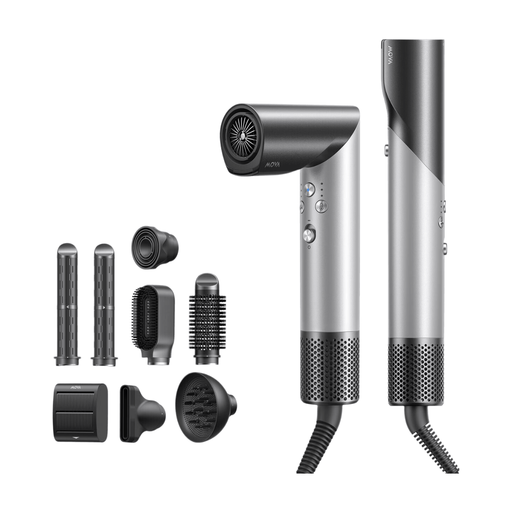
Why This Fits Their Persona: Suits shoppers seeking one organised system for drying, curling, smoothing, diffusing and adding volume.
Its attachment list makes the intended functions clear, while smart flat-surface detection and overheat protection add practical handling features.
Lists a 110,000 RPM motor, intelligent temperature regulation and eight styling attachments, including a diffuser and fast dryer.
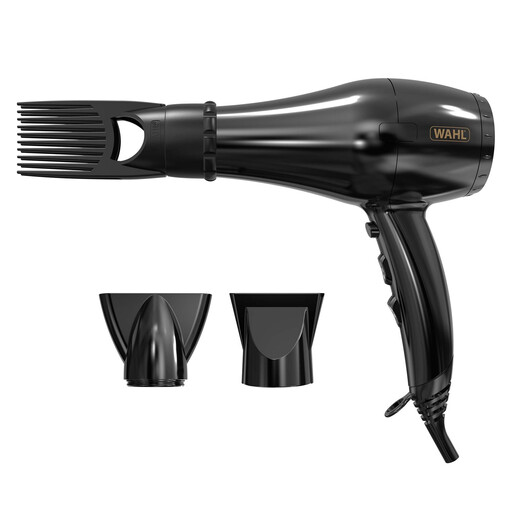
Why This Fits Their Persona: Designed for people who regularly dry Afro, curly or textured hair and need direct access to roots and hard-to-dry areas.
The OnePik attachment is intended to reach roots, and the instructions specifically warn against using attachments on the highest heat setting.
Offers 1,800W power, three heat settings, two speeds, ionic conditioning, two concentrator nozzles and a 3m cord.
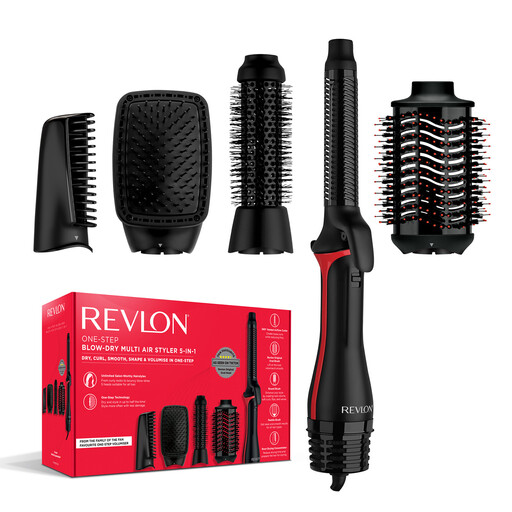
Why This Fits Their Persona: A practical choice for households or individuals who switch between drying, curling, straightening, smoothing and volume styles.
The five included attachments are listed by function, making it easier to judge whether the extra versatility will genuinely replace other tools.
Includes a root-drying concentrator, oval brush, paddle brush, 38mm round brush and vented curler, plus three heat levels and cool shot.
We have compiled a complete, real-time list of products that fully satisfy these strict selection criteria and UK safety regulations.
For quick daily drying, prioritise airflow control, manageable weight and a removable filter. A fast-drying hair dryer with a concentrator is usually more suitable than a large multi-styler if you rarely curl or volumise.
For curls and waves, choose a hair dryer with diffuser and adjustable heat. Avoid brushing wet curls aggressively, and use a diffuser attachment on a suitable airflow setting.
For blowouts, an oval hair dryer brush or hot air styler can combine drying and shaping. Work in small sections and avoid holding the brush against one area for too long.
For automatic curling, check whether the barrel is intended for damp or dry hair. Air-powered systems and heated curling brushes have different operating methods, so follow the individual instructions rather than assuming they work like a conventional curling iron.
Running cost depends on the appliance’s wattage and how long it is used. As a simple guide, multiply the appliance’s kilowatt rating by the hours used and your electricity tariff. A 1,800W dryer used for 10 minutes consumes approximately 0.3kWh. Actual cost varies by tariff and usage time.
Lifespan depends on motor quality, cleaning and frequency of use. Keep filters clear, avoid wrapping the cord tightly around the handle and store attachments without bending them. Check the warranty period and retain proof of purchase for future support.
Usually, no. Many hot air brushes are intended for towel-dried hair, while heated thermal brushes should only be used on dry hair. Remove excess water first and check the product manual before switching on. Always keep the appliance away from sinks, baths and wet surfaces.