
24/7 Customer Support

Free returns

Same-day & Next-day Delivery

Quality Guaranteed

Unlock Your Welcome Offers: FREE Delivery | Up to 80% OFF | Free 30-day JoyPlus trial
Download the APP
Navigating the world of hair care can be complex, especially when dealing with concerns like hair thinning or a desire for a healthier, more vibrant scalp. While traditional treatments have their place, a new generation of at-home devices offers a modern approach to scalp care. A hair growth comb is one such tool, designed to integrate advanced technology into your daily routine.
As a Joybuy Product Recommendation Officer, my role is to help you understand these devices. This guide will walk you through the key technologies, offer practical advice on what to look for and present a selection of products to help you make an informed choice for your hair care needs.
Before looking at specific models, it's useful to understand the features that set these devices apart. Considering these points will help you find a tool that aligns with your goals and lifestyle.
Most modern hair care combs combine several functions. The main technologies you will encounter are:
The best tool is one you will use consistently. Think about how a device will fit into your routine:
Here are a few hair growth combs that stand out for their distinct features and technologies.
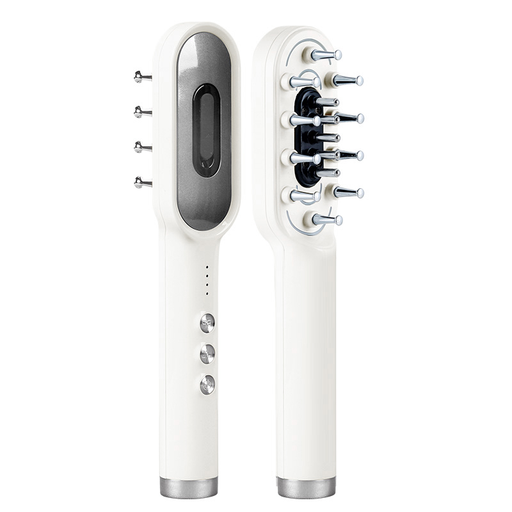
Why It Stands Out The K·SKIN KD3806 is a multi-functional tool that combines several scalp care technologies into one device. Its main appeal is the integration of EMS microcurrent for scalp stimulation, a quadruple LED light therapy system with different light colours and a built-in liquid tank for applying hair essences directly to the scalp.
Pros
Who is it for? This device is ideal for individuals who want to combine their light therapy, scalp massage and serum application into a single, efficient step.
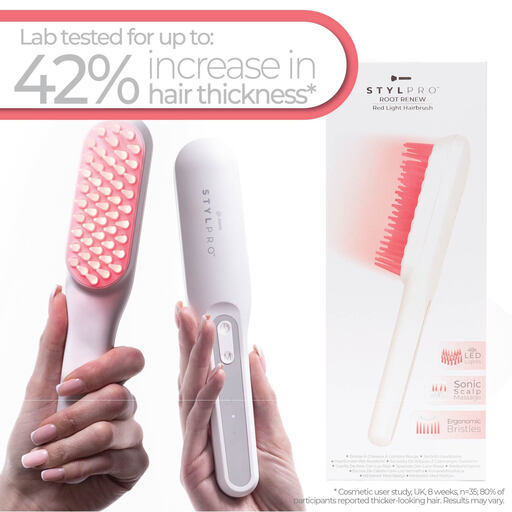
Why It Stands Out The STYLPRO Root Renew focuses on two core functions: red light therapy and sonic massage. It uses a specific 655nm red LED light wavelength and combines it with gentle vibrations. Its design is simple and user-friendly, with flexible silicone bristles that comfortably move over the scalp.
Pros
Who is it for? This is a great option for those looking for a simple, no-fuss device focused primarily on red light therapy and a soothing scalp massage.
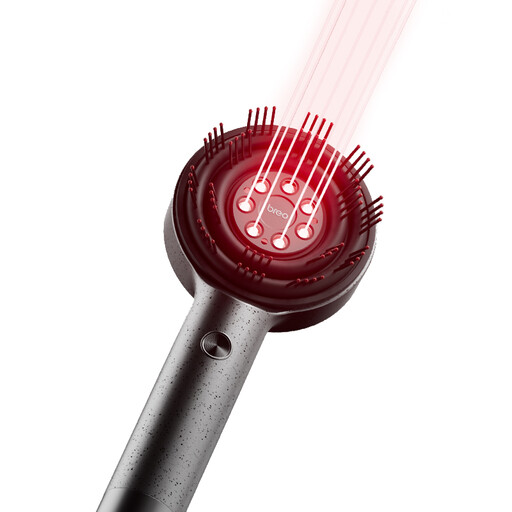
Why It Stands Out The Breo Scalp 3L is a specialised laser hair growth device that uses seven infrared laser lights at a 650nm wavelength. It stands apart with its fully waterproof design, allowing for use in the shower. It also features an impressive 72 massage teeth for 360° scalp coverage and a smart safety sensor that only activates the laser when it's close to the skin.
Pros
Who is it for? This comb is suited for users specifically seeking a hair thinning treatment tool with laser technology and the convenience of a waterproof design for use during their washing routine.
The products highlighted here represent just a fraction of the innovative tools available for scalp care. If you are looking for different features or want to compare more models, you can browse our complete range.
Explore our full collection of hair massage combs to find the perfect fit for your routine.
1. How does a hair growth comb work? These devices typically work by using one or more technologies to stimulate the scalp. This can include low-level light therapy (red light or laser) to deliver light energy to the scalp area and mechanical massage or microcurrents to provide a stimulating sensation. The aim is to create an optimal environment for your scalp and hair.
2. Can I use a hair growth comb on wet hair? It depends entirely on the product's specifications. Some devices, like the Breo Scalp 3L, are fully waterproof and designed for use in wet conditions. Others are intended for use on dry or damp hair only. Always check the manufacturer's instructions before using your device in the shower.
3. What is the difference between red light and laser therapy for hair? Both are forms of low-level light therapy. The main difference lies in the light source. Red light therapy devices generally use Light Emitting Diodes (LEDs), which disperse light over a wider area of the scalp. A laser hair growth device uses focused beams of coherent light to deliver energy to more specific points. The choice between them often comes down to the device's overall design and personal preference.