
24/7 Customer Support

Free returns

Same-day & Next-day Delivery

Quality Guaranteed

Unlock Your Welcome Offers: FREE Delivery | Up to 80% OFF | Free 30-day JoyPlus trial
Download the APP
Regular blow-drying, straightening and curling can leave hair feeling dry, rough or difficult to manage. The right hair heat protection products can help reduce exposure-related stress during styling, while also supporting smoother, softer-looking results.
However, choosing a product is not simply a matter of picking the spray with the largest temperature printed on the bottle. Marketing language can hide important differences in application, finish and hair-type suitability.
A heat rating, such as 220°C or 230°C, describes the product’s stated use with hot tools. It does not mean that hair is completely protected from damage at that temperature. Results also depend on the tool setting, how long heat is applied, whether the hair is damp or dry and how evenly the product is distributed.
Use the lowest effective temperature and keep the tool moving rather than repeatedly passing over the same section.
A lightweight heat protection spray for hair may suit fine hair and frequent blow-drying, but a dry or thick hair type may need a leave-in conditioner, smoothing treatment or hair repair serum as well. Conversely, layering several rich products can leave fine hair flat or greasy.
Check whether the product is designed for damp hair, dry hair or both before buying.
Hair products for damaged hair can improve softness, manageability and the appearance of split or rough ends. They cannot permanently restore a broken hair fibre. A sensible routine combines heat protection with regular conditioning, gentle detangling and occasional trims.
Look for clear instructions covering:
For example, VO5 Heat Protect Spray states protection for heat styling tools up to 230°C, while Schwarzkopf Got2B Guardian Angel Spray states use with devices up to 220°C. These are useful reference points, but they should not replace sensible temperature control.
Ingredients such as silicones, conditioning agents, proteins, oils and film-forming polymers can affect the finish. These may help with slip, shine, frizz control or styling hold, but the feel will vary between hair types.
If fragrance or particular ingredients concern you, read the current packaging and ingredient list before use. Formulas can change, and product pages may not always reflect the latest label.
More product is not automatically more protective. Apply evenly from mid-lengths to ends, where hair is typically older and more exposed. Avoid saturating the scalp unless the directions specifically say otherwise.
For a damp-hair product, towel-dry first so the hair is not dripping wet. Comb through with a wide-tooth comb, then blow-dry. A dry-hair mist should be applied according to its directions before using a hot tool. Never spray directly towards the eyes or face.
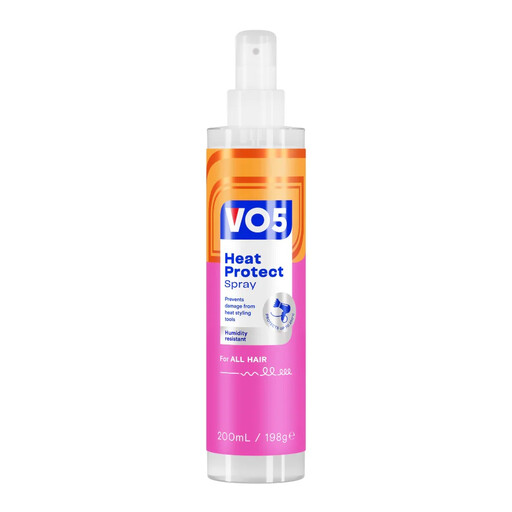
Why This Fits Their Persona: A straightforward starting point for UK shoppers who regularly blow-dry, curl or straighten and want one lightweight base product.
The directions specify application to towel-dried hair from root to tip, followed by combing through for even distribution.
States heat protection up to 230°C; the formula is described as lightweight, humidity resistant and suitable for all hair types.
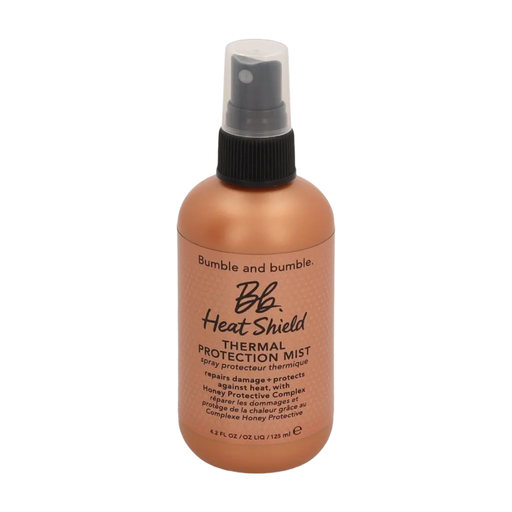
Why This Fits Their Persona: Suits shoppers wanting a dry-hair mist with additional conditioning and UV-filter features for regular heat styling.
The instructions clearly state that it is sprayed onto dry hair before heat styling, helping prevent damp-hair application errors.
States protection against heat tools up to 232°C and includes conditioning ingredients, oils and UV filters.
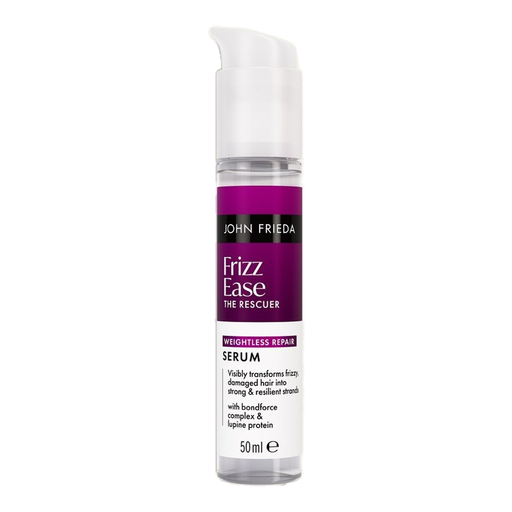
Why This Fits Their Persona: A targeted option for dry, damaged or frizz-prone hair exposed to frequent styling, including fine hair that cannot tolerate heavy products.
It offers separate wet- and dry-hair directions, with measured guidance of 1–2 pumps on damp hair and a few drops for dry areas.
The product description states heat protection up to 230°C and a lightweight, non-greasy texture for all hair types.
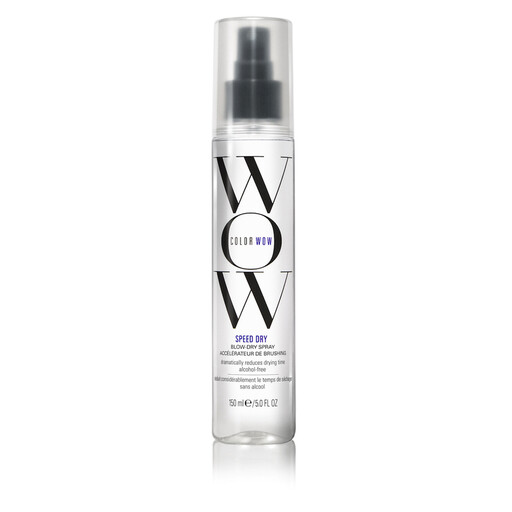
Why This Fits Their Persona: Practical for colour-treated hair that is blow-dried often and needs a lightweight product focused on reducing drying time.
Its directions specify towel-dried hair and combing through, while the formula is described as alcohol-free and intended to minimise heat exposure by reducing drying time.
Designed to support faster blow-drying, shine and smoothness; the product description specifically mentions colour-treated hair.
We have compiled a complete, real-time list of products that fully satisfy these strict selection criteria and UK safety regulations.
Some products are specifically intended for dry hair, while others are designed for towel-dried hair. Always follow the label. A dry-hair mist may be useful before straightening or curling, but applying a damp-hair formula to dry hair can produce a different finish and coverage.
Check the packaging for the period-after-opening symbol and storage guidance. Many haircare products should be used within the stated period after opening. Discard a product if its smell, colour, texture or spray pattern changes, and store it away from direct sunlight and excessive heat.
No. A heat protectant for hair is primarily a styling-preparation product. It may include conditioning ingredients, but it does not necessarily replace shampoo, conditioner or a targeted anti-frizz hair treatment. Dry, colour-treated or damaged hair may benefit from using a suitable conditioner first, followed by heat protection before styling.