
24/7 Customer Support

Free returns

Same-day & Next-day Delivery

Quality Guaranteed

Unlock Your Welcome Offers: FREE Delivery | Up to 80% OFF | Free 30-day JoyPlus trial
Download the APP
A good hair mask can make wash day more manageable, but the wrong product may leave hair greasy, weighed down or still difficult to style. UK shoppers also face a crowded market filled with promises about “repair”, “hydration”, shine and long-lasting frizz control.
Before buying, look past the front label. The formula, application method and suitability for your hair type usually matter more than a dramatic marketing claim.
A repairing hair mask can improve the feel and appearance of damaged strands, but no rinse-out treatment can permanently restore split ends. Conditioning agents, oils, proteins and film-formers may make hair feel smoother and easier to comb. This is useful, but it should not be confused with reversing structural damage.
For visibly brittle or chemically processed hair, choose a treatment that matches the cause of the problem and trim split ends when necessary.
Shea butter, coconut oil, macadamia oil and other emollients can suit dry, thick or curly hair. However, fine hair may become flat if a rich mask is applied too close to the roots or used too frequently.
A lightweight hydrating hair mask may be more practical for fine, wavy or easily weighed-down hair. Apply most masks from the mid-lengths to the ends unless the packaging specifically says otherwise.
Natural-origin percentages and vegan credentials describe sourcing or formulation choices, not universal performance. Fragrance and essential-oil components can also be unsuitable for some sensitive users. Always check the full ingredient list and follow the product warnings.
If you have a known allergy or scalp sensitivity, patch testing a small area and stopping use if irritation occurs are sensible precautions.
Start with the result you actually need:
A deep conditioning hair treatment may need only three to five minutes, while a concentrated treatment may require five to ten minutes. Shorter contact time is convenient for busy routines, but leaving a product on for longer than directed does not necessarily improve results.
Check whether it is a rinse-out product, a leave-in hair mask or a multi-use formula. Garnier Hair Food products, for example, are available in formats designed for use as a conditioner, rinse-out mask or leave-in treatment.
Compare the container size with how often you plan to use it. A 400 ml tub may offer practical value for long or thick hair, whereas a 125 ml or 150 ml treatment may be more suitable for occasional intensive care or travel.
Look for clearly stated credentials such as vegan, cruelty-free or natural-origin ingredients, and distinguish these from performance claims. Ingredients such as fragrance, silicones, proteins and oils are not automatically good or bad; their suitability depends on your hair preferences and routine.
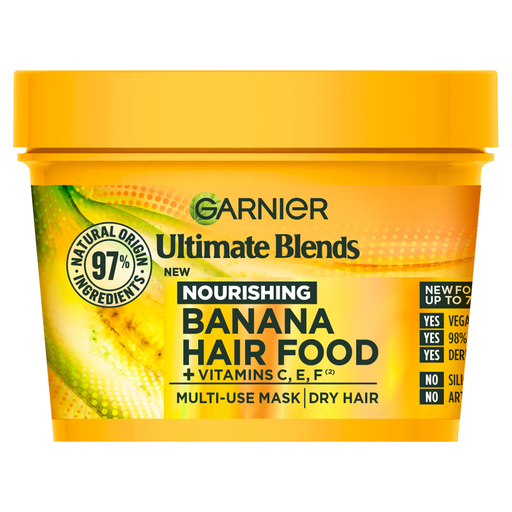
Why This Fits Their Persona: The generous 400 ml tub and three application methods make this a practical starting point for dry hair care in a regular UK washing routine.
It is not limited to a single use: apply it as a conditioner, three-minute rinse-out mask or small-amount leave-in treatment.
100% vegan formula, no silicones and up to 97% natural-origin ingredients according to the product information.
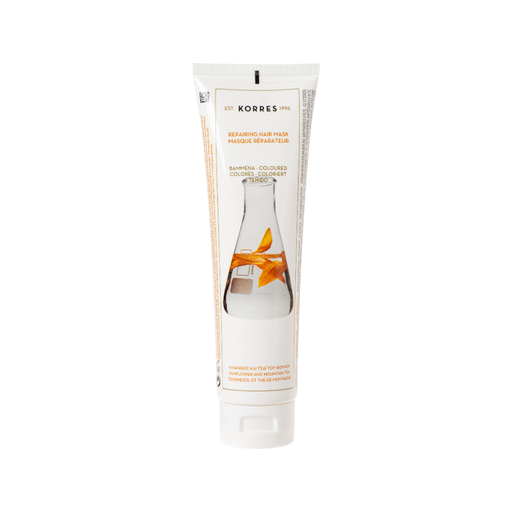
Why This Fits Their Persona: A compact intensive treatment for shoppers prioritising botanical extracts, a focused formula and occasional weekly care.
The 3–5 minute application and recommended one-to-two-times-weekly use helps avoid treating a mask like an everyday conditioner.
Contains almond and linseed extracts, shea butter, meadowfoam seed oil and panthenol; the product information states it is vegan and cruelty-free.
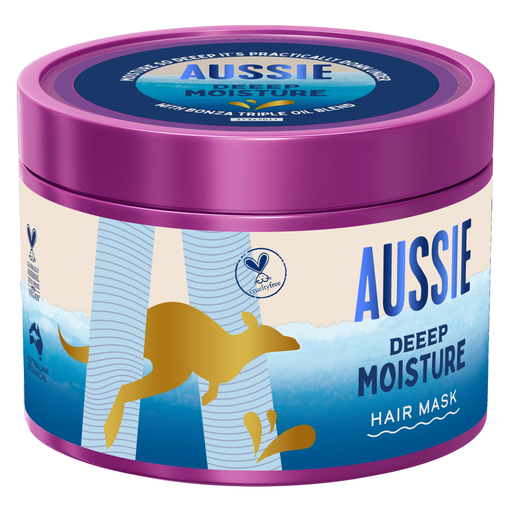
Why This Fits Their Persona: It is designed for very dry, thick and curly hair, making it suitable for users who need more substantial conditioning between washes.
The formula offers daily deep conditioning, a three-minute treatment or a longer leave-in option, so use can be adjusted to hair density and dryness.
Includes jojoba, avocado and macadamia oils; the product is described as vegan, PETA-certified cruelty-free and made with 93% natural-origin ingredients.
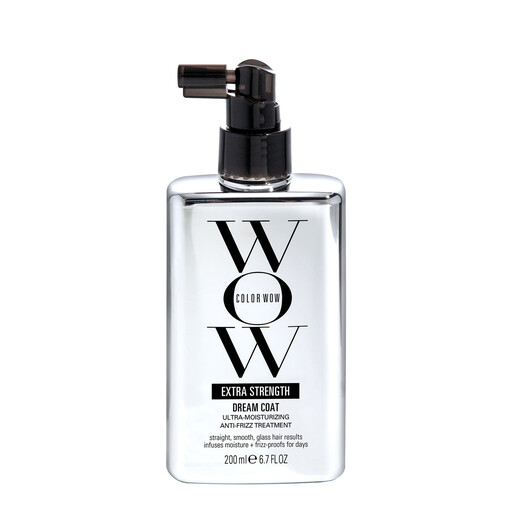
Why This Fits Their Persona: A targeted choice for thick, coarse or extremely frizz-prone hair during damp UK weather, particularly when blow-drying is part of the routine.
It is clearly a leave-in, heat-activated styling treatment rather than a conventional rinse-out mask, so the application expectations are straightforward.
The extra-strength formula is intended for severe frizz and is applied to towel-dried hair before thorough blow-drying.
We have compiled a complete, real-time list of products that fully satisfy these strict selection criteria and UK safety regulations.
For most dry or damaged hair, once weekly is a sensible starting point. Some lightweight multi-use formulas can be used more often, while concentrated masks may be better limited to weekly or occasional use. Follow the product directions and reduce frequency if hair feels coated or limp.
Usually, apply a rinse-out mask after shampooing and rinse it thoroughly. A separate conditioner may not be necessary if the mask already provides enough slip and detangling. A pre-shampoo treatment is different, so check the label rather than assuming all hair masks work the same way.
It can improve softness and manageability, but results depend on humidity, hair porosity and styling. A conditioning mask supports moisture balance, while a dedicated anti-frizz treatment such as a heat-activated spray is designed specifically to help resist atmospheric moisture. Use either according to its instructions and avoid layering too many heavy products.