
24/7 Customer Support

Free returns

Same-day & Next-day Delivery

Quality Guaranteed

Unlock Your Welcome Offers: FREE Delivery | Up to 80% OFF | Free 30-day JoyPlus trial
Download the APP
Dry ends, frizz after a damp commute, colour that looks flat and curls that lose definition can make choosing a treatment surprisingly difficult. Product labels often use similar language—“repair”, “hydration”, “strength” and “shine”—even though the formulas and application methods can be very different.
The right choice depends less on the most dramatic promise and more on your hair concern, the finish you prefer, how often you will use it and whether you need a rinse-out or leave-in product.
A hair mask can make strands feel smoother, softer or easier to detangle, but damaged hair cannot be permanently restored to its original condition by a cosmetic product. Conditioning agents, oils, proteins and film-formers may improve the look and feel of the lengths, while split ends still require trimming.
Be cautious with dramatic numerical claims. If a brand references test results, treat them as brand-specific evidence rather than a guarantee for every user. Check whether the claim relates to a consumer self-assessment, an instrumental test or a comparison with untreated hair.
A thick deep conditioning hair mask may suit coarse, curly or very dry hair but leave fine hair limp. Similarly, oils, butters and conditioning polymers can create a smooth finish without being suitable for someone who prefers volume or a lighter texture.
Look at the intended use and apply most products from the mid-lengths to the ends, rather than directly to the scalp. Start with a small amount, particularly when trying an overnight hair treatment or leave-in hair treatment.
These labels describe particular formulation or sourcing choices; they do not automatically indicate the right performance for your hair. A vegan hair mask may still contain fragrance, oils or rich conditioning ingredients that do not suit your preferences. Conversely, a silicone-containing anti-frizz hair mask may provide the slip and humidity resistance you want.
Always read the current packaging, ingredient list and usage instructions. Fragrance allergens can appear in the ingredient list, and formulas may change.
A rinse-out mask is applied after shampooing and removed after several minutes. It is generally practical for weekly conditioning. A leave-in formula remains on the hair and can support daily smoothing, but using too much may create residue.
Some products offer several options. Garnier Ultimate Blends Hair Food masks can be used as a conditioner, a three-minute rinse-out mask or a small amount of leave-in treatment. This flexibility can be useful if your routine changes between wash days and styling days.
A 50ml treatment may be convenient for occasional use or travel, while 225–400ml tubs can offer more applications for longer or thicker hair. Use frequency also matters: a rich mask may be intended once or twice a week, whereas a lightweight leave-in product may be used more regularly.
Store products in a cool, dry place away from direct sunlight and heat. Follow the period-after-opening symbol, expiry information and manufacturer instructions. Stop using a product if irritation develops and avoid contact with the eyes.
The following selections are matched to different shopping profiles rather than ranked against one another.
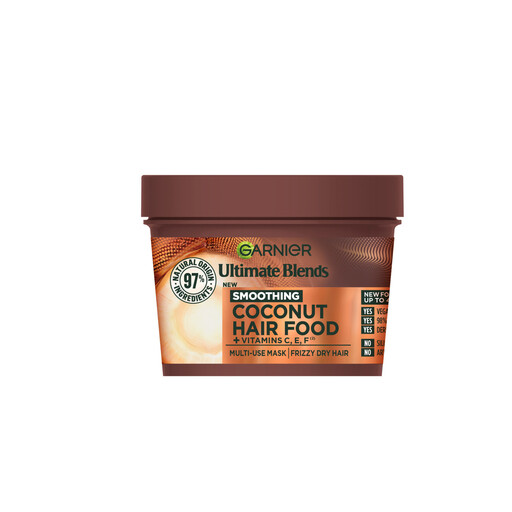
Why This Fits Their Persona: A large 400ml format and three application methods make it a practical starting point for dry, frizz-prone or curly hair routines.
The label clearly explains conditioner, rinse-out mask and leave-in use, reducing the risk of applying a rinse-out product as a daily leave-in.
100% vegan formula, no silicones, coconut oil, macadamia extract and shea butter; suitable for several hair textures.
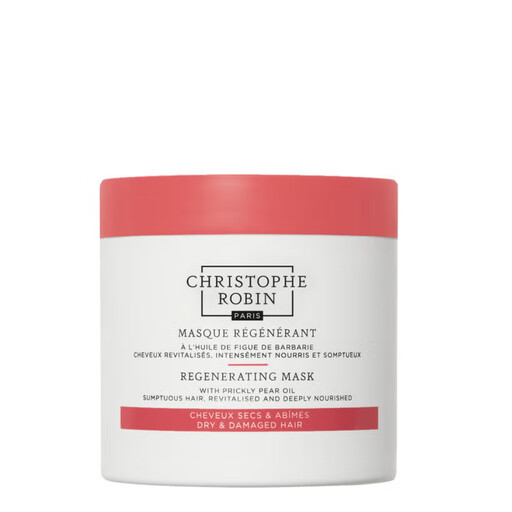
Why This Fits Their Persona: A concentrated rinse-out option for people seeking a more intensive routine for dry, brittle or chemically treated lengths.
Its directions specify use on damp hair, concentrating on the mid-lengths and ends, helping avoid unnecessary scalp application.
250ml size; listed as 97% natural-origin ingredients and formulated without silicones, parabens or SLES.
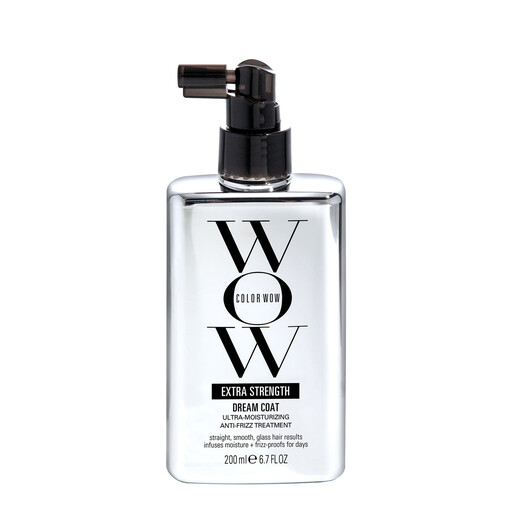
Why This Fits Their Persona: This is a styling treatment rather than a traditional mask, suited to coarse, curly or hard-to-manage hair during humid UK weather.
The product requires thorough blow-drying to activate its heat-activated formula, so expectations are clear before purchase.
Leave-in spray format; listed with Polysilicone-29 and silicone quaternium-18 for a humidity-resistant smoothing film.
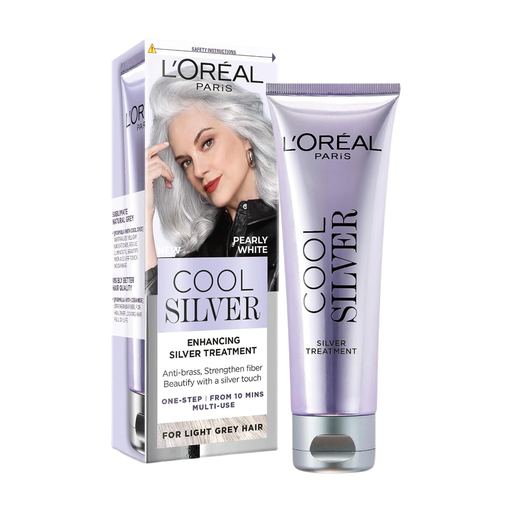
Why This Fits Their Persona: A targeted silver hair treatment for people with 50% or more grey hair who want to manage warm or yellow-looking tones.
The directions state a 10–15 minute processing time and require an allergy alert test 48 hours before each use.
Contains purple dye CI 60730 and silver-toning pigments; intended for grey-hair enhancement rather than general conditioning.
We have compiled a complete, real-time list of products that fully satisfy these strict selection criteria and UK safety regulations.
Start with once a week for a rich rinse-out mask, then adjust according to how your hair feels. Very dry, curly or chemically treated hair may suit more frequent conditioning, while fine hair may need less product. Follow the specific instructions rather than leaving every mask on overnight.
Not necessarily. Leave-in overnight formulas are designed to remain on the hair, whereas rinse-out masks should be removed after their stated processing time. Apply an overnight product mainly to the lengths and ends, use a small amount and protect bedding if the instructions recommend it. OGX Rescue Deep Recovery Overnight Treatment is a leave-in serum format intended for damp or dry hair.
Choose a hydrating hair mask when your main concern is dryness, rough texture or manageability. A repairing hair treatment may be more suitable when hair feels brittle after bleaching, heat styling or chemical processing, particularly if it includes conditioning proteins. Many users alternate hydration and strengthening products to avoid overloading the hair with either rich oils or protein-focused formulas.