Dry-hair touch-up users
If your hair is dry before work, you may want a straightforward smoothing tool without adding a drying step. Leave time for it to cool before putting it away.


If your hair is already dry, a conventional straightener with adjustable heat is a direct choice for before-work smoothing; choose its plate width to suit your hair and the areas you style. If you regularly start with wet hair, consider a purpose-designed wet-to-dry airflow tool instead. For a mains model used in the UK, check the supplied plug and fuse, and allow time to unplug and cool the tool after use.
If your hair is dry before work, you may want a straightforward smoothing tool without adding a drying step. Leave time for it to cool before putting it away.
If you style frequently, or have fine, coloured or bleached hair, adjustable heat may matter more to you than a high maximum-temperature setting.
If working through sections takes up your morning, compare wider plates with the precision you need around roots, fringes and shorter layers. The Independent distinguishes wider plates for thick hair from slimmer plates for shorter styles.
Start with whether your hair is dry or wet when you style it. Then consider heat control and how much hair you need to cover at once.
| Concern | What to check | Who this matters to |
|---|---|---|
| Dry-hair touch-ups | Choose a tool intended for dry hair; check its temperature controls and whether automatic shut-off is specified. | If my hair is already dry before work, I want to smooth it without adding a drying stage. Around 31% of consumers put dry-hair touch-ups first. |
| Heat control | Look for a documented adjustable range and a lower setting you can select. Remington lists a 185°C Pro+ setting for its S9100; that is a model-specific feature, not a heat-damage guarantee. | When I style often or my hair is coloured, I want to choose the heat setting rather than default to the maximum. Around 31% of consumers make heat control their primary concern. |
| Plate width | Compare wider plates for thick hair with slimmer plates for shorter styles, as distinguished by The Independent; consider how much precision you need around a fringe or short layers. | If I have long or thick hair, working through many small sections can take time before work. Around 23% of consumers prioritise coverage. |
| Wet-to-dry styling | Check that the tool is expressly designed for wet-to-dry use. Dyson describes its Airstrait as an airflow tool without hot plates that dries and straightens in one session. | When I regularly start with wet hair, I want to combine drying and straightening rather than use a conventional plate tool on wet hair. Around 15% of consumers put that combined routine first. |
A plate straightener does not replace a drying step. Electrical Safety First advises against using a straightener on wet hair or with wet hands.
Choose a conventional tool for a dry-hair routine. If you normally start with wet hair, assess a device expressly designed for wet-to-dry styling.
A higher available temperature is not automatically the right everyday setting, and wider plates can be less precise around fringes and short layers.
Check the adjustable heat range and choose the lowest setting that achieves the result you need. Match plate width to your hair thickness and the areas you style.
Automatic shut-off and a heat pouch do not remove the need to handle a hot straightener carefully while it cools.
Electrical Safety First advises unplugging it, cooling it on a heat-resistant surface and waiting until it has cooled before putting it in a supplied heat-proof pouch. Keep the cooling area inaccessible to children.
For a mains-operated straightener intended for UK use, the supplied plug and fuse are an electrical safety check.
Confirm that the tool comes with a standard UK 3-pin plug and fuse, as advised by Electrical Safety First, and buy from a retailer you can identify.
ghd has conventional straightener lines including Original and Chronos, alongside wet-to-dry styling tools.
Remington offers conventional straighteners for dry-hair styling, including adjustable-temperature PROluxe models and wide-plate options.
Dyson’s Airstrait is a wet-to-dry airflow option for a routine that begins with wet hair.
BaByliss is represented in Good Housekeeping’s UK straightener guide by its Sensor Protect Styler.
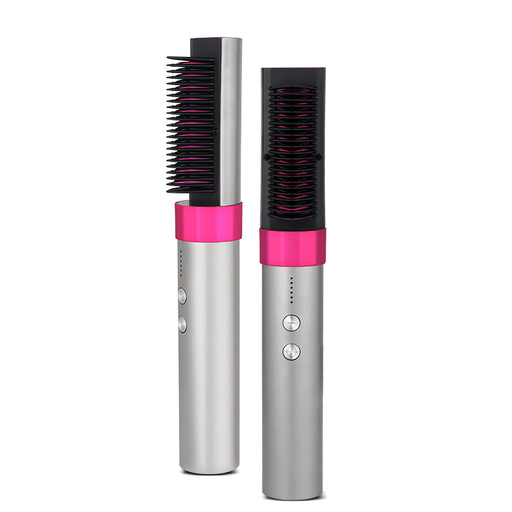
The cordless straightening brush below is an option to assess for dry-hair touch-ups. Its brush format differs from the conventional plate and wet-to-dry airflow tools discussed above.
 No image available
Consider this brush if you want a cordless tool for smoothing fully dry hair before work.
No. Electrical Safety First advises against using a straightener on wet hair or with wet hands. If you start your before-work routine with wet hair, compare a purpose-designed wet-to-dry tool instead of using a conventional plate straightener before drying.
Check that a mains-operated straightener intended for UK use is supplied with a standard UK 3-pin plug and fuse, as advised by Electrical Safety First. Confirm what comes with the exact model before buying.
No. Automatic shut-off can be a useful backstop, but Electrical Safety First advises unplugging the straightener and letting it cool on a heat-resistant surface, away from children.
Yes, if product registration is available. Electrical Safety First recommends registering appliances so the manufacturer can contact you about safety recalls.