
24/7 Customer Support

Free returns

Same-day & Next-day Delivery

Quality Guaranteed

Unlock Your Welcome Offers: FREE Delivery | Up to 80% OFF | Free 30-day JoyPlus trial
Download the APP
Choosing hair straighteners involves more than comparing temperature ranges and glossy product photos. A tool that looks suitable online may be awkward for thick hair, too hot for fine hair or impractical for travel. As the Joybuy Product Recommendation Officer, my role is to filter out marketing clutter and focus on the details that affect everyday use.
A maximum setting of 230°C may sound appealing, but it is not automatically suitable for every hair type. Fine, bleached or fragile-feeling hair generally needs a lower starting temperature, while thick or tightly curled hair may require more heat and smaller sections. Without an adjustable temperature hair straightener, you have less control over the styling process.
Ionic hair straighteners are designed to help reduce static, while a steam hair straightener adds moisture during styling. These features may make hair feel smoother, but they do not replace sensible heat settings, heat protection products or correct technique. Claims such as “damage-free” or “permanent frizz control” should be treated cautiously.
A straightener can become frustrating if its plates snag, its cord tangles or its controls are easy to press accidentally. Cordless models also require charging, and steam models need their water tanks emptied after use. Check the complete design rather than focusing only on headline technologies such as graphene, ceramic coating or negative ions.
Look for a clear temperature range and multiple settings. The products in this guide range from 130°C to 240°C, depending on the model. Lower settings can be useful for fine hair, fringes and light touch-ups, while thicker hair may need a higher setting.
Heat-up time is also relevant for busy mornings. The K·SKIN KD382 reaches its selected temperature in approximately one minute, while the ANGENIL graphene ceramic model is listed with a heat-up time of approximately 15–20 seconds. Actual performance can vary according to conditions, so treat these figures as product specifications rather than a guarantee of styling time.
Ceramic hair straighteners are popular because ceramic surfaces are designed to distribute heat across the styling area. Tourmaline-ceramic plates, as used by the Gtech StyleOnic range, combine ceramic construction with tourmaline material.
A graphene hair straightener may appeal if you want a modern plate material and a flexible tool for both straightening and curling. However, material names alone do not determine suitability. Plate width, movement, temperature adjustment and the condition of your hair remain important.
A cordless hair straightener is convenient for quick touch-ups, commuting or locations where a socket is inconvenient. Battery capacity and runtime should be checked carefully. The K·SKIN KD382 has a built-in 3000mAh battery and is listed for approximately 30 minutes of use per charge.
For holidays, consider weight, storage and voltage. The ANGENIL model is listed with worldwide dual-voltage compatibility from 100V to 240V, which may be useful outside the UK. Always confirm the destination’s plug requirements and follow the appliance instructions.
A hair straightening brush combs through larger sections and can feel more natural for everyday smoothing. It may not create the same sharply pressed finish as narrow plates, particularly on very curly or dense hair.
A steam model such as the K·SKIN KD880 combines comb-style straightening with a water spray function. It should be used only on dry or slightly damp hair as directed, never on soaking-wet hair. A 2-in-1 hair straightener and curler is more versatile for waves, flips and curls, but it may require a little more practice.
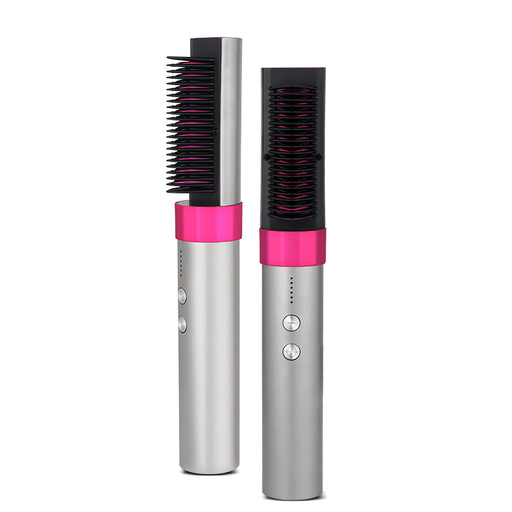
Why This Fits Their Persona: It offers brush-style operation, six temperature settings and cordless use for straightforward daily styling without committing to a larger plate-based tool.
The 130°C–200°C range avoids a single high-temperature setting, while anti-scald comb teeth address a common handling concern.
Six heat settings, PTC ceramic heating and approximately 30 minutes of cordless operation per full charge.
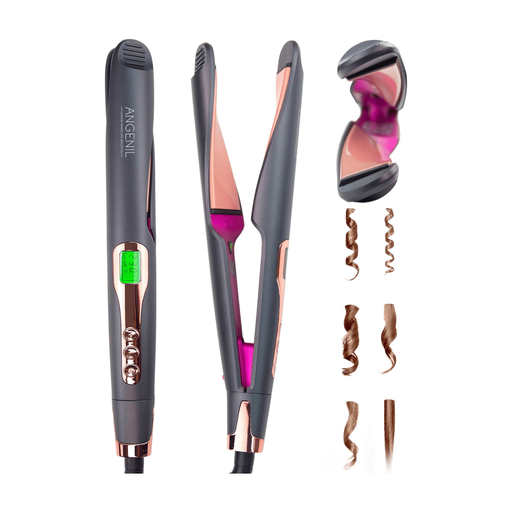
Why This Fits Their Persona: This suits shoppers wanting one tool for straight looks, curls, flips and beach waves, with precise digital control for different styling routines.
The LCD display and 11 heat settings make the chosen temperature visible instead of relying on an unclear preset.
Graphene-infused ceramic plates, 130°C–230°C adjustment, 360° swivel cord and dual-voltage 100V–240V operation.
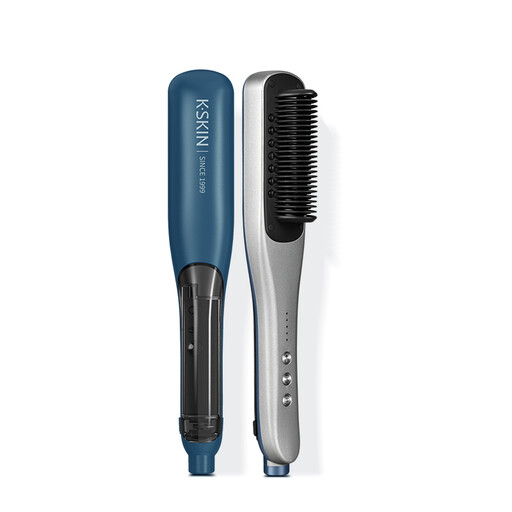
Why This Fits Their Persona: It is aimed at frequent daily users who prefer comb-style styling and want a built-in spray function for a smoother-feeling finish.
Its 25-tooth comb and PTC even-heating design address slow section-by-section styling, while the water tank has a clear maximum-fill instruction.
Steam spray function, approximately 30–60 seconds before steam generation and a one-comb styling format for dry or slightly damp hair.
We have compiled a complete, real-time list of products that fully satisfy these strict selection criteria and UK safety regulations.
For compact travel hair straighteners, the Gtech StyleOnic Turbo ION models offer a 0.4kg design, 10 temperature settings from approximately 140°C to 230°C, a swivel cord and an auto shut-off function listed at around 30 minutes.
If your priority is volume rather than a flat finish, a hair dryer volumiser such as the Revlon Salon One-Step Hair Dryer and Volumiser combines drying with an oval brush. Its two heat settings, cool shot and mixed bristles are suited to blow-dried volume and turned-under ends, rather than precise plate straightening.
Running cost depends on the appliance’s power rating, heat-up time and how long it remains switched on. Short styling sessions generally use less electricity than leaving a tool heated between sections. Unplug it after use and check the product specification for wattage if energy consumption is a key concern.
Lifespan varies with construction, frequency of use and storage. Plate coatings can wear over time, particularly if styling-product residue is left on the surfaces. Clean the plates only as instructed, avoid wrapping the cable tightly around the appliance and replace the tool if the cable, plug or casing becomes damaged.
Yes, but results depend on hair density, section size and the brush’s temperature range. Work with smaller, fully dry sections and select a suitable setting rather than automatically choosing the highest heat. For very curly hair, a plate-based model or a 2-in-1 tool may provide more control than a straightening brush.