Fringe and face-frame detail stylers
If you mainly smooth, curve or flick small dry sections near the roots, plate width and rounded edges matter more than covering a large section quickly. ghd positions its Mini for this kind of precision work.


For dry fringe and face-framing sections, start with plate width and shape: ghd positions its 15 mm Mini with rounded edges for precise styling near the roots. Choose selectable heat if controlling the setting matters more to you, and consider a wet-to-dry airflow tool only if your routine starts with towel-dried hair. For a dressing-table setup, check the UK plug and fuse and make room for the tool to cool safely.
If you mainly smooth, curve or flick small dry sections near the roots, plate width and rounded edges matter more than covering a large section quickly. ghd positions its Mini for this kind of precision work.
If you want to choose a temperature rather than use a fixed setting, compare the settings on the exact model. BaByliss lists five settings on its Titanium Shine ST620U.
If you regularly start with towel-dried hair, a purpose-built airflow tool may fit that routine. Dyson describes its Airstrait as a wet-to-dry tool, not a compact iron for dry touch-ups.
For small dry sections, decide whether close placement or temperature choice is your main priority, then plan how you will set down and cool the tool.
| Concern | What to check | Who this matters to |
|---|---|---|
| Fringe and root precision | Check plate width and rounded edges. For a documented narrow option, ghd lists 15 mm plates on the Mini. | When my fringe needs a small bend near the roots, I want to position the plates around that section; around 50% of consumers put precise placement first. |
| Temperature choice | Check the exact model’s selectable settings and temperature range. BaByliss lists five settings from 150°C to 230°C for the ST620U. | If I prefer to choose a setting for dry styling instead of using one fixed temperature, that choice leads my decision; roughly 25% of consumers prioritise adjustable heat. |
| Dressing-table safety | For a mains model, check its UK 3-pin plug and fuse. Electrical Safety First advises unplugging after use and cooling the tool on a heat-resistant surface. | I need somewhere safe to rest and cool a hot tool after styling close to my face; for about 25% of consumers, the dry-hair setup and cooling routine come first. |
A general-purpose width may be awkward to position around a short fringe or near the roots. ghd positions the Mini’s 15 mm plates for precision styling in those areas.
Check the exact width and edge shape. A standard-width tool makes more sense if you also routinely style larger sections.
Dyson’s UK guidance says conventional flat irons are for completely dry hair; its wet-to-dry Airstrait uses a different airflow approach.
Dry face-framing sections completely before using a conventional plate tool. If you start with towel-dried hair, compare tools specifically designed for that routine.
Electrical Safety First says straighteners can take up to 40 minutes to cool. Automatic shut-off does not replace a safe resting and cooling routine.
Unplug after styling, use a heat-resistant surface and keep the tool out of children’s reach until it has cooled.
A product listing or review is not a substitute for checking the appliance you will receive. Electrical Safety First advises that mains straighteners have a UK 3-pin plug and fuse.
Confirm the plug, fuse and exact model with the retailer, and follow the manufacturer’s instructions.
Its Mini and Original illustrate two different plate widths for dry styling: detail work and a broader everyday routine.
The Titanium Shine ST620U is a conventional straightener to compare when selectable heat is a priority.
Its Airstrait represents a different, wet-to-dry routine rather than the default choice for dry dressing-table touch-ups.
These options cover small-section styling and selectable-heat tools for a dry-hair routine. Compare their shape and settings against your main task rather than assuming that every compact tool has narrow plates.
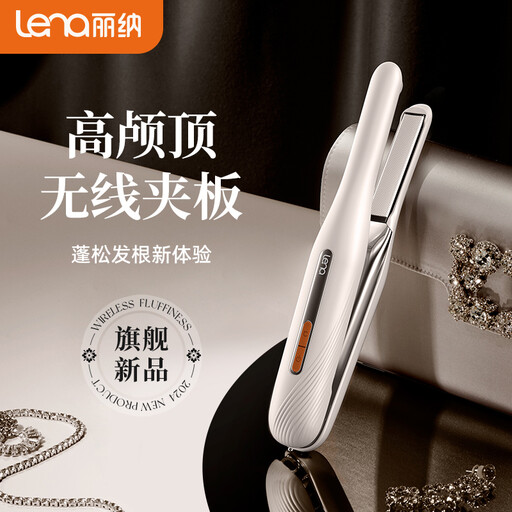 No image available
Consider this cordless clamp if positioning a tool around small dry front sections is your main concern.
Its named 12 mm curved plates distinguish it from the broader styling options. If temperature choice or charging compatibility matters to you, confirm both for the exact model before ordering.
 No image available
This brush is an option if selectable heat for dry-hair styling matters more to you than a narrow plate format.
The product name lists six settings from 130°C to 200°C and a cordless lithium-battery design. Check the brush dimensions before choosing it for a small fringe, and follow the model’s warnings on wet-hair use.
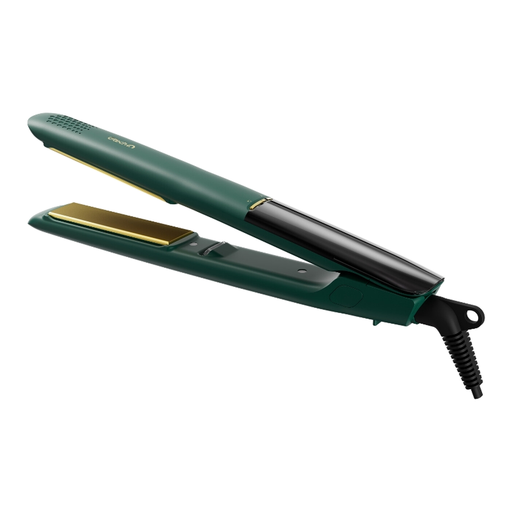 No image available
Consider this conventional straightener if you want several heat choices for dry-hair touch-ups.
The named model has ten temperature settings and tourmaline ceramic plates. If close-to-root work leads your choice, confirm its plate width and edge shape; for UK mains use, check the plug and fuse.
No: Dyson’s UK guidance says conventional plate straighteners should be used on completely dry hair. For a routine starting with towel-dried hair, compare tools specifically designed for wet-to-dry styling.
Start by comparing narrow plates if the fringe and nearby roots are your main task. ghd specifies 15 mm plates for its Mini and positions that model for short hair and precision styling; check the width of any other model individually.
Not necessarily: a narrow fixed-temperature tool may suit precise placement, while an adjustable model lets you choose a stated setting. BaByliss lists five settings from 150°C to 230°C for its Titanium Shine ST620U; follow the instructions for whichever model you choose.
For a mains straightener, check for a UK 3-pin plug and fuse, as advised by Electrical Safety First. Provide a heat-resistant place to set it down, unplug it after use and allow it to cool before storage.