
24/7 Customer Support

Free returns

Same-day & Next-day Delivery

Quality Guaranteed

Unlock Your Welcome Offers: FREE Delivery | Up to 80% OFF | Free 30-day JoyPlus trial
Download the APP
Choosing hair straighteners can be more complicated than comparing prices. A low-cost model may heat quickly but offer limited temperature control, while a feature-rich device may be awkward to use or unsuitable for your hair type. UK shoppers also need to consider plug compatibility, safe handling and whether a cordless design is genuinely practical for everyday styling.
This guide explains the specifications worth checking, the marketing traps to avoid and which styling tools may suit different routines.
A higher temperature is not automatically more suitable. Fine, bleached or fragile hair may need a lower setting, while thick or tightly curled hair may require more controlled heat and smaller sections. A straightener with only one or two heat levels can make it harder to adjust your routine.
Look for an adjustable temperature hair straightener with a clearly stated range. Temperature controls do not remove the need for heat protection or careful technique, but they provide more flexibility than a fixed-temperature model.
An ionic hair straightener may help reduce the sensation of static and make hair appear smoother, but results depend on hair condition, humidity and styling technique. Similarly, a steam hair straightener may add moisture during use, but it still needs to be handled carefully and should not be used on soaking-wet hair unless the instructions specifically allow it.
Check what the product actually includes: ion output claims, water-tank instructions, heating method and cleaning requirements. Avoid choosing based only on phrases such as “damage-free” or “instant repair”.
Cordless styling sounds convenient, but battery capacity, charging time and continuous operating time matter. A cordless hair straightener may be suitable for quick touch-ups but less practical for long, thick hair if its battery lasts for only a short session.
For corded models, check for features such as a swivel cable, automatic shut-off and a UK-compatible plug or suitable charging arrangement. Also consider the weight, plate width and whether the tool can be stored safely while still warm.
For versatile home use, compare both the lowest setting and the highest setting, not just the maximum temperature. The products featured here offer ranges beginning at approximately 130°C or 140°C, with upper settings reaching 200°C, 230°C or more.
As a general starting point:
Use dry hair unless the instructions explicitly state otherwise, apply a suitable heat-protection product and avoid repeatedly passing over the same section.
A ceramic hair straightener is often selected for its smooth surface and even heat distribution. Tourmaline-ceramic plates add another material element, while floating plates can accommodate varying hair thickness as you glide the tool.
Plate width affects styling speed and precision. Wider plates can cover more hair, whereas narrow or curved plates may be easier to use for short hair, volume, waves and curls. A hair straightening brush can detangle and smooth as you brush, but it may not create the same sharply pressed finish as clamping plates.
A quick-heating hair straightener can be useful on busy mornings, but the stated heat-up time may refer to reaching a particular temperature rather than the full operating range. Compare the manufacturer’s stated time and look for a ready indicator or digital display.
For cordless models, note the battery capacity and approximate run time. For heated tools generally, useful practical features include:
No safety feature replaces switching the device off, unplugging it where applicable and allowing hot surfaces to cool on a stable, heat-resistant surface.
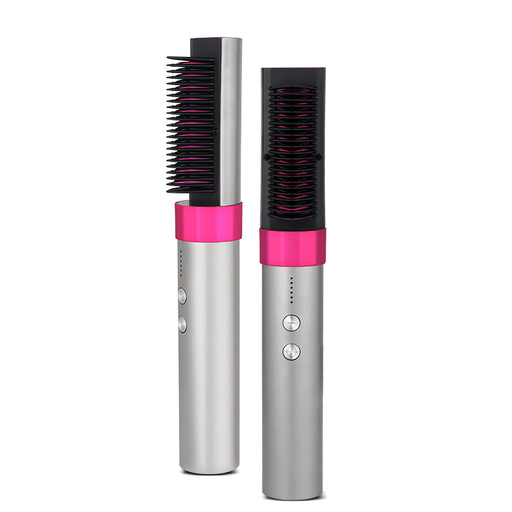
Why This Fits Their Persona: A cordless brush format suits shoppers wanting straightforward daily smoothing without managing a long cable in a bedroom or dressing area.
It provides six temperature settings from 130°C to 200°C rather than relying on one fixed heat level.
PTC ceramic heating, negative-ion function, anti-scald comb teeth and approximately 30 minutes of cordless use per charge.
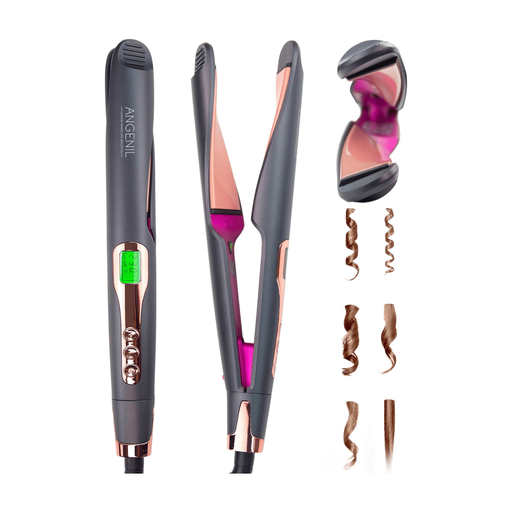
Why This Fits Their Persona: Its display and broad temperature adjustment suit shoppers who want more control for straight styles, curls, flips and waves.
The LCD display shows the selected heat, while 11 settings from 130°C to 230°C avoid vague temperature selection.
3D twisted ceramic plates, 360-degree swivel cord, safety lock, 60-minute automatic shut-off and 100V–240V dual-voltage support.
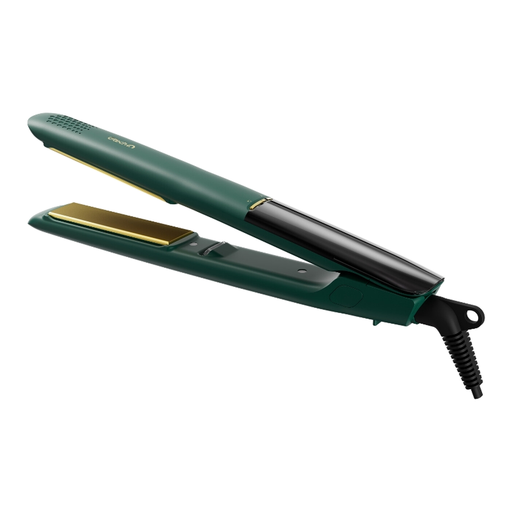
Why This Fits Their Persona: The compact corded design is suitable for UK weekends away, holidays and limited storage where a full-sized tool may be inconvenient.
It states ten digital heat settings and a defined approximately 60-second heat-up time, rather than offering only a generic “fast” claim.
Tourmaline-ceramic floating plates, ionic function, LED display, two-metre swivel cord and approximately 30-minute automatic shut-off.
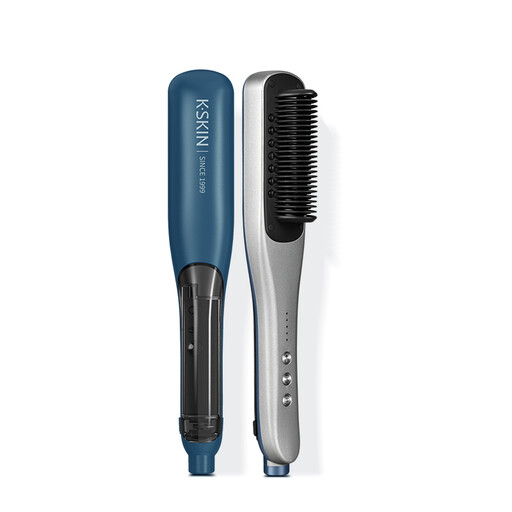
Why This Fits Their Persona: The comb format and 25-tooth design are aimed at shoppers who want to cover sections efficiently during regular styling.
It specifies the water-tank process, 30–60-second steam preparation and the need to empty remaining water after use.
PTC even heating, steam spray function and a comb design intended for quick straightening and smoothing.
We have compiled a complete, real-time list of products that fully satisfy these strict selection criteria and UK safety regulations.
Before using any hair straightener:
Most corded hair straighteners use electricity only while heating and styling, so the running cost is generally linked to power consumption and session length. A quick-heating model may reduce waiting time, but it does not automatically indicate lower electricity use. Cordless models shift the charging requirement to their battery and may be useful for short touch-ups away from a socket.
Lifespan depends on frequency of use, storage, cleaning and the condition of the cable or battery. Avoid wrapping the cord tightly around the appliance, dropping it or storing it while hot. For cordless tools, battery performance can change over time. Follow the supplied care instructions and stop using any device showing damage or unusual behaviour.
A product described as a hair straightener for all hair types may offer a broad temperature range and versatile plate design, but no single tool guarantees identical results for every texture or condition. Fine hair may benefit from lower heat and lighter handling, while thick or curly hair may require sectioning, a suitable plate shape and additional passes. Choose adjustable control and a format that matches your actual styling routine.