
24/7 Customer Support

Free returns

Same-day & Next-day Delivery

Quality Guaranteed

Unlock Your Welcome Offers: FREE Delivery | Up to 80% OFF | Free 30-day JoyPlus trial
Download the APP
Choosing hair straighteners involves more than comparing temperature ranges and glossy product photographs. The wrong design can catch or tug at hair, leave thick sections uneven or become inconvenient after only a few uses. UK shoppers should also consider voltage, plug compatibility, heat protection and whether a cordless model offers enough battery life for a full styling session.
This guide explains the specifications that matter, common marketing pitfalls and which styles of straightener suit different routines.
A tool reaching 230°C or 240°C is not automatically more suitable. Fine, coloured or fragile hair generally needs a lower setting, while thick or curly hair may require more heat and smaller sections. The useful feature is adjustable temperature control, not simply a high top setting.
Look for clearly stated temperature steps, a digital display where possible and instructions that help you select a suitable heat level. Always use a heat-protection product and avoid repeatedly passing over the same section.
An ionic hair straightener may help reduce static and improve the feel of flyaway hair during styling. However, negative-ion claims do not compensate for plates that snag, have uneven heat or do not move smoothly.
Floating plates, a rounded outer edge and a reliable temperature system are practical features to check alongside ionic functions. Terms such as “millions of ions” should be treated as a specification rather than a guarantee of a particular result.
Wide plates can reduce the number of passes needed on long, thick hair, but may be awkward for short layers or detailed curls. A cordless hair straightener can be useful for touch-ups, although battery runtime and charging time matter more than the absence of a cable.
For UK travel, check whether a model supports 100–240V dual voltage. This concerns electrical supply, not necessarily the plug shape: an appropriate travel adaptor may still be needed. At home, also check that the supplied plug and operating instructions are suitable for UK use.
A ceramic hair straightener usually distributes heat across a smooth surface and is a practical choice for regular styling. Graphene-infused ceramic and tourmaline-ceramic models combine ceramic plates with additional material features, but buyers should still check the complete specification rather than relying on the material name alone.
Titanium plates can reach and maintain high heat efficiently. They may suit thick, coarse or long hair, but a high setting can be excessive for fine hair. Rounded or curved plates are helpful if you want a 2-in-1 straightener and curler for flips, waves and curls as well as straight styles.
A wide plate hair straightener, such as one measuring around 4.5cm, can cover more hair in each pass. This can be convenient for long, dense or natural hair. Narrower plates offer more control around fringes, roots and shorter layers.
A 12mm curved plate, for example, is more manoeuvrable and may also help add root volume. There is no universal plate width for every user: match the surface to your hair length, density and preferred styling technique.
Useful specifications include:
A frizz-control straightener may combine ionic or plasma technology with smooth plates. These features can reduce static and make hair feel smoother, but they do not remove the need to dry hair fully, section it carefully and use suitable heat protection.
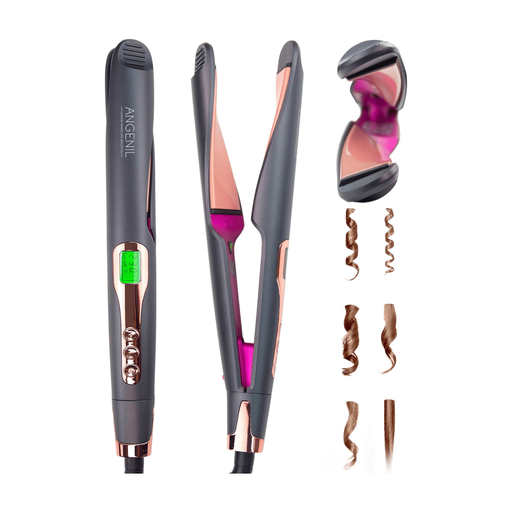
Why This Fits Their Persona: A versatile option for UK households wanting one tool for straightening, curls, beach waves and travel use.
Its LCD display provides 11 temperature settings from 130°C to 230°C, so users are not limited to one high setting.
Graphene-infused ceramic plates, ionic technology, 360° swivel cord, safety lock and 100–240V dual-voltage support.
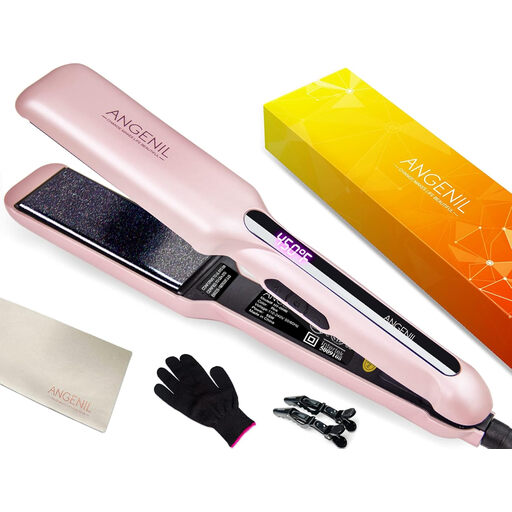
Why This Fits Their Persona: Designed for people with long or thick hair who want to work with larger sections.
The 4.5cm floating plates address the limitation of narrow tools when covering dense or lengthy hair.
Titanium 3D floating plates, nine settings from 160°C to 240°C, LCD display, plasma technology and a heat-resistant mat.
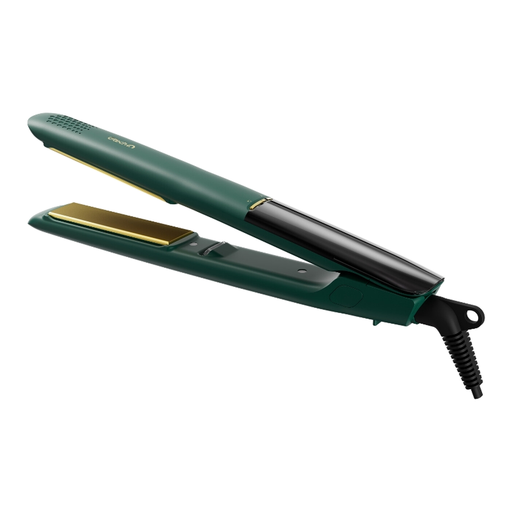
Why This Fits Their Persona: A compact corded choice for everyday users who want straightforward controls and a smaller form factor.
Ten digital temperature settings from approximately 140°C to 230°C offer more control than a basic single-heat tool.
Tourmaline-ceramic floating plates, ionic technology, LED display, 2m swivel cord and approximately 30-minute auto shut-off.
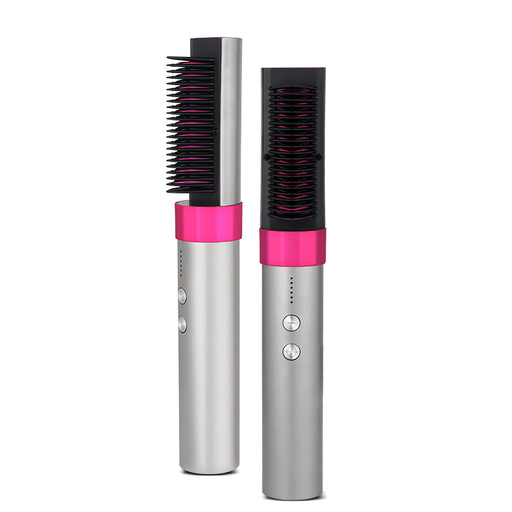
Why This Fits Their Persona: Suitable for quick touch-ups away from a socket, including commuting, holidays and office use.
Its cordless design is paired with a stated 3000mAh battery and approximately 30 minutes of use per full charge.
A hair straightener brush with anti-scald comb teeth, six settings from 130°C to 200°C and negative-ion technology.
We have compiled a complete, real-time list of products that fully satisfy these strict selection criteria and UK safety regulations.
Use straighteners only on dry hair, unless the manufacturer specifically states otherwise. Steam models, such as a steam hair straightening brush, still require careful handling: fill only to the stated limit, keep the steam away from skin and empty the tank after use.
Keep heated tools away from sinks, baths and flammable materials. Place them on a heat-resistant mat while cooling, engage the safety lock if provided and do not rely solely on auto shut-off. Inspect the cable, plug and plates regularly and stop using the product if it becomes damaged.
Their electricity use is usually limited because heating sessions are short. Running cost depends on wattage, heat-up time and how long the tool remains switched on. Unplugging immediately after styling avoids unnecessary standby consumption.
Lifespan varies with frequency of use, storage and build quality. Smooth plates, an undamaged cable and consistent heating are useful signs of ongoing usability. Replace a tool if plates chip, the cord frays or the temperature becomes inconsistent.
Only models marked with suitable dual-voltage support can adapt to different mains voltages. Check the product specification and take the correct plug adaptor. A cordless model avoids mains-voltage issues while in use, but its charger may still require an adaptor.