
24/7 Customer Support

Free returns

Same-day & Next-day Delivery

Quality Guaranteed

Unlock Your Welcome Offers: FREE Delivery | Up to 80% OFF | Free 30-day JoyPlus trial
Download the APP
Choosing between hair styling tools can be difficult when product pages focus on phrases such as “salon-style”, “fast heat” and “ionic technology”. These terms may sound useful, but they do not always explain how a tool will suit your hair, routine or available space.
For UK shoppers, the practical questions are more important: Does the barrel size create the finish you want? Can you control the heat? Is the cord long enough to use comfortably near your mirror? And can the tool be stored safely after styling?
This guide covers common buying pitfalls, the specifications worth checking and three options suited to different at-home styling needs.
A slim barrel is not automatically suitable for every type of curl. A 19mm curling tong generally creates tighter curls, spirals and more defined waves. A 25mm curling tong is more suitable for softer curls and looser movement, depending on hair length and styling technique.
Very small barrels can take longer to use on thick or long hair, while larger barrels may not provide enough definition for short hair or styles that need stronger curl formation.
A higher temperature can reduce styling time, but it also increases the need for careful technique. Maximum heat should not be used as a substitute for suitable preparation, sectioning or heat protection.
Look for practical controls such as multiple heat settings, a cool-touch tip, an integrated stand and a secure clamp. These features can make a tool easier to handle, especially when styling in a smaller UK bathroom or bedroom.
Ceramic coatings are designed to distribute heat across the barrel or heated surface. Ionic systems are commonly included in dryers and dryer brushes to help manage static and frizz during drying. However, the finish also depends on hair condition, moisture levels, brush technique and the products used beforehand.
A ceramic curling iron may feel smoother during use, but it should still be used on dry hair and not held in one position for too long.
The barrel is one of the clearest indicators of the final shape:
A clamp can help hold each section in place, which may be useful for beginners. A clamp-free wand can offer a more relaxed finish but usually requires more manual control.
Check both the maximum temperature and the number of settings. The Wahl curling tong models listed here reach up to 200°C and provide two heat levels. This gives more flexibility than a single fixed-temperature tool, although users should select the lowest setting that produces the desired result.
A 200°C fast heat curler may be convenient before work or an evening out, but rapid heat-up should not encourage rushed styling. Allow the tool to reach its operating temperature, section the hair evenly and follow the included instructions.
Features that are easy to overlook can affect everyday usability:
For dryers and hot air brushes, also compare the brush shape, bristle arrangement, cool-shot function and heat settings. An ionic hair dryer brush can combine drying and smoothing, while a dedicated curling tong is more focused on shaping.
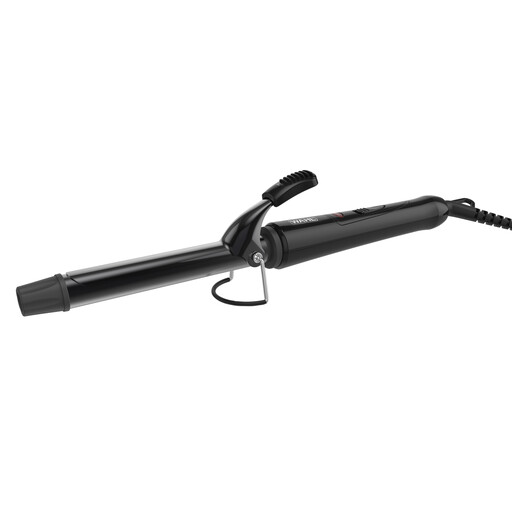
Why This Fits Their Persona: A straightforward option for shoppers starting to create tighter curls at home, with a manageable set of controls and a mains-powered design suited to regular use.
The 19mm ceramic-coated barrel and two heat levels provide more usable information than a vague promise about styling performance.
19mm barrel for defined curls; 2.5m swivel cord, cool-touch tip, integrated stand and hanging loop.
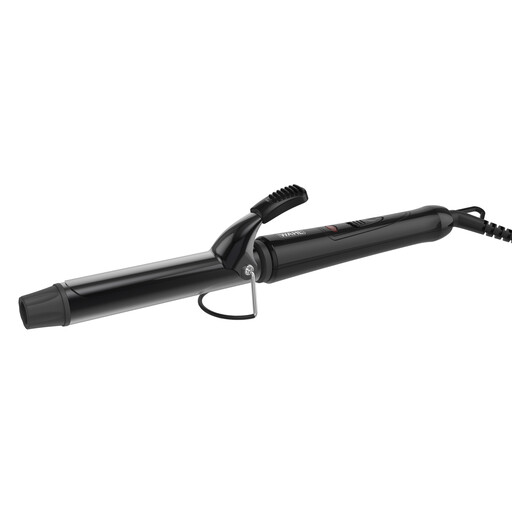
Why This Fits Their Persona: Suitable for users who prefer softer, more relaxed curls and want practical handling features for frequent at-home styling.
Its 25mm size makes the intended curl shape clear, while the ceramic barrel, clamp and two heat levels offer defined points for comparison.
25mm ceramic-coated barrel; fast heat-up to 200°C, cool tip, swivel cord and integrated storage stand.
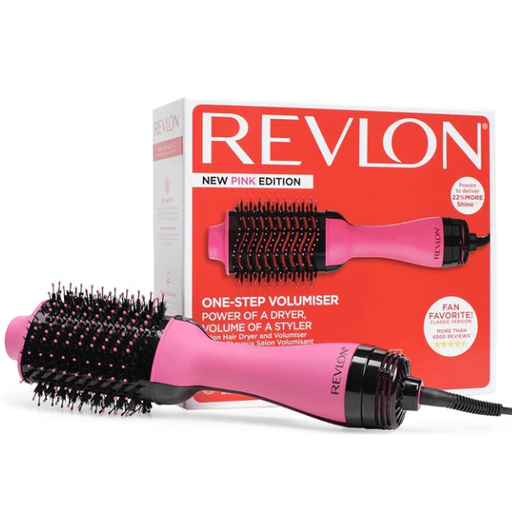
Why This Fits Their Persona: A practical choice for users who want to combine drying, root lift and smoothing rather than using a separate dryer and curling tool.
The oval brush, mixed bristles, two heat settings and cool-shot function provide concrete information beyond general volumising language.
Combines a dryer and volumising hair styler; ceramic coating, ionic technology, root-lifting brush shape and cool shot.
We have compiled a complete, real-time list of products that fully satisfy these strict selection criteria and UK safety regulations.
Use curling tongs and curling irons only on fully dry hair unless the appliance specifically states otherwise. Apply a suitable heat-protection product, divide the hair into manageable sections and avoid repeatedly passing over the same section.
With a dryer brush, remove excess water first and work with sections that are damp rather than dripping wet. Keep the brush moving, particularly around the ends, and use the cool-shot setting when available to help finish the style.
Never leave a heated appliance unattended. Unplug it after use, allow it to cool completely on its stand and store it away from water and children. Check the cable and plug regularly; discontinue use if either appears damaged.
Running cost depends mainly on the appliance’s wattage and how long it is used. Check the rating label or product specifications for wattage, then compare usage time. Curling tongs usually operate for shorter periods, while a hair dryer brush may run for longer during a full blow-dry.
Lifespan varies according to frequency of use, storage and cable condition. Ceramic coatings can show wear over time, particularly if the barrel is scratched or cleaned with abrasive materials. Keeping the tool dry, allowing it to cool naturally and avoiding tight cord wrapping can help maintain it.
A curling tong can create different shapes by changing section size, wrapping direction and hold time. However, a 19mm model is oriented towards tighter definition, while a 25mm model is more suited to softer curls. For root lift, smoothing and a blowout-style finish, an ionic hair dryer brush or volumising styler may be more suitable than a dedicated curler.