
24/7 Customer Support

Free returns

Same-day & Next-day Delivery

Quality Guaranteed

Unlock Your Welcome Offers: FREE Delivery | Up to 80% OFF | Free 30-day JoyPlus trial
Download the APP
Choosing between hair styling tools can be difficult when product pages highlight ion counts, motor speeds and “salon-style” results without explaining what those specifications mean in daily use. The right choice depends on your hair type, preferred finish, available storage and how often you style.
Before buying a hair dryer, hot air brush, hair straightener or multi-styler hair dryer, watch out for these common pitfalls.
An ionic hair dryer may help reduce static and visible flyaways, but a large ion figure does not tell you how comfortable or effective the appliance will be. Airflow control, heat settings, attachment design and filter maintenance also affect the styling experience.
For curly or textured hair, a suitable diffuser or pik attachment can be more useful than a headline ion figure. For fine hair, excessive heat or powerful airflow may flatten the roots.
A hair styler with attachments can cover drying, smoothing, curling and volumising, but only if the attachments suit your routine. A multi-styler that includes several brush heads may be less useful if you mainly want straight hair or a quick root refresh. Check how easily attachments change, how much storage space the set requires and whether the tool is comfortable to hold.
UK shoppers should check whether the appliance is designed for UK mains voltage and which plug is supplied. Some low-power appliances may come with a UK 2-pin plug and require a suitable adapter for a three-pin socket.
No heated styling tool should be used on soaking wet hair unless the instructions specifically permit it. Most hair dryers and hot air brushes are intended for towel-dried hair, while hair straighteners, curling tongs and hair straightening brushes generally require dry hair.
At least two heat levels and two airflow speeds allow better control across different hair types. A cool-shot function can help set a finished style without adding more heat.
Fine or fragile hair generally benefits from lower temperature settings and shorter passes. Thick, curly or hard-to-dry hair may need stronger airflow, but attachments should not automatically be used on the highest heat setting. Always follow the supplied instructions.
The K·SKIN KD382 hair straightening brush offers six temperature settings from 130°C to 200°C, while the K·SKIN KD880 steam straightening comb uses PTC heating and a water tank for its steam function. Both should be used on dry or slightly damp hair as directed, not on dripping-wet hair.
A volumising hair dryer brush usually uses an oval or round barrel to lift roots and shape the ends. A paddle or smoothing brush is more suitable for a straighter finish. A diffuser spreads airflow and is often preferred for defining curls while reducing concentrated airflow.
For styling tools for curly hair and hair tools for textured hair, look for:
The Wahl PowerPik 2 includes a OnePik attachment and concentrator nozzles, with three heat and two speed settings. It is designed for Afro, curly and textured hair types.
A cordless hair straightener can be convenient for quick touch-ups, but battery runtime matters. The K·SKIN KD382 has a built-in 3000mAh battery and provides approximately 30 minutes of use per full charge. This may suit short daily styling sessions, but a mains-powered hair straightener is more practical for longer or more frequent use.
For travel, consider folding dimensions, weight, dual-voltage operation and the supplied plug. A travel hair dryer with a 100–240V range can be more suitable for overseas trips, but voltage must still be selected correctly where applicable.
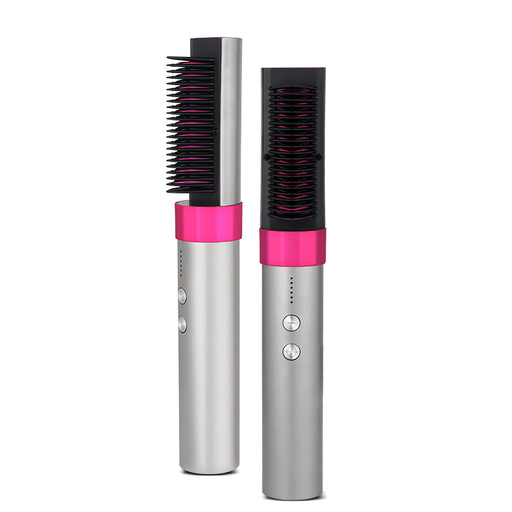
Why This Fits Their Persona: A cordless design suits shoppers wanting straightforward daily smoothing without buying several separate tools.
It states its temperature range and battery runtime clearly, avoiding vague cordless performance promises.
Six settings from 130°C to 200°C, PTC ceramic heating and anti-scald comb teeth.
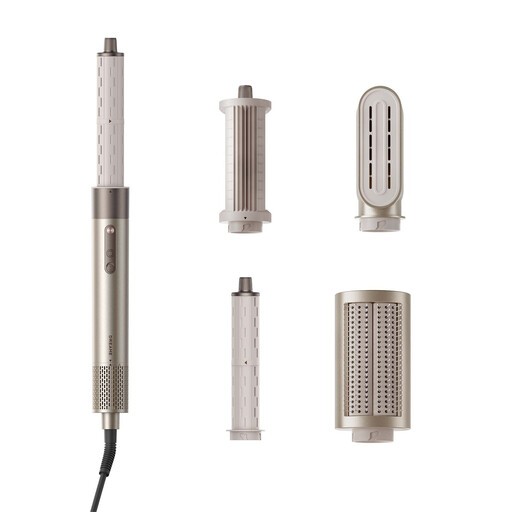
Why This Fits Their Persona: Suitable for users who want one organised system for drying, smoothing, curling and shaping at home.
The five-piece system has defined functions, including dual auto-wrap barrels, a smoothing brush and a concentrator.
Magnetic quick-change attachments, multiple heat and airflow levels and Coanda airflow styling.
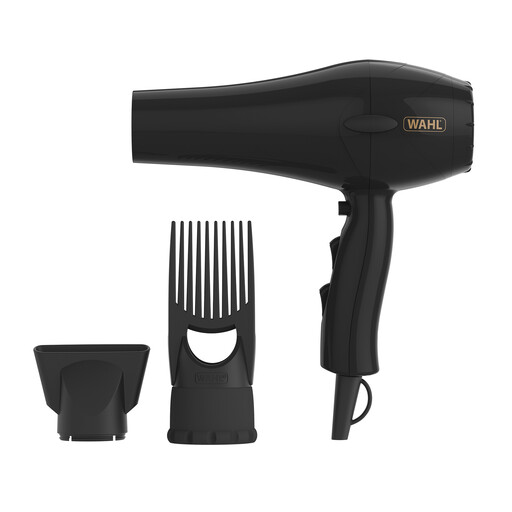
Why This Fits Their Persona: Its pik attachment and focused nozzles are suited to thicker, Afro, curly or textured hair that can take longer to dry.
The attachment guidance specifies avoiding the highest heat setting, giving a clearer operating limit.
1500W listed in the product name, a 3-metre cable, cold shot and removable air filter.
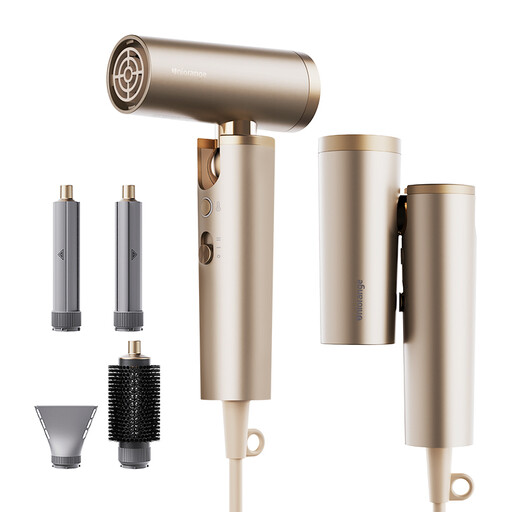
Why This Fits Their Persona: The foldable body and dual-voltage design are practical for UK residents travelling abroad.
It specifies 100–240V operation, foldable storage and a removable filter rather than relying only on portability language.
Four styling attachments, including auto-curling barrels and a volumising round brush.
We have compiled a complete, real-time list of products that fully satisfy these strict selection criteria and UK safety regulations.
Running cost depends mainly on wattage and usage time. A 1,000W appliance used for 15 minutes consumes less electricity than a 1,800W appliance used for the same period. Use the lowest effective heat and switch the appliance off and unplug it immediately after use.
Lifespan varies with construction, frequency of use and maintenance. Clean removable filters regularly, avoid wrapping cords tightly around the handle and store hot tools only after they have cooled completely. Stop using any appliance with a damaged cable, unusual smell, smoke or inconsistent heating.
A multi-styler hair dryer can cover several functions, but results and handling differ from dedicated tools. Choose a multi-styler for convenience and storage savings. Choose a separate hair straightener, curling tong or hair dryer with diffuser when one specific finish or hair type is your main priority.