
24/7 Customer Support

Free returns

Same-day & Next-day Delivery

Quality Guaranteed

Unlock Your Welcome Offers: FREE Delivery | Up to 80% OFF | Free 30-day JoyPlus trial
Download the APP
Choosing between hair styling tools and products can be surprisingly difficult. A low-priced hair straightener may lack useful temperature control, while a cordless hair straightener may run out of charge before you finish styling. Similarly, a hair styling wax or texture clay can look suitable online but feel too heavy, sticky or difficult to wash out.
The right purchase depends on your hair type, preferred style and daily routine. Before comparing products, watch out for these common buying traps.
Terms such as “ionic”, “ceramic” and “steam” describe design features, not guaranteed results for every hair type. An ionic hair straightener may help reduce the sensation of static, but technique, temperature and hair condition still affect the finish. Steam can support a smoother styling process, but it does not make a heated tool suitable for wet hair.
Cordless styling tools are convenient for quick touch-ups, commuting or travel. However, runtime is often more important than the word “wireless”. Check the stated usage time, charging method and whether the tool can be used while charging. A compact tool with limited battery capacity may be useful for fringes and short touch-ups, but less suitable for long or thick hair.
Hair styling wax, clay and gel are not interchangeable. Wax generally gives shape and some shine, while a texture clay usually creates a more matt, separated finish. Applying too much product can flatten fine hair or leave short styles feeling greasy. Look for clear information about hold level, finish, ingredients and removal.
A hair straightener with several temperature settings offers more control than a device with one fixed high setting. Lower temperatures, such as 130°C–160°C, may be more suitable for fine or fragile hair, while thicker or coarser hair may require a higher setting. Always follow the product instructions and avoid repeated passes over the same section.
Useful features include:
A ceramic hair straightener distributes heat across its plates or comb area. Ceramic, graphene-infused ceramic and MCH or PTC heating systems are design details worth comparing, but they do not remove the need for sensible heat use.
The shape of the heated surface determines which styles are practical. Wide plates can cover more hair in each pass, whereas narrow or curved plates can help with fringes, short hair, waves and root volume.
A hair straightening brush can be easier to guide through larger sections than clamp-style plates. A steam hair straightening comb may appeal to users who want straightening and moisture spraying in one step, but it still requires dry or slightly damp hair according to the supplied instructions. For curls, compare the barrel diameter: a 25mm curling tong is designed for defined curls and waves rather than very loose volume.
Check that the product includes clear instructions, warnings and suitable charging or power information for the UK. Look for details such as:
Do not use heated tools on wet hair unless the instructions specifically permit it. Keep them away from sinks, baths and other water sources, unplug corded models after use and allow all heated surfaces to cool fully before storage.
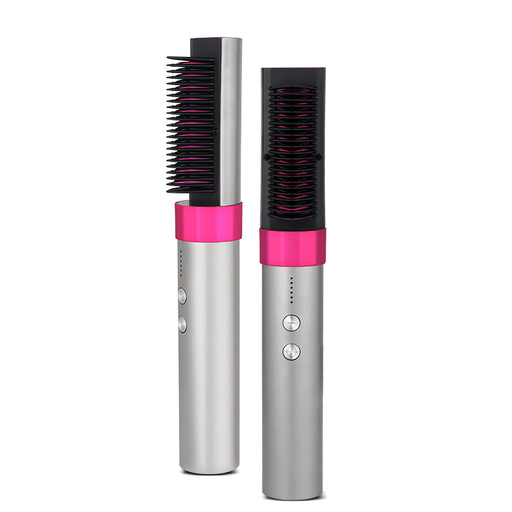
Why This Fits Their Persona: A practical choice for daily grooming, simple smoothing and quick preparation before work or outings in the UK.
It does not rely on a single fixed heat level: six settings run from 130°C to 200°C, while the anti-scald comb teeth add separation between the heated area and skin.
PTC ceramic heating reaches the stated temperature in about one minute; its 3000mAh battery provides approximately 30 minutes of cordless use.
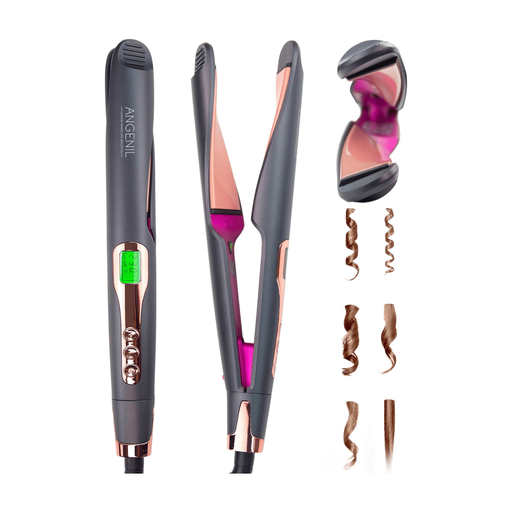
Why This Fits Their Persona: Suitable for shoppers wanting one corded tool for straight styles, flips, beach waves and curls, including travel between countries.
The 11 temperature settings from 130°C to 230°C provide more adjustment than a one-temperature straightener, and the LCD display shows the selected setting.
The 3D twisted ceramic plate design supports straightening and curling; dual-voltage operation is listed as 100V–240V for travel use.
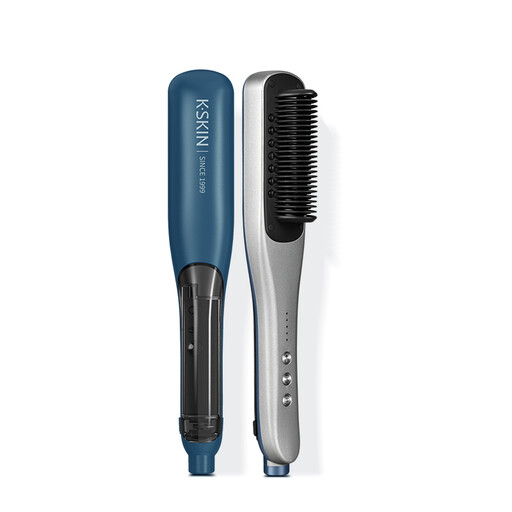
Why This Fits Their Persona: A useful option for people who regularly manage dryness, static or frizz and prefer comb-style styling for larger sections.
Its water tank and spray function are clearly defined, so buyers can account for filling, emptying and cleaning rather than assuming steam is maintenance-free.
The 25-tooth comb covers a broad area, and the product description states that basic styling can take approximately three minutes.
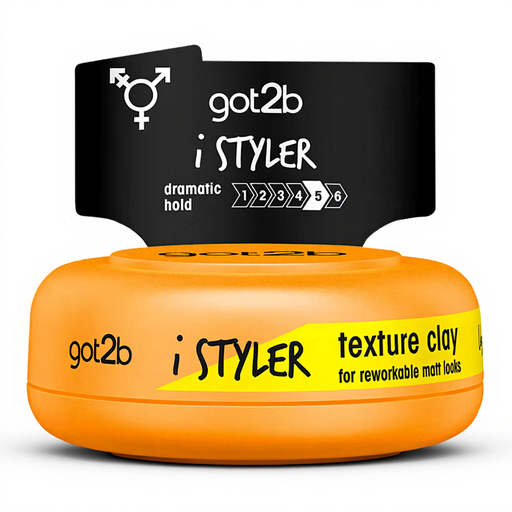
Why This Fits Their Persona: Designed for short to medium-length styles where separation, shape and a natural matt appearance matter more than glossy finish.
The product information specifies a matt finish, silicone-free formula and no white residue, helping set realistic expectations before purchase.
A small amount is intended to go a long way; it can be worked into dry hair for definition and shaped with fingertips.
We have compiled a complete, real-time list of products that fully satisfy these strict selection criteria and UK safety regulations.
Running cost depends on wattage, usage time and electricity tariffs. A tool that heats quickly may reduce the time it is switched on, but the exact saving depends on how often it is used. Cordless models shift some energy use to charging the battery rather than drawing power directly during styling.
Lifespan varies according to construction, frequency of use, storage and cable or battery condition. Keep plates clean, avoid wrapping cords tightly around corded tools and store heated devices only after they have cooled. For cordless models, battery capacity may gradually reduce with repeated charging cycles.
Unless the manufacturer specifically states otherwise, use heated styling tools only on dry hair. The supplied instructions for the featured brush, steam comb and curling tong advise against wet-hair use. Dry hair also makes it easier to work in small sections and avoid repeated passes.