
24/7 Customer Support

Free returns

Same-day & Next-day Delivery

Quality Guaranteed

Unlock Your Welcome Offers: FREE Delivery | Up to 80% OFF | Free 30-day JoyPlus trial
Download the APP
A hair volumiser brush can simplify your morning routine by combining brushing, drying or heat styling in one device. However, not every tool described as a “one-step hair dryer brush” performs the same job. Some are designed for damp hair, while others are heated styling brushes that must only be used on fully dry hair.
The right choice depends on your hair length, styling routine and preferred finish. Before buying, check these common pitfalls and the practical specifications that make a noticeable difference.
A hot air brush uses airflow to dry and shape damp hair. It may be labelled a one-step hair dryer brush, hair dryer and volumiser or 2-in-1 hair styling brush.
A thermal brush, by contrast, has a heated barrel or bristles but does not blow air. It is intended for dry hair that has already been washed and dried. For example, the Wavytalk Thermal Brush is specifically described as not suitable for blow drying. Using a heated thermal brush on wet hair can lead to uneven styling and unnecessary heat exposure.
An ionic hair styler may help reduce static and make hair feel smoother during styling, but ionic features do not remove the need to select an appropriate temperature. Fine, bleached or damaged hair generally needs a lower setting, while thick hair may require more heat for shaping.
Look for adjustable controls rather than relying on phrases such as “faster styling” or “less damage”. Heat protection products, small sections and continuous movement remain important.
A large oval head can lift roots and turn ends under, making it practical for medium to long hair. A round barrel can create more defined bends, fringe shaping and curled ends. However, a large barrel may be awkward on short layers, while a very small barrel can take longer to use on long hair.
Also check the handle, cord movement and storage design. A detachable head, swivel cord or digital display can be more useful in daily life than a long list of promotional features.
If you want to dry and style in one step, choose a model that clearly states it is suitable for wet and dry styling. Towel-dry hair first rather than applying a hot air brush to dripping-wet hair. This reduces the amount of time the tool needs to operate and can make sectioning easier.
A wet-and-dry volumising brush for hair usually combines airflow with a brush head. A thermal heated hair brush is better suited to refreshing dry hair, adding root lift or shaping the ends of an existing blow-dry.
Multiple settings provide more control. The Wavytalk thermal models offer five temperature settings: 150°C, 165°C, 180°C, 200°C and 215°C, shown on an LED display. The product guidance places the lower settings towards thin or damaged hair and the higher settings towards thick or coarse hair.
A tool with two heat settings and a cool setting can still be practical, particularly for straightforward blow-dry styles. The cool setting is useful for finishing a style, but it should not be treated as a substitute for careful heat management.
Ceramic, tourmaline ceramic or ceramic-coated barrels are designed to distribute heat across the styling surface. These materials can help reduce hot spots when used correctly, but they do not make excessive heat risk-free.
For a heated round brush, check the barrel diameter. The 38mm Wavytalk barrel is suited to loose volume, airy curls and shaped fringe. Oval brushes with mixed bristles can detangle, smooth and lift the roots at the same time. Ball-tipped bristles may feel more comfortable when guiding the brush through longer sections.
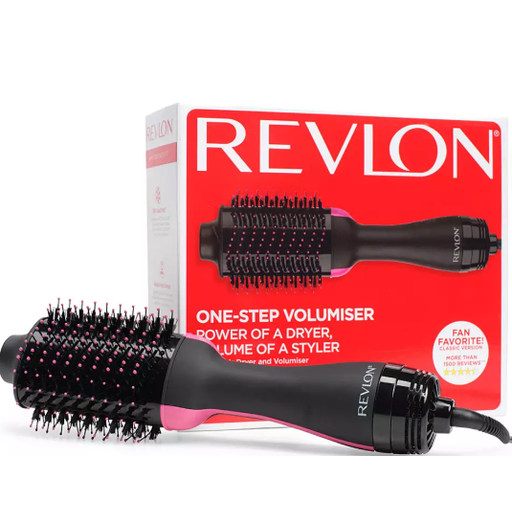
Why This Fits Their Persona: A straightforward choice for UK shoppers who want one tool for drying and adding volume to mid to long hair.
Its description clearly identifies it as a drying and volumising tool rather than a dry-hair thermal brush.
Ionic technology, ceramic coating, mixed bristles and two heat settings plus cool.
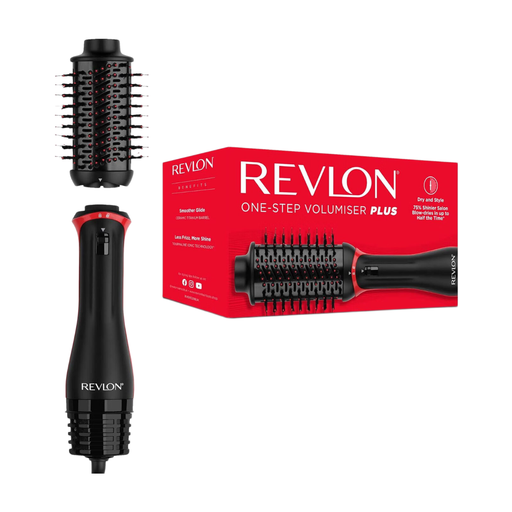
Why This Fits Their Persona: Suitable for shoppers wanting flexible wet-and-dry styling, closer root access and easier storage.
The detachable, smaller oval head is specified for closer root styling and the tool is listed for wet and dry use.
Four heat settings, cool setting, ionic technology and detachable head for travel.
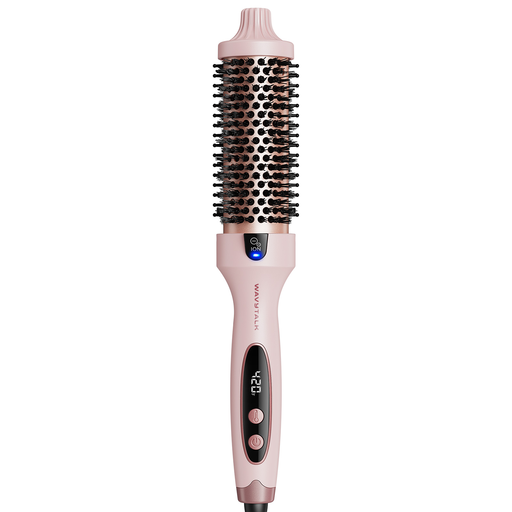
Why This Fits Their Persona: Designed for users who already dry their hair and want a dedicated dry-hair tool for volume, waves and shaped ends.
The listing states that it is not a hair dryer brush and gives clear temperature guidance for different hair types.
38mm tourmaline ceramic barrel, five LED-displayed temperatures, dual voltage and 360° swivel cord.
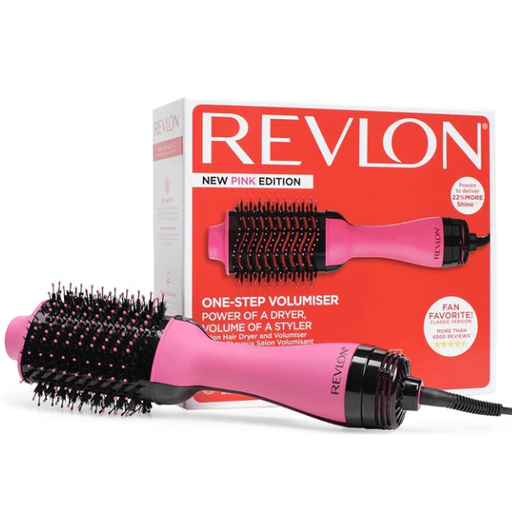
Why This Fits Their Persona: A practical wet-and-dry option for regular users who want root lift, smooth lengths and turned-under ends from one device.
It specifies two heat settings and a cool shot, so the styling routine is not dependent on a single fixed temperature.
Oval brush shape, ionic technology, ceramic coating and mixed nylon and tufted bristles.
We have compiled a complete, real-time list of products that fully satisfy these strict selection criteria and UK safety regulations.
It can be, but the head size matters. A smaller detachable oval head or a medium round barrel may offer better control around short layers and roots. Large oval brushes are often easier to handle on medium to long hair.
Only if the product instructions explicitly state that it is suitable for wet-and-dry styling. A thermal heated brush, such as the Wavytalk model listed above, is intended for dry hair and should not be used for blow drying.
Running cost depends on the appliance’s wattage, your electricity tariff and how long each session lasts. The listed Wavytalk thermal brush operates at 68 watts, while the wattage of other models should be checked on their product pages or packaging. Shorter sessions may use less electricity, but hair should be fully and safely styled rather than rushed.