
24/7 Customer Support

Free returns

Same-day & Next-day Delivery

Quality Guaranteed

Unlock Your Welcome Offers: FREE Delivery | Up to 80% OFF | Free 30-day JoyPlus trial
Download the APP
As a cat owner, you are likely familiar with the unwelcome discovery of a hairball. While it's a natural result of your cat's meticulous grooming, frequent hairballs can be a sign that their digestive system needs a bit of support. Navigating the world of specialised cat food can be confusing, with countless options all claiming to solve the problem.
This guide is designed to help you understand what to look for in a hairball control cat food. As the Joybuy Product Recommendation Officer, my role is to provide clear, practical advice to help you make an informed choice for your feline companion, cutting through the marketing clutter to focus on what truly matters.
When selecting a food to help manage hairballs, focusing on a few key areas can make all the difference. Here are some practical points to consider during your search.
Fibre is essential in a digestive care cat food. It plays a crucial role in helping ingested hair move smoothly through the digestive tract, encouraging it to pass naturally in the stool rather than being regurgitated. Look for ingredients like beet pulp, cellulose, pumpkin or barley grass on the label. These ingredients add bulk and help maintain regular bowel movements, which is fundamental for hairball management.
A healthy coat sheds less, which means your cat ingests less hair during grooming. High-quality, easily digestible protein sources like chicken or fish support skin and coat health. For some cats, digestive upset can contribute to poor coat condition. If you suspect your cat has a sensitive stomach, a grain-free cat food might be a suitable choice. These formulas avoid common grains like wheat and corn, which can be difficult for some felines to digest, opting instead for alternative carbohydrate sources or focusing on a high-protein, low-carb profile.
Your cat's diet doesn't have to be an all-or-nothing approach. Cat hairball treats can be an excellent way to supplement their main meals. Many modern options, such as lickable cat treats, are formulated with functional ingredients like flaxseed and psyllium husk to aid digestion. These natural cat treats provide targeted support and can also be a great tool for bonding or encouraging hydration when mixed with water.
Here are a few products that align with the principles of effective hairball and digestive support.
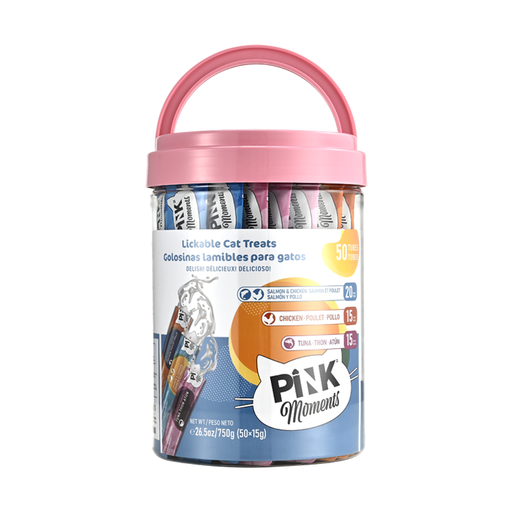
Why It Stands Out: This is a complementary pet food that offers variety and functional benefits. The formula is built around a "Real Zero" principle, meaning it contains no grains, gluten or artificial flavours. It uses ingredients like barley grass and flaxseed to specifically aid intestinal movement and support hairball control. The high moisture content also helps with hydration.
Pros:
Who is it for? This is a great option for owners looking for a high-value, natural cat treat to supplement their cat's main diet. It's particularly useful for cats who are picky eaters or those who need encouragement to drink more water.

Why It Stands Out: This is a complete dry food designed as an all-in-one solution. With chicken as the number one ingredient, it provides a strong protein base for muscle and coat health. The formula includes a specific blend of fibres to help reduce hairball formation by moving hair through the digestive system. It also contains chicory, a natural prebiotic, to support gut balance.
Pros:
Who is it for? This food is suitable for cat owners who prefer the convenience of a complete dry kibble that addresses both coat health and hairball control in a single, scientifically formulated product.

Why It Stands Out: This is a highly targeted cat hairball treat designed for cats needing extra digestive support. The formula is grain-free and soy-free, making it a good choice for a cat food for sensitive stomach. It combines natural fibre from barley grass and psyllium husk with prebiotics (FOS) to promote a healthy gut environment and the natural passage of hairballs.
Pros:
Who is it for? This is an ideal choice for owners who are happy with their cat's main food but want to add a functional treat to specifically address hairballs and support digestive wellness, especially if their cat has known sensitivities.
Every cat is an individual, and the recommendations above are just a starting point. If your cat has a particular preference for chicken-based formulas or you'd like to browse a wider selection of specialised diets, you can explore more options in our curated collection.
[Explore our full range of cat food selections here.](https://www.joybuy.co.uk/explore/chicken-ball/HQSrDrGN)
Most hairball control formulas work by increasing the amount of dietary fibre. This fibre, which can be soluble or insoluble, helps to bind with ingested hair in the stomach and move it through the digestive tract so it can be passed in the cat's stool. This reduces the likelihood of the hair accumulating and being regurgitated as a hairball. Some formulas also include oils to help lubricate the digestive system.
For mild or infrequent hairballs, using cat hairball treats as a supplement can be an effective strategy. They provide a concentrated dose of fibre and other beneficial ingredients. However, if hairballs are a persistent issue, switching to a complete hairball control cat food ensures your cat receives consistent support with every meal. Using both in combination is also a viable approach.
Not necessarily. The effectiveness of a food for hairball control depends on its fibre content and quality, not the absence of grains. However, a grain-free cat food can be very beneficial for cats with digestive sensitivities. By improving overall gut health and reducing potential inflammation, it can lead to a healthier skin and coat, which may result in less shedding and, consequently, fewer hairballs.