
24/7 Customer Support

Free returns

Same-day & Next-day Delivery

Quality Guaranteed

Unlock Your Welcome Offers: FREE Delivery | Up to 80% OFF | Free 30-day JoyPlus trial
Download the APP
Grey roots can appear sooner than expected, particularly around the parting, temples and hairline. A suitable hair dye for grey coverage can refresh your colour at home, but the right choice depends on whether you need an all-over change, permanent root coverage or a temporary fix between colour appointments.
Marketing language can make similar products seem interchangeable. Before buying, check the colour type, shade suitability, ingredients and application requirements rather than relying only on phrases such as “salon-quality” or “natural-looking”.
A temporary root concealer sits on the hair surface and is usually removed by shampoo. It is practical for an event, holiday or last-minute touch-up, but it does not replace a permanent hair dye.
Permanent formulas use a colourant and developer and are designed to remain on the hair as it grows. They may offer longer-lasting coverage, but regrowth will still become visible over time. Select the format according to how often you want to reapply and whether you are changing the colour throughout your hair.
The same shade can look different depending on your existing colour, previous dye, hair porosity and the proportion of grey. A dark brown hair dye may appear deeper on porous lengths, while a lighter shade may not cover resistant grey as evenly.
Compare the shade number and description carefully. Options labelled natural brown hair colour, brown hair dye, dark brown hair dye or dark blonde are not identical. If you are between two shades, read the manufacturer’s instructions and consider a strand test before applying colour across your head.
An ammonia-free hair dye may be preferable if you want to avoid ammonia, but it can still contain other colourant ingredients that may cause an allergic reaction. “Gentle”, “natural origin” and “nourishing” describe aspects of a formula; they do not remove the need for a safety test.
Always read the full packaging, ingredient list and warnings. Do not use hair colourants on irritated or damaged scalps, and never use them on eyelashes or eyebrows.
Choose a permanent hair dye when you want broader grey coverage and a colour result intended to last through repeated washing. Product descriptions commonly state a duration such as up to six or eight weeks, but actual results vary with hair condition, washing frequency and regrowth.
A permanent root touch-up is useful when your lengths already match your desired shade. Temporary sprays and powders are more suitable for concealing visible roots until the next shampoo. They can also reduce the need to recolour lengths unnecessarily.
Look for a clear coverage statement rather than assuming every brown formula will cover grey equally. Several products below are listed with 100% grey coverage, including options designed for resistant greys.
Application time matters too. Root touch-up products may process in around 10 minutes, while all-over permanent kits can require approximately 30–45 minutes. Follow the leaflet exactly: extending the development time does not necessarily improve the result and may increase the chance of irritation or uneven colour.
Check whether the kit contains developer, gloves, conditioner, shampoo or a mask. A complete kit can be more convenient for at-home hair colour, particularly if you do not already have suitable application supplies.
Review ingredients if you are avoiding particular substances. For example, the Garnier Good range is described as ammonia-free and includes shea butter, while several L’Oréal and Clairol permanent formulas list ammonia or other oxidative colour ingredients. Ingredient preferences should be balanced with shade, coverage and allergy precautions.
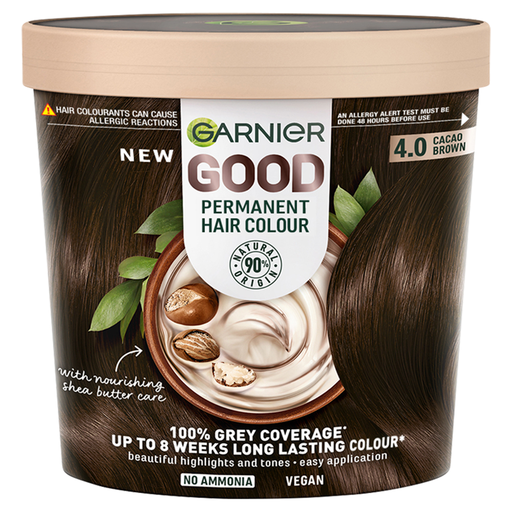
Why This Fits Their Persona: A practical brown shade for shoppers starting with at-home colour and looking for a permanent, non-drip formula without ammonia.
It clearly identifies the formula as permanent and lists 100% grey coverage, rather than presenting a temporary concealer as an all-over solution.
Ammonia-free formula, shea butter, non-drip texture and a listed development time of up to 45 minutes.
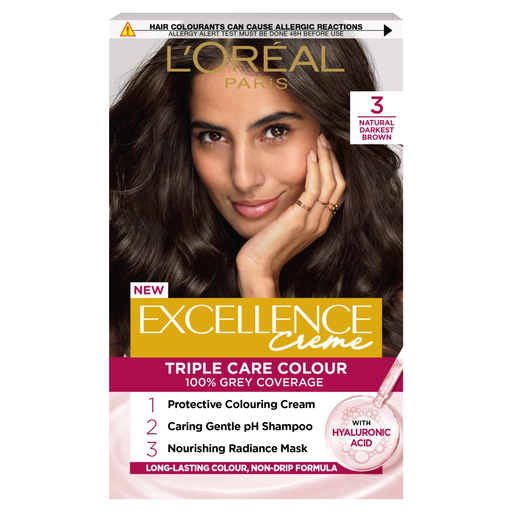
Why This Fits Their Persona: Suits shoppers who want a complete kit with colour cream, post-colour shampoo and a lightweight mask for a structured home routine.
The kit states its coverage and application guidance clearly, while the non-drip crème helps reduce mess during section-by-section application.
Up to 100% grey coverage, a triple-care routine and a stated result duration of up to eight weeks.
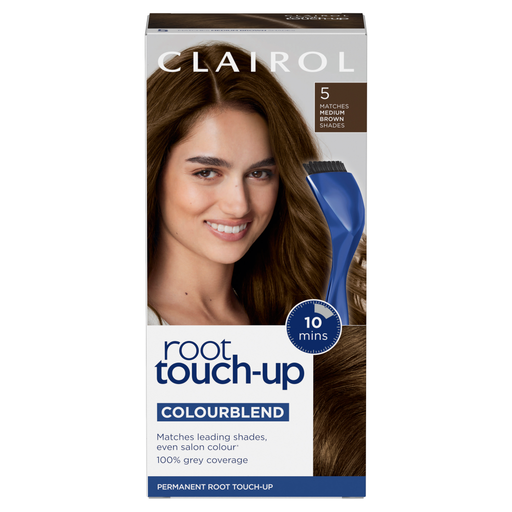
Why This Fits Their Persona: Designed for regular root maintenance when your lengths already have a compatible colour and you want to extend the time between full applications.
Its purpose is specifically root coverage, helping avoid repeatedly applying permanent colour to already-coloured lengths.
Listed as providing 100% grey coverage, with a precision brush, approximately 10-minute application and up to three weeks of coverage.
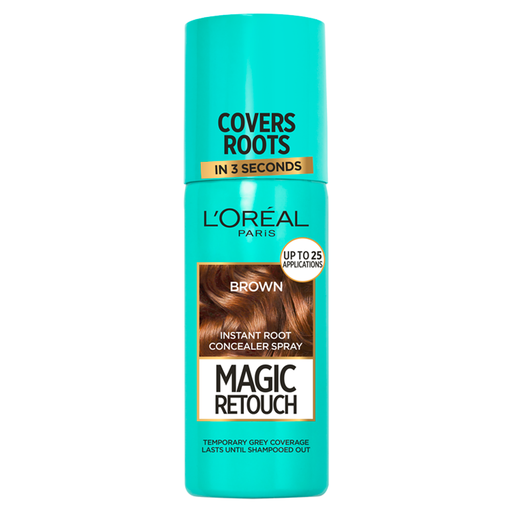
Why This Fits Their Persona: A compact option for commuters, travellers and anyone needing a quick brown root cover-up before work or an occasion.
The temporary format makes its lifespan clear: it is intended to wash out with shampoo rather than provide permanent colour.
75ml handbag-friendly format, pinpoint micro-diffuser, light application and coverage designed to last until shampooing.
Before using any oxidative hair colour:
For a wider choice of shades and formats, browse the roots hair dye range.
We have compiled a complete, real-time list of products that fully satisfy these strict selection criteria and UK safety regulations.
It can be suitable when you want longer-lasting coverage and are prepared to recolour regrowth as it appears. Check the product’s stated grey-coverage level, select a compatible shade and complete the allergy alert test before use.
A spray or root cover-up powder generally lasts until the next shampoo. Some formulas are water-resistant, but perspiration, rain and friction may affect wear. Apply to dry hair and follow the product directions.
Maintenance depends on the contrast between your natural regrowth and the chosen shade. Darker colours can make lighter roots more noticeable, while a natural brown hair colour may create a softer transition. Matching your existing lengths and choosing a root-specific product can reduce uneven results.