
24/7 Customer Support

Free returns

Same-day & Next-day Delivery

Quality Guaranteed

Unlock Your Welcome Offers: FREE Delivery | Up to 80% OFF | Free 30-day JoyPlus trial
Download the APP
Choosing between ceramic hair straighteners, a cordless hair straightener and a hair straightening brush can be difficult when product listings focus on ion counts, rapid heating and salon-style results. The right choice depends less on impressive-sounding claims and more on practical details: temperature control, plate or comb design, charging requirements and safe operation.
Whether you have fine, thick, curly or frizz-prone hair, these checks can help you avoid paying for features that do not suit your routine.
A higher temperature is not automatically more effective. Fine, fragile or chemically treated hair may need a lower setting, while thick or tightly curled hair can require more heat and smaller sections. However, excessive heat or repeated passes can make styling uncomfortable and may leave hair feeling dry.
Look for an adjustable temperature hair straightener with clearly stated settings. A tool offering several lower and higher options is generally more adaptable than one with a single fixed temperature.
An ionic hair straightener or brush may help reduce static and improve the feel of smoothness during styling. However, ion technology does not replace suitable temperature control, correct technique or a suitable plate design. Marketing claims about ion quantities should be treated as product specifications rather than guarantees of a particular result.
Cordless styling tools are convenient for quick touch-ups, but battery life, charging time and heat-up performance matter. A cordless model may not be suitable for a full styling session on very thick or long hair if its stated runtime is limited.
For travel, also check whether the appliance supports dual voltage, whether a travel case is included and whether its charger is suitable for UK sockets. A compact corded model may be more practical than a cordless tool if you need longer operating time.
A useful temperature range should match your hair type and styling goals. For everyday smoothing, start at the lowest effective setting and increase gradually if needed. Digital displays or clearly marked controls make it easier to repeat your preferred setting.
The products listed here include different approaches:
Always style dry hair unless the manufacturer specifically states otherwise. Steam features do not mean that a steam hair straightener should be used on soaking-wet hair.
Ceramic hair straighteners are commonly selected for a smooth glide and even heat distribution. Floating plates can help maintain contact with sections of different thicknesses, while curved edges are useful for creating bends, waves or curls.
A hair straightening brush uses heated comb teeth rather than clamping plates. This can feel more natural for quick daily grooming, although it may not create the same degree of sleekness or curl definition as narrow plates.
MCH, PTC and similar heating systems describe how the appliance generates and manages heat. What matters in practice is the stated heat-up time, temperature stability and whether the design allows you to style without repeatedly passing over the same section.
Prioritise features that reduce avoidable handling risks:
A volumising hair styler or hair dryer brush may also need more storage space than standard hair straighteners. Consider whether you want one tool for drying, smoothing and root lift, or a smaller appliance dedicated to straightening and touch-ups.
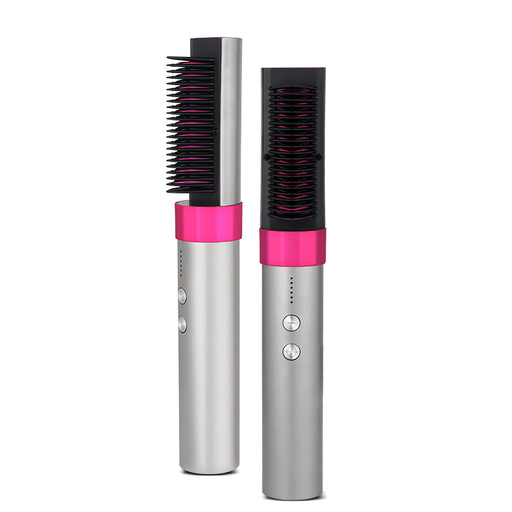
Why This Fits Their Persona: Its brush format suits beginners who want simple daily smoothing without learning plate-based curling techniques. The cordless design is also practical for quick preparation before commuting or going out.
Six settings from 130°C to 200°C provide more choice than a fixed-temperature tool, while the stated approximately 30-minute cordless runtime makes the battery limitation clear.
PTC ceramic heating, negative-ion functionality, anti-scald comb teeth and a built-in 3000mAh battery.
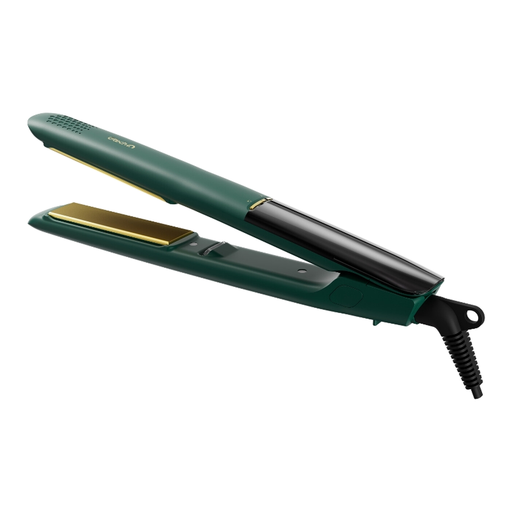
Why This Fits Their Persona: This compact corded option suits shoppers who value a digital interface, broad temperature selection and straightforward daily styling at home or while travelling.
The 10 digital settings make temperature selection more transparent, while the approximately 30-minute auto shut-off addresses accidental operation.
Tourmaline-ceramic floating plates, ionic technology, LED display, approximately 60-second heat-up and a 2m swivel cord.
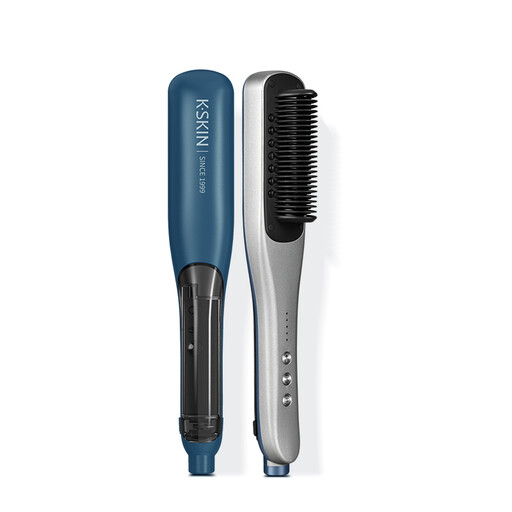
Why This Fits Their Persona: The steam format is aimed at users who want a quick comb-through for smoothing and frizz management, particularly during busy morning routines.
Its water-tank instructions and approximately 30–60-second steam preparation time clarify the extra maintenance involved. It should still be used on dry or slightly damp hair, not soaking-wet hair.
PTC even heating, 25 comb teeth, spray hydration design and stated basic styling time of approximately three minutes.
We have compiled a complete, real-time list of products that fully satisfy these strict selection criteria and UK safety regulations.
Start with a lower setting and increase only when necessary. Fine hair generally needs less heat than thick or tightly curled hair. Work in small, dry sections and avoid repeatedly passing over the same area.
They can be suitable for short routines and touch-ups, but check the stated runtime. For example, the K·SKIN KD382 lists approximately 30 minutes per full charge. Long or thick hair may require a corded model or a tool with a longer confirmed operating time.
Lifespan depends on frequency of use, storage, plate condition, charging habits and general care. Wipe plates only as instructed, keep steam water tanks empty after use and replace any appliance showing damaged cables, loose plates, unusual odours or charging faults. Always follow the manufacturer’s warranty and safety guidance.